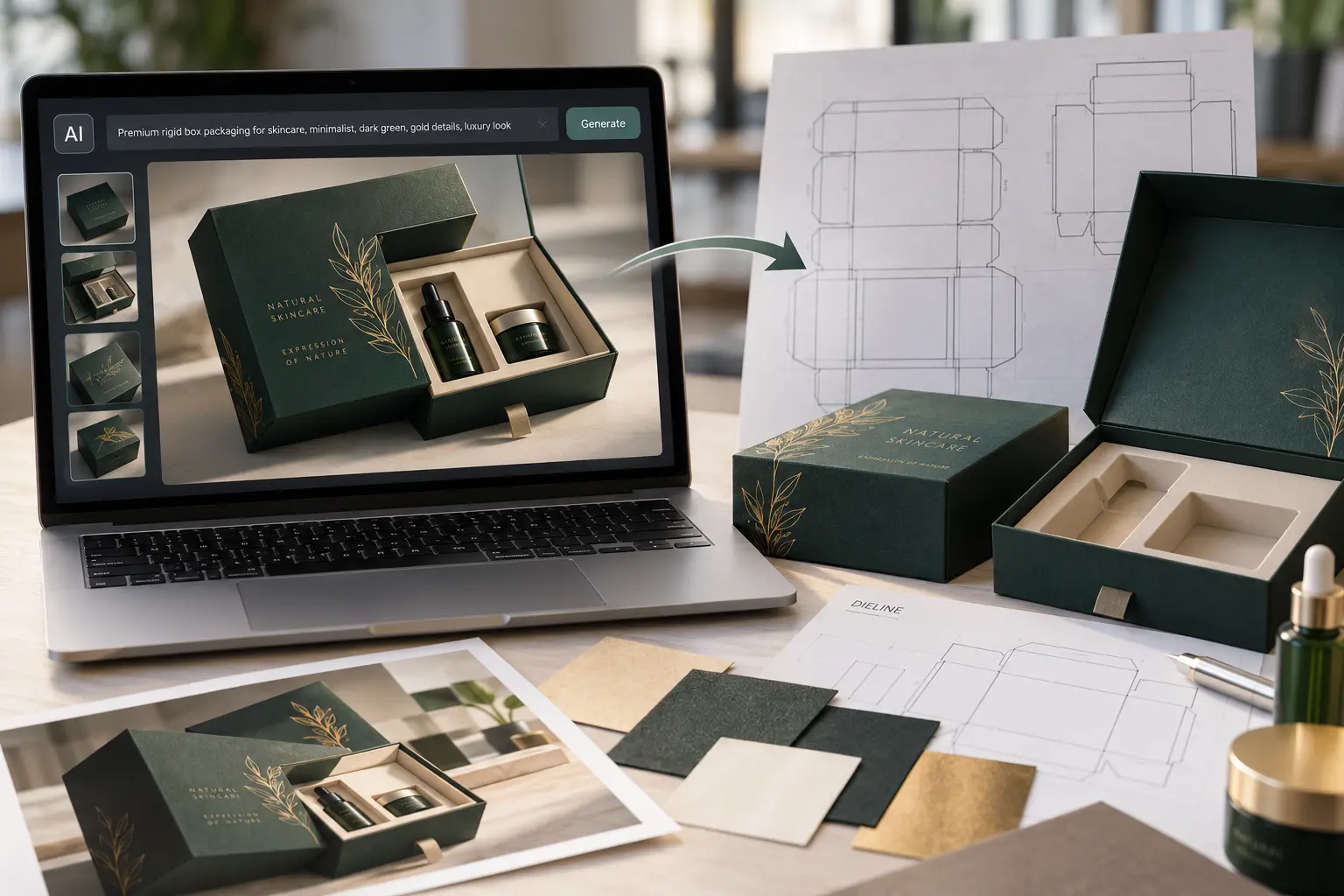
Two identical chocolates. Same recipe, same ingredients, same factory. One arrives in a plain brown box with a printed label. The other arrives in a matte black rigid box with a magnetic closure, a gold foil logo, and a satin ribbon pull. Customers pay significantly more for the second one — and rate it as tasting better.
This is not a marketing trick. It is psychology. And understanding it is one of the most commercially useful things a brand can do.
The Numbers First
Before getting into the mechanism, the scale of the effect is worth establishing.
According to an Ipsos survey conducted on behalf of the Paper and Packaging Board — one of the most widely cited studies on this topic — 72% of American consumers say that a product’s packaging design directly influences their purchase decisions. When buying a gift specifically, that figure rises to 81%. Two thirds of respondents said that paper and cardboard packaging makes a product seem premium or high quality. 63% said it makes products seem more artisanal or handcrafted.
Research published in Nature’s Humanities and Social Sciences Communications found that between 73 and 85 percent of consumer purchase decisions are made at the point of sale — and that packaging design is often the primary differentiator between competing products at that moment.
The implication is straightforward: packaging is not decoration applied after the product is made. It is a primary driver of perceived value, purchase decisions, and willingness to pay.
How the Brain Processes Packaging Before the Product
The psychological mechanisms behind premium packaging are well-documented across consumer behavior research. Several of them operate below conscious awareness, which is why their effects are so consistent and difficult for consumers to override even when they know about them.
The halo effect. When a product presents well — through premium materials, precise construction, deliberate finishes — the brain extends that quality judgment to the product inside. The packaging does not just signal quality. It creates the experience of quality before the product is even touched.
Crossmodal correspondence. This is a well-established phenomenon in sensory psychology where signals from one sense influence perception in another. Research documented by Neurolaunch shows that tactile cues — the weight of a box, the texture of a soft-touch matte laminate, the resistance of a magnetic closure — independently affect perceived product quality and willingness to pay, completely separate from anything the consumer sees. A heavy box feels more valuable than a light one. A box that opens with resistance and a satisfying snap communicates precision manufacturing. These are unconscious quality signals operating through touch, not sight.
The value illusion. Consumer psychology research consistently documents what is sometimes called the value illusion — a cognitive bias in which higher price and higher quality are treated by the brain as equivalent signals, regardless of objective product differences. Premium packaging activates this bias in the opposite direction: it signals high quality, which the brain translates into an expectation of high value, which justifies a higher price. The packaging does not make the product better — it makes the consumer’s experience of the product better, which amounts to the same thing in terms of satisfaction and repeat purchase.
The consumption experience effect. Research documented by Luth Research shows that identical products are not just purchased more often in premium packaging — they are experienced differently. Consumers rate the same food or drink as tasting better when presented in premium packaging compared to plain packaging. This has been replicated across multiple product categories. The packaging changes not just the purchase decision but the consumption experience itself.
What Specifically Signals Premium
Not all premium signals work equally, and the research is specific about which elements carry the most weight.
Material and tactile finish. The Ipsos research found that 67% of consumers say the material a product is packaged in influences their decision. Among material signals, research consistently points to matte surfaces as strongly associated with sophistication and quality — specifically soft-touch matte laminate, which creates a velvet-like tactile experience that consumers associate with luxury goods. Gloss finishes read as commercial. Matte finishes read as deliberate and premium.
Weight and structural rigidity. A box that holds its shape, has a perceptible weight, and does not flex when held communicates something that a folding carton cannot. Rigid board construction creates a physical experience of quality that lightweight packaging cannot replicate regardless of print quality. The weight is itself a quality signal.
Color and its specific effects. Color psychology in packaging is more nuanced than popular summaries suggest. As documented by Layfield Group and peer-reviewed packaging research, darker colors — black, deep navy, forest green — consistently signal premium positioning. Gold and metallic accents activate associations with luxury. Crucially, color saturation matters: academic research found that high-saturation colors can evoke associations of cheapness, while moderate saturation paired with matte finishes reads as premium.
Typography and white space. Less text, more space, and refined typography consistently signal premium across categories. Crowded packaging with multiple fonts and many information elements signals mass market. Restrained packaging with one or two typefaces and deliberate negative space signals confidence — the brand does not need to shout.
The unboxing sequence. The order and resistance of opening — lid that lifts with slight resistance, ribbon that pulls cleanly, tissue that unfolds to reveal the product — creates what consumer psychologists describe as a ritual. Rituals attach meaning and value to experiences. This is why brands that invest in the unboxing experience see it replicated in social media content: consumers are sharing an experience, not just a product.
The Gift Purchasing Effect
The psychology amplifies significantly in gift purchasing contexts, which is relevant for any brand whose product is bought as a gift — chocolate, cosmetics, wine, candles, food, corporate gifts.
The Ipsos research found that 81% of consumers say packaging design influences their gift selection — a higher figure than for personal purchases. The reason is straightforward: in gift purchasing, the buyer is making a statement about how much they value the recipient. The packaging is visible evidence of that valuation. A beautifully packaged gift communicates effort and care regardless of the price. Plain packaging communicates the opposite, even at the same price point.
For brands in gift-adjacent categories, this means that the packaging investment returns not just on the first sale but on every subsequent referral and repeat purchase that follows from the impression the gift made.
The Repeat Purchase Effect
Premium packaging influences not just the first purchase but the ongoing relationship between customer and brand. Research in consumer behavior documents that the unboxing experience creates a memory trace that becomes associated with the brand. When the customer encounters the brand again, that memory is part of the brand perception they carry.
Brands that create a consistently premium packaging experience build brand equity through every delivery. Brands that use plain packaging lose this opportunity with every shipment.
For subscription businesses, this dynamic is particularly significant: the packaging arrives repeatedly, and each delivery is an opportunity to reinforce or erode the brand’s premium positioning in the subscriber’s perception.
What This Means for Your Brand Practically
The research translates into a few practical implications worth making explicit.
The race to the bottom on packaging is a race to the bottom on pricing. If a brand’s packaging signals mass market, the brand’s price ceiling is set accordingly. Consumers who perceive a product as premium will pay premium prices. Consumers who perceive a product as generic will compare it on price. The packaging choice is a pricing strategy choice.
Packaging investment has a measurable ROI. The difference in per-unit cost between stock packaging and custom premium rigid box packaging is real — but so is the difference in the price customers will pay, the frequency with which they recommend the product, and the rate at which they return. Brands that calculate packaging cost without calculating the revenue effect of premium positioning are making an incomplete calculation.
The first physical interaction sets everything that follows. For e-commerce brands especially, the packaging is the first physical interaction the customer has with the brand. Everything before it — the website, the social media, the reviews — is digital. The box is real. It confirms or contradicts everything the brand has communicated online.
The Materials Matter More Than the Design
One observation from the research that is often overlooked: the material choice and structural quality of packaging carries more psychological weight than the graphic design.
A beautifully printed design on a thin, flexible box does not read as premium. A simple, clean design on a heavy rigid board with a quality finish does. The material is the signal. The design amplifies it.
This explains the Ipsos finding that 63% of consumers specifically associate paper and cardboard packaging with premium or high quality. Paper has genuine premium associations that plastic does not, and rigid paper construction has associations that folding carton does not.
Putting It Into Practice
For brands considering whether to invest in premium packaging, the psychological research makes a strong case. The question is not whether premium packaging influences customer perception and willingness to pay — the evidence on that is clear. The question is whether the investment delivers a return on that specific brand’s product and customer.
DST-Pack produces fully custom premium paper packaging for brands across cosmetics, chocolate and confectionery, corporate gifting, wine and spirits, wellness, and retail. Every order starts with a physical sample so you can experience the material quality, tactile finishes, and structural precision before committing to production. The difference between reading about soft-touch matte laminate and holding a box finished with it is significant — and it is the same difference your customer will feel.
Sources:
- Ipsos / Paper and Packaging Board — Most Americans Say Packaging Design Influences Purchase Decisions (2018)
- Ipsos — Five Packaging Design Trends That Make You Want to Buy
- Nature / Humanities and Social Sciences Communications — The Multidimensional Impact of Packaging Design on Purchase Intention (2025)
- Neurolaunch — Packaging Psychology: How Product Design Influences Consumer Behavior (2024)
- Brand Auditors — Premium Pricing Psychology: Why Some Consumers Will Pay More
- Layfield Group — How Packaging Affects Consumer Perception and Buying Decisions
- Luth Research — Can a Product’s Packaging Design Influence the Perceived Taste?
- Academia.edu — Tough Package, Strong Taste: The Influence of Packaging Design on Taste Impressions