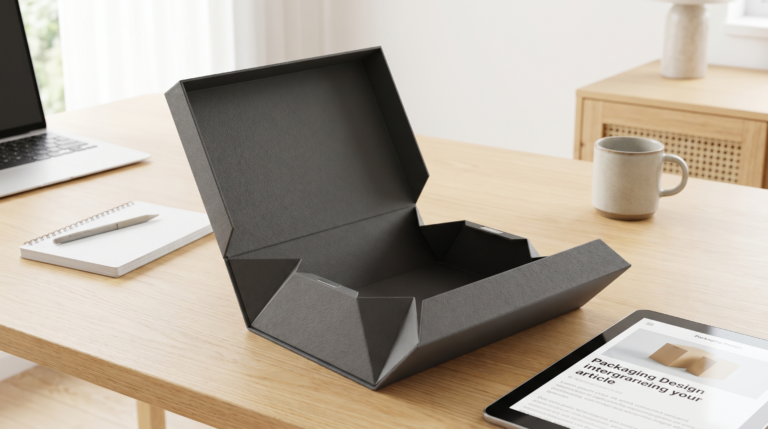
Rigid boxes are widely known as one of the most premium packaging solutions available today. They are strong, durable, and associated with luxury products such as cosmetics, electronics, perfumes, and gift items. However, within this category, there is a special variation that often raises questions: the foldable rigid box.
At first glance, it sounds contradictory. Rigid packaging is supposed to be solid and non-collapsible, so how can a rigid box be foldable at the same time? The answer lies in smart structural engineering and material design that allows the box to maintain its premium feel while solving a very practical problem: storage and transportation efficiency.
What Exactly Is a Foldable Rigid Box?
A foldable rigid box is a type of premium packaging made from thick paperboard or greyboard, but designed with special creasing and construction techniques that allow it to be flattened when not in use. Unlike traditional rigid boxes that are permanently assembled, foldable versions can be shipped and stored flat, then easily assembled into a solid 3D structure when needed.
Once assembled, the box looks and feels almost identical to a standard rigid box. It has strong walls, a premium surface finish, and a sturdy structure. The key difference is hidden in its joints and folding mechanism, which are engineered to allow controlled collapsing without damaging the material.
Why Most Rigid Boxes Cannot Be Folded
Traditional rigid boxes are built using thick greyboard panels that are permanently glued together at right angles. This creates a solid, non-flexible structure that is highly durable but not collapsible.
The reason they cannot be folded is simple: the construction relies on fixed joints. Once assembled, the corners and edges are permanently bonded, which gives the box its strength but also removes any flexibility. If you try to fold a standard rigid box, the material will either crack or break at the seams.
This makes traditional rigid packaging strong but inefficient when it comes to logistics. They take up a lot of space during shipping and storage, especially in large-scale production.
How Foldable Rigid Boxes Solve This Problem
Foldable rigid boxes are designed differently from the ground up. Instead of being permanently fixed, they use pre-scored panels connected with hidden adhesive structures, fabric joints, or magnetic elements that allow controlled movement.
The key innovation is the way the corners are constructed. Instead of rigid permanent bonding, the panels are designed to fold along precise lines. This allows the box to be completely flat when not assembled, but still transform into a stable, rigid structure when opened.
Despite being foldable, these boxes maintain the same premium appearance as traditional rigid packaging once assembled. The folding mechanism is usually invisible to the end user, which preserves the luxury experience.
Why Brands Use Foldable Rigid Boxes
One of the biggest advantages of foldable rigid boxes is logistics efficiency. Since they can be shipped flat, they significantly reduce storage and transportation costs. This is especially important for global brands or companies producing large volumes of packaging.
Another advantage is sustainability. By reducing volume during shipping, companies can lower their carbon footprint and optimize warehouse space. This makes foldable rigid boxes a more environmentally conscious choice compared to traditional rigid packaging.
From a branding perspective, they offer the same premium feel as standard rigid boxes. This means companies do not have to compromise on presentation while still benefiting from practical efficiency.
They are widely used in industries such as cosmetics, luxury retail, electronics, promotional kits, and subscription boxes where both presentation and logistics matter.
Design and Structural Features
Foldable rigid boxes require precise engineering. The structure must balance flexibility during folding with stability after assembly. This is achieved through carefully designed creases, reinforced edges, and high-quality adhesive systems.
The outer surface is usually wrapped with printed or textured paper, just like traditional rigid boxes. This allows full customization of branding, including embossing, foil stamping, soft-touch coatings, and UV effects.
Magnetic closures are also commonly used in foldable designs, helping the box snap into place once assembled. This enhances both usability and the premium feel of the packaging.
Are Foldable Rigid Boxes as Strong as Traditional Ones?
A common question is whether foldable rigid boxes are weaker than standard rigid packaging. The answer is no—when properly designed and manufactured, they offer nearly the same level of durability.
Once assembled, the structure becomes stable and firm, capable of protecting high-value products during storage and transport. The difference lies not in strength, but in flexibility before assembly.
However, quality is highly dependent on manufacturing precision. Poorly engineered foldable boxes may lose rigidity over time or fail to lock properly, which is why choosing an experienced packaging supplier is essential.
Where Foldable Rigid Boxes Are Commonly Used
These boxes are widely used in premium product categories where both aesthetics and logistics efficiency are important. Luxury cosmetics brands use them for skincare sets and gift collections. Electronics companies use them for packaging accessories or small devices. They are also popular in PR kits and influencer boxes where presentation and shipping efficiency are equally important.
Subscription box companies also benefit from foldable rigid packaging because it reduces warehouse storage requirements while maintaining a high-end unboxing experience.
Manufacturing Foldable Rigid Packaging
Producing foldable rigid boxes requires advanced manufacturing techniques and precise engineering. Unlike standard folding cartons, this type of packaging involves both rigid box construction and folding carton logic combined into one structure.
This is why many brands work with specialized packaging manufacturers who understand both design and structural engineering. For example, companies such as foldable rigid box manufacturer provide custom solutions that combine premium aesthetics with efficient production and shipping optimization.
Conclusion
A foldable rigid box is a smart evolution of traditional rigid packaging. It solves one of the biggest limitations of classic rigid boxes—lack of flexibility in storage and transport—while maintaining the same premium look and feel.
By combining structural innovation with luxury design, foldable rigid packaging has become a preferred solution for modern brands that value both presentation and efficiency. When produced correctly, it delivers the best of both worlds: a flat-packed structure for logistics and a high-end rigid box experience for the customer.