Artisan chocolate is one of the most visually judged product categories in the world. Before a customer tastes a single praline, they have already decided whether your chocolate is worth the price — based almost entirely on how it looks in the box. For a chocolatier who sources exceptional cacao, tempers by hand, and obsesses over flavor profiles, the packaging is the last mile of that craft. It either confirms that something special is inside, or it undermines everything that came before it.
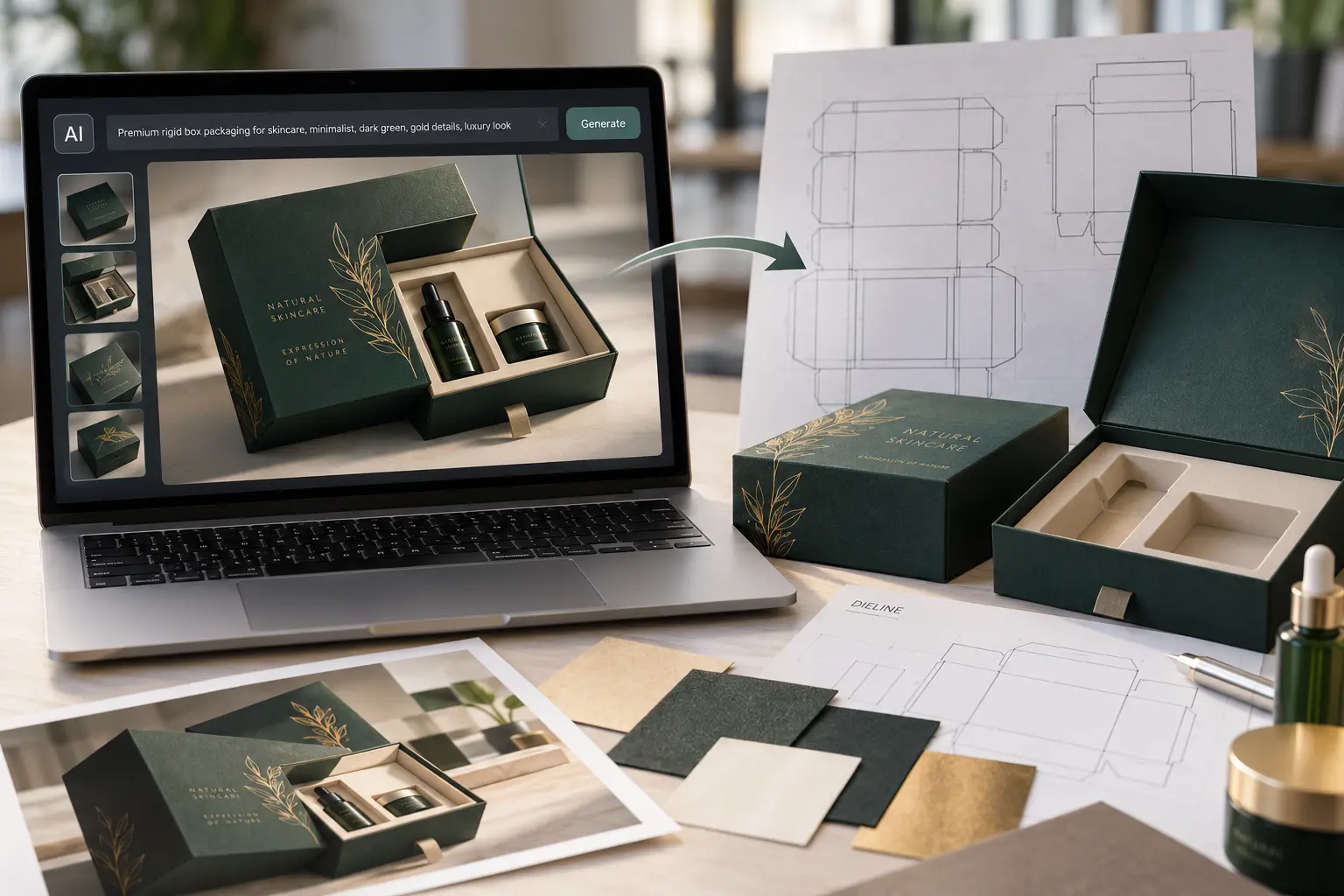
DST-Pack works with artisan chocolate makers at every scale — from single-location chocolatiers producing seasonal collections to growing confectionery brands shipping across multiple markets. Fully custom rigid box packaging, praline tray systems, and luxury gift boxes, starting from 100 units, with food-safe materials and a physical sample before production begins.
What Artisan Chocolate Packaging Has to Do
Premium chocolate packaging carries more requirements than most product categories. It needs to be beautiful enough to justify the price, functional enough to protect fragile handmade pieces during transit, food-safe in every material that contacts the chocolate, and — for chocolatiers selling internationally — capable of surviving shipping across climates and distances.
Generic packaging fails on most of these counts. A stock folding carton does not hold individual pralines in position. A plain box does not signal the level of craft that went into the product. And packaging that looks like it belongs in a supermarket aisle actively lowers the perceived value of chocolate that sells for a premium price.
The chocolatiers that build strong brands — in the US, Germany, France, Italy, and across every market where artisan chocolate culture is strong — invest in packaging that is as deliberate as their product.
Packaging Formats for Artisan Chocolatiers
Rigid magnetic closure boxes with custom praline inserts
The most popular format for artisan chocolate presentation. A magnetic closure rigid box in matte black, deep brown, or your brand color, with a precision-cut paperboard or thermoformed insert that holds each praline in its exact position — this is the format that communicates craftsmanship immediately. The insert is as important as the box itself: a grid of individual compartments, each holding one chocolate without movement, creates a visual presentation that looks like a jeweler’s tray. See our luxury chocolate packaging range for format references.
Custom praline trays and ballotin-style boxes
The ballotin — the traditional European format for presenting boxed chocolates — has a specific structural logic that flat-pack boxes cannot replicate. DST-Pack produces custom praline trays and ballotin-style rigid boxes designed specifically for chocolate presentation, with insert configurations from 4-piece to 64-piece and beyond. Visit our dedicated packaging for pralines page for format options.
Chocolate gift box sets
For seasonal collections, Valentine’s Day, Christmas, and corporate gifting programs, a multi-tier or multi-compartment gift box presents an assortment of chocolates as a considered gift rather than a commodity purchase. Custom rigid gift boxes with separate compartments for different chocolate types, flavors, or formats. See our chocolate gift box packaging for examples.
For single-origin chocolate bars, truffle collections, or specialty confectionery, a cylindrical paper tube gives the product a distinctive shelf profile that stands apart from rectangular box formats. Particularly popular with artisan chocolatiers who sell at farmers markets, specialty food retailers, and online — where visual differentiation matters enormously.
Seasonal and limited edition packaging
Christmas advent calendars, Easter egg boxes, Valentine’s Day heart formats, Halloween collections — seasonal packaging for artisan chocolatiers is one of DST-Pack’s core specializations. These require precise structural design to hold irregular formats, clean presentation of the seasonal theme, and production timelines that align with the retail calendar. See our full range of custom candy and confectionery packaging.
Food Safety: What Artisan Chocolatiers Need to Know
Every material that contacts chocolate directly must be food-safe. This is not just good practice — it is a legal requirement in the US, EU, and most international markets where artisan chocolate is sold.
DST-Pack uses food-contact compliant materials throughout its chocolate packaging production. Board, liners, inserts, and adhesives are all specified for food safety. For chocolatiers selling in the US, materials comply with FDA food contact requirements. For European producers — including the many artisan chocolatiers based in Germany, France, Belgium, and Italy who export internationally — our materials meet EU food contact regulations.
When you request a quote, tell us whether your chocolate will be in direct contact with the packaging surface (unwrapped pralines in a tray, for example) versus wrapped chocolates that never touch the box directly. This determines the specific material specifications required.
The Artisan Chocolate Market — Why Packaging Matters Now More Than Ever
Artisan chocolate has moved from niche to mainstream across the US and Europe. In the US, the bean-to-bar movement has produced hundreds of craft chocolate makers competing at premium price points. In Germany, France, and Italy — where confectionery tradition runs deep — the market for independently produced premium chocolate has expanded significantly, particularly in the gifting and specialty retail segments.
In every one of these markets, the buyers who pay premium prices for artisan chocolate are making a comparison every time they purchase: is this chocolatier’s product worth more than what I can find at a department store or a supermarket premium tier? Packaging is a significant part of that comparison. A chocolatier in Brooklyn charging $45 for a 16-piece praline box, a maison de chocolat in Paris presenting their signature ganaches, a small-batch producer in Munich selling through an online shop — all of them are competing on perception as much as product. The box is where perception is formed.
Starting from 100 Units
Most large-scale packaging manufacturers require minimum orders that make no sense for artisan producers. A chocolatier producing 200 boxes of a seasonal Valentine’s collection does not need 2,000 boxes. A small-batch producer testing a new product format needs to validate the packaging at a realistic quantity before committing to full production.
DST-Pack starts from 100 units for most rigid box formats. That is a quantity that works for an artisan producer at any stage — from a single-location chocolatier in a US farmers market circuit to a growing confectionery brand beginning to export to European retailers.
The quality, the finishes, and the production process are identical at 100 units as at 2,000. The per-unit cost is higher at lower quantities — as it is with any manufacturer — but the minimum is accessible.
Finishes That Work for Premium Chocolate Packaging
The finish communicates the positioning of your chocolate before the box is opened.
Soft-touch matte laminate is the dominant finish for premium artisan chocolate packaging globally. The velvet-like tactile surface communicates quality through touch and creates a visual contrast with foil or spot UV elements. Dark chocolate brands in particular gravitate toward soft-touch matte for its association with sophistication and restraint.
Gold and bronze foil stamping on a matte background is the most recognizable visual language of premium chocolate packaging — the finish that signals luxury chocolatiers from Brussels to San Francisco. Applied to your logo, a decorative motif, or a typographic element, hot-stamp foiling immediately elevates the perceived price point of the product.
Embossing — your logo or a pattern pressed into the board surface — creates a tactile brand element that reads as handcrafted and artisanal. Particularly effective for chocolatiers with heritage positioning or provenance-based branding.
Spot UV — a selective gloss varnish over a matte base — creates the contrast between a shiny design element and a matte background that photographs exceptionally well and creates a premium visual impression on a retail shelf.
Working With DST-Pack
The process starts with a brief: your box dimensions or product dimensions, your branding, your quantity, and your timeline. We come back with structural options, material recommendations, and a quote.
Once approved, we produce a physical sample — with your actual praline insert, your actual box dimensions, your actual finish — and send it to your address before full production begins. For chocolate packaging specifically, the sample stage matters: it lets you verify that the insert holds your specific chocolates without movement, that the food-safe liner is correctly specified, and that the finish communicates your brand the way you intend.
Production takes three to four weeks from sample approval. For seasonal collections — Christmas, Valentine’s Day, Easter — plan your order 10 to 14 weeks ahead of your required delivery date.
Request a Sample
If you are an artisan chocolatier looking for packaging that represents your craft properly — from your first season to your hundredth — the easiest place to start is a sample request.