By Stanislav Krykun, CEO of DST-Pack
In today’s highly competitive confectionery market, chocolate is no longer just a product — it is an experience. And increasingly, that experience begins not with taste, but with packaging.
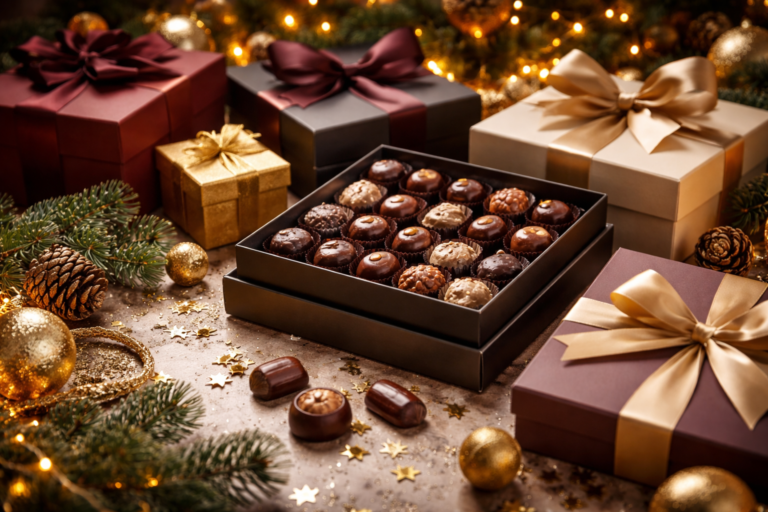
From luxury Christmas gift boxes to playful Easter-themed assortments, chocolate brands across the globe are doubling down on premium, seasonal packaging. This shift is not accidental — it is a calculated strategy rooted in consumer psychology, market economics, and brand positioning.
As the CEO of DST-Pack, working closely with international brands and manufacturers, I have observed a clear pattern: companies that invest in premium and seasonal packaging consistently outperform competitors in both perceived value and seasonal sales.
In this article, I will break down why premium packaging works so well in the chocolate industry, how brands leverage holidays to maximize revenue, and what data tells us about consumer behavior in this space.
Chocolate Is No Longer Just a Product — It’s a Visual Decision
One of the most important shifts in the chocolate industry over the last decade is simple but often underestimated: chocolate is no longer chosen purely for taste. It is chosen visually first.
Before a consumer ever experiences the product, they have already made a decision. The shape of the box, the texture of the surface, the use of color, and the perceived “giftability” all shape expectations within seconds.
Research confirms that packaging directly influences perceived quality and willingness to purchase. A study published in the Journal of Sensory Studies shows that identical chocolate products are often rated as higher quality when presented in premium packaging, even when consumers are told the product is exactly the same.
Source: Journal of Sensory Studies (Wiley)
Why Chocolate Is Uniquely Sensitive to Packaging
Chocolate sits in a very specific category between FMCG and emotional gifting. That combination is what makes packaging so powerful in this industry.
When people buy chocolate for themselves, packaging plays a supporting role. But when chocolate becomes a gift, packaging becomes the product itself. It communicates intention, care, and perceived value long before the box is opened.
This is why premium materials such as rigid cardboard boxes, soft-touch coatings, foil stamping, and magnetic closures are so widely used in the category. They do not simply protect the product — they define how it is perceived.
At DST-Pack, we see this dynamic daily when working with international confectionery brands. The same product can move into a completely different market segment simply by changing its packaging system.
Seasonal Demand: Why Chocolate Peaks Around Emotional Moments
Chocolate is one of the few FMCG categories that is naturally aligned with emotional calendar events. Christmas, Easter, Valentine’s Day, and Halloween are not just marketing moments — they are consumption peaks driven by gifting behavior.
During these periods, chocolate is no longer competing as a snack or impulse product. It becomes part of a gifting decision, which changes how consumers evaluate it completely.
According to market data, seasonal confectionery plays a significant role in total chocolate revenue across Europe, especially in markets with strong gifting traditions such as Germany and the UK.
Source: Statista – Chocolate Market in Europe
How Seasonal Packaging Creates Multiple Revenue Cycles
One of the most powerful strategies in the chocolate industry is the ability to reuse the same product across multiple seasonal identities throughout the year.
A single chocolate assortment can become a Christmas gift box in winter, a Valentine’s edition in February, an Easter-themed collection in spring, and later a general premium product. The product remains the same — but the perception changes completely.
This is where packaging becomes a commercial strategy rather than a design exercise. It allows brands to multiply selling moments without changing core production.
This approach is a key reason why brands increasingly invest in structured packaging systems such as custom candy packaging solutions .
Instead of thinking in terms of one product launch, brands are now thinking in terms of multiple emotional cycles throughout the year.
Limited Editions and the Psychology of Scarcity
Scarcity is one of the strongest psychological drivers in consumer behavior, and chocolate packaging uses it extremely effectively.
When a product is clearly marked as seasonal or limited edition, it immediately changes how consumers perceive it. It is no longer a permanent option — it becomes a temporary opportunity.
This shift leads to faster decision-making and reduced comparison behavior. Instead of analyzing alternatives, consumers are more likely to act quickly to avoid missing out.
The Harvard Business Review explains this effect in detail, showing that scarcity increases perceived value and accelerates purchasing decisions, especially in discretionary and emotional product categories.
Source: Harvard Business Review – The Power of Scarcity
Premium Packaging as a Pricing Mechanism
One of the most important but often overlooked roles of packaging is its direct influence on pricing strategy.
A standard chocolate product may sit in a low price range in retail environments. However, when repositioned in premium packaging with seasonal storytelling, the same product can move into significantly higher price brackets.
This is not about changing the product itself — it is about changing its perceived category.
In many cases, brands are able to move from €2–€3 products into €10–€25 gift sets simply through packaging transformation and repositioning.
This is why packaging is no longer treated as a cost, but as a margin expansion tool within the FMCG industry.
Packaging and Brand Identity in Chocolate
Over time, packaging in the chocolate industry evolves far beyond its functional role. It becomes a core part of brand identity and recognition.
In retail environments where purchase decisions happen in seconds, consumers rarely analyze ingredients or specifications. Instead, they rely on visual memory — color, shape, material, and consistency.
This is why strong chocolate brands invest heavily in maintaining consistent packaging language across seasons. Even when designs change for Christmas or Easter, the brand remains instantly recognizable.
Packaging is not just communication — it is memory encoding. It allows a brand to exist in the consumer’s mind long before and after the purchase.
The Unboxing Effect and Social Media Amplification
In the modern chocolate market, packaging no longer exists only in physical retail. It now lives in digital environments as well.
Consumers frequently share unboxing experiences on platforms like Instagram and TikTok, especially when products are visually appealing or gift-oriented.
This has created a new dynamic: packaging is no longer just designed for shelf impact, but also for digital storytelling.
According to Nielsen Norman Group research, unboxing experiences significantly increase user engagement and emotional recall, particularly when products are visually structured and layered.
Source: Nielsen Norman Group – Unboxing Experience
This means that packaging has effectively become a marketing channel itself, not just a product container.
Sustainability vs Premium Packaging Expectations
One of the most important challenges in modern chocolate packaging is balancing sustainability with premium perception.
Consumers increasingly expect environmentally responsible materials, but at the same time, they still associate premium products with tactile and visual richness.
This creates a tension between minimalism and luxury. Brands must now design packaging that feels both responsible and emotionally valuable.
According to McKinsey research, more than 60% of consumers consider sustainability when making FMCG purchasing decisions, making it a critical factor in packaging strategy.
Source: McKinsey – Sustainability in Packaging
In practice, the most successful chocolate brands are not choosing between premium and sustainable — they are combining both through recyclable rigid materials, paper-based luxury finishes, and simplified structural design.
The Future of Chocolate Packaging
The chocolate packaging industry is moving toward a much more dynamic and experience-driven model.
Personalization is becoming increasingly important, with brands exploring ways to adapt packaging to individuals, occasions, and regional preferences.
At the same time, sustainability is no longer optional. It is becoming a baseline expectation rather than a differentiator.
Another emerging direction is interactive packaging — QR codes, digital storytelling layers, and hybrid physical-digital experiences that extend the product beyond the box.
In this environment, packaging is no longer a static object. It is evolving into a communication platform.
Final Thoughts
Chocolate has always been an emotional product, but in today’s market, that emotion begins much earlier than taste.
It begins with packaging — with how the product is perceived, how it is gifted, and how it is remembered.
Premium packaging transforms chocolate from a simple consumer good into a seasonal experience that can be reintroduced multiple times throughout the year.
This is why brands continue to invest in it — not as an aesthetic choice, but as a strategic necessity.
To learn more about packaging solutions for confectionery brands, visit DST-Pack or explore custom solutions at custom candy packaging.