Offset printing is one of the most commonly used printing methods in commercial printing and packaging production. It is valued for its high image quality, color accuracy, and efficiency in large-scale printing projects. Offset printing is widely used for custom packaging boxes, catalogs, brochures, and marketing materials where consistency and premium appearance are required.
Understanding how offset printing works helps brands choose the right printing method for their packaging needs.
How Offset Printing Works
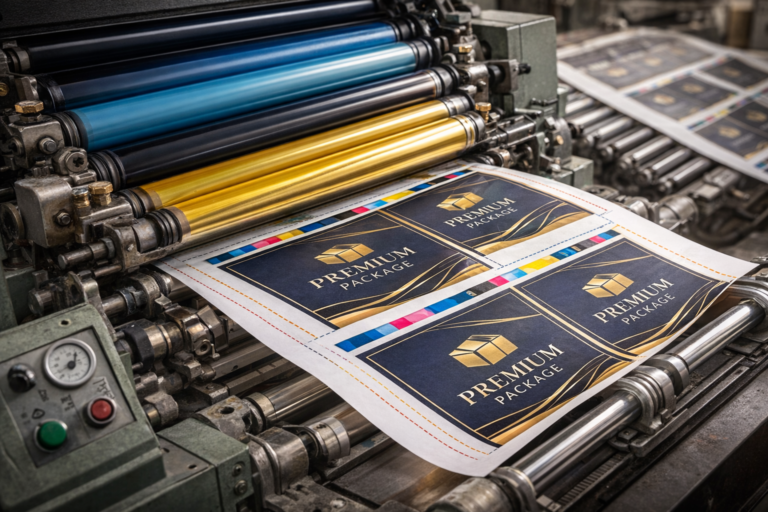
Offset printing is based on an indirect printing process. Instead of transferring ink directly from a plate to the material, the image is first transferred to a rubber blanket and then onto the final surface.
The process includes several key steps:
- The design is transferred onto an aluminum printing plate
- Water is applied to non-image areas of the plate
- Oil-based ink adheres only to the image areas
- The inked image is transferred to a rubber blanket
- The blanket presses the image onto paper or cardboard
This indirect method ensures smooth ink distribution and consistent results across the entire print run.
Key Advantages of Offset Printing
One of the main advantages of offset printing is its exceptional print quality. Fine details, smooth color gradients, and sharp text are easier to achieve compared to many other printing methods.
Another important benefit is color consistency. Offset printing allows precise color matching, including Pantone colors, which is essential for brand identity and packaging design.
Offset printing also becomes cost-effective for high volumes. While setup costs are higher, the price per unit decreases significantly as quantities increase, making it ideal for large packaging orders.
Common Uses of Offset Printing
Offset printing is widely used across multiple industries, especially where visual quality matters. Typical applications include:
- Custom folding cartons and paperboard packaging
- Product catalogs and brochures
- Magazines and books
- Labels, sleeves, and inserts
- Corporate and promotional materials
In packaging, offset printing is often combined with finishing options such as lamination, embossing, foil stamping, and spot UV to enhance shelf appeal.
Offset Printing vs Digital Printing
Compared to digital printing, offset printing requires longer setup time and higher initial costs. However, it offers better color accuracy, more ink options, and higher efficiency for large production runs.
Digital printing is better suited for small quantities, test samples, and fast turnaround projects. Offset printing remains the preferred choice for mass production where consistency and quality are critical.
Why Offset Printing Is Important for Packaging
In packaging production, brand presentation plays a major role in customer perception. Offset printing provides the precision and reliability needed to produce professional, visually appealing packaging that reflects brand quality.
It works well with different paperboard types and box structures, making it a flexible solution for custom packaging projects.