If you’ve ever opened a box of cosmetics, supplements, or even a small electronic accessory, you’ve likely interacted with a tuck box—whether you realized it or not. It’s one of those packaging formats that quietly dominates retail shelves because it simply works.
But what exactly is a tuck box, and why do so many brands rely on it?
Let’s break it down in a clear, practical way—without overcomplicating things.
So, What Is a Tuck Box?
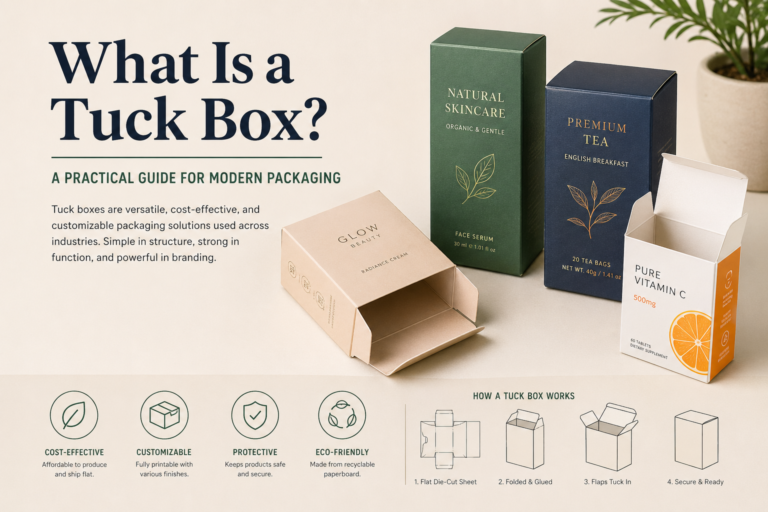
A tuck box is a type of folding carton made from paperboard or cardboard, designed with flaps that “tuck” into the box to close it. That’s where the name comes from.
There’s no magnet, no ribbon, no complicated locking system. Just a smart structural design where the top (and often bottom) flaps fold inward and hold the box shut through friction.
That simplicity is exactly why tuck boxes are everywhere. They’re easy to produce, easy to use, and easy to adapt to almost any product category.
Why Brands Keep Choosing Tuck Boxes
Tuck boxes aren’t popular by accident. They hit a sweet spot between cost, appearance, and functionality that’s hard to beat.
From a production perspective, they’re efficient. The box is cut from a single sheet, printed, and then folded into shape. That keeps manufacturing costs relatively low compared to more complex packaging like rigid boxes.
From a logistics standpoint, they’re even better. Before assembly, they ship flat—saving a huge amount of space. If you’re dealing with large quantities, that directly translates into lower shipping and storage costs.
And then there’s branding. A tuck box gives you clean, uninterrupted surfaces on all sides. That means full freedom to print your design, tell your story, and stand out on the shelf.
This combination is exactly why so many companies—from startups to established brands—turn to experienced manufacturers like packaging manufacturer DST-Pack when developing custom tuck boxes.
How a Tuck Box Actually Works
At first glance, it might look basic, but the structure is surprisingly well thought out.
The box starts as a flat die-cut sheet. One side is glued to form the body, and the rest is folded into shape. The top flap folds down and tucks into the front panel or inside the box, depending on the design. The bottom is either tucked in the same way or pre-glued for quicker assembly.
That’s it. No extra materials, no unnecessary complexity.
And yet, when done properly, the result is secure enough for retail use while still being easy for customers to open.
Different Styles of Tuck Boxes (And Why They Matter)
Not all tuck boxes are identical. Small structural differences can make a big impact depending on your product.
Some boxes are designed so that both flaps fold in the same direction. This creates a very clean front panel, which is ideal if your design relies heavily on visuals or branding.
Others use a reverse structure, where the top and bottom flaps fold in opposite directions. This version is slightly more efficient in mass production and is extremely common in retail packaging.
For heavier products, there are tuck boxes with reinforced or auto-lock bottoms. These are pre-glued in a way that allows the base to snap into place during assembly, making them much stronger without slowing down packing speed.
Choosing the right structure isn’t just a technical decision—it directly affects how your product feels, how it opens, and even how premium it appears.
Materials: More Important Than Most People Think
Most tuck boxes are made from paperboard, but that doesn’t mean they’re all the same.
The thickness, finish, and type of board you choose can completely change the perception of your product. A lightweight carton might be perfect for something like tea or supplements, while a thicker, coated board gives a more premium feel for cosmetics or electronics.
Kraft material is another popular option, especially for brands that want a natural or eco-friendly look. It immediately communicates sustainability, even before the customer reads anything on the packaging.
If the product requires more protection, corrugated layers can be introduced—but that’s usually reserved for shipping rather than primary retail packaging.
Where You’ll See Tuck Boxes in Real Life
Once you start paying attention, you’ll notice tuck boxes almost everywhere.
In cosmetics, they’re used for everything from serums to perfumes. In food, they appear in chocolate packaging, tea boxes, and snack products. In electronics, they’re often used for accessories like cables, earbuds, and chargers.
They’re also widely used in pharmaceuticals, where the structure allows space for instructions, labels, and regulatory information without making the packaging bulky.
What makes tuck boxes so effective across these industries is their adaptability. The same basic concept can be scaled, reinforced, or upgraded depending on what the product needs.
The Role of Design (Where Most Brands Get It Wrong)
Here’s the thing: a tuck box is only as good as its design.
You can have a perfectly engineered structure, but if the visuals are weak or inconsistent, the packaging won’t perform.
This is where professional design becomes critical. It’s not just about making something “look nice”—it’s about aligning the structure, materials, and branding into one cohesive experience.
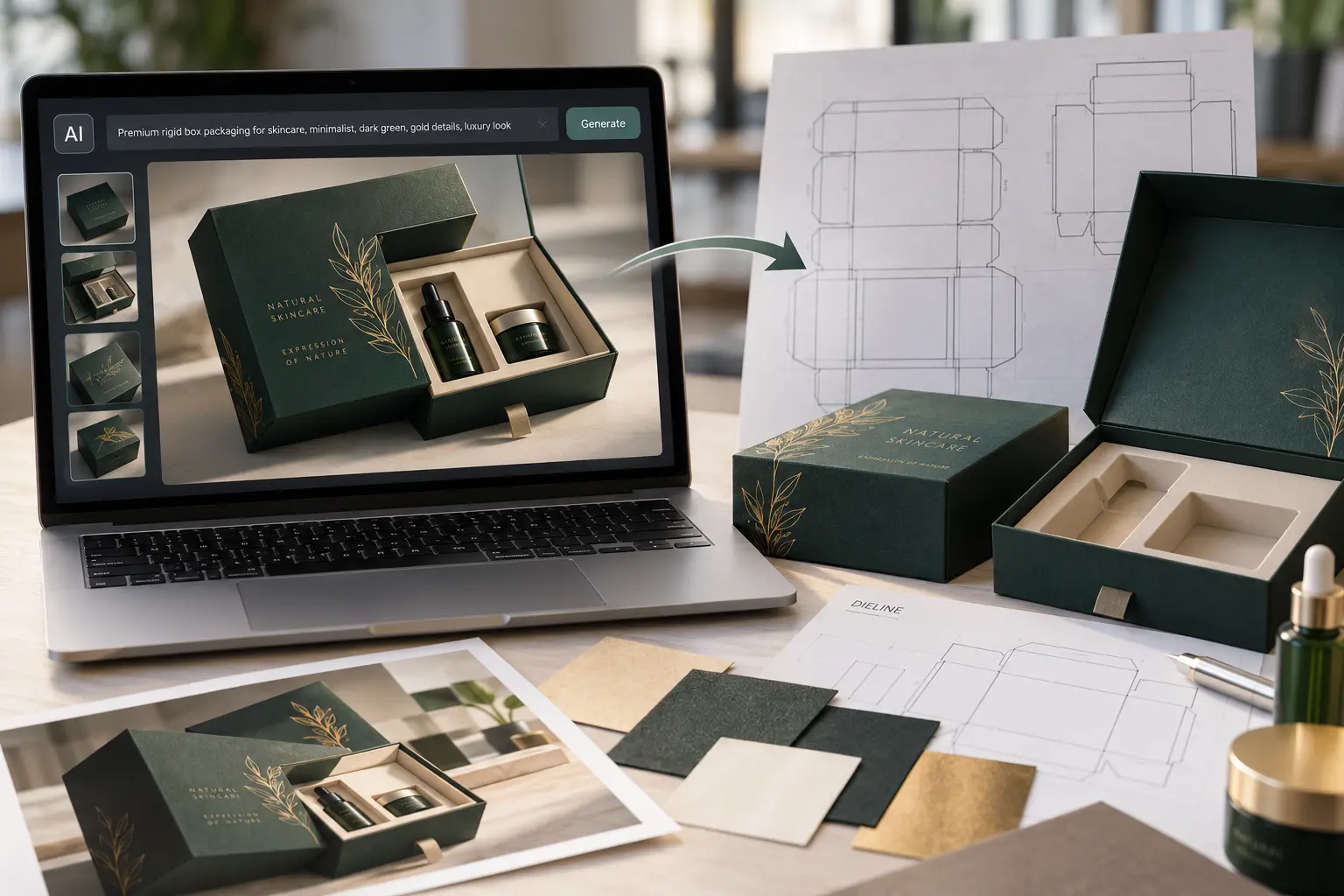
If you’re developing custom packaging, it’s worth working with specialists who understand both the technical and visual side. For example, DST Pack offers a dedicated packaging design service that helps brands translate ideas into production-ready packaging, avoiding costly mistakes along the way.
Because once you go into production, changes are no longer cheap.
When a Tuck Box Is the Right Choice
Tuck boxes make the most sense when you need packaging that is scalable, cost-efficient, and visually flexible.
If your product is relatively lightweight and doesn’t require heavy-duty protection, a tuck box is often the smartest option. It’s especially effective for retail environments where shelf appearance matters just as much as functionality.
They’re also ideal if you’re producing in higher volumes. The structure is optimized for efficient manufacturing and packing, which becomes more important as your business grows.
However, if your goal is to create a luxury, gift-oriented experience, you might need something more rigid and substantial. Tuck boxes can still look premium—but there’s a limit to how far you can push them before another format becomes more suitable.
Why the Manufacturer You Choose Matters
Two tuck boxes can look identical in photos but perform completely differently in reality.
The difference usually comes down to the manufacturer.
Precision in die-cutting, consistency in printing, and the quality of materials all play a role in the final result. Even small misalignments can affect how the box closes, how it feels, and how your brand is perceived.
That’s why many businesses prefer working with experienced partners like DST-Pack, who not only produce packaging but also help optimize it—from structure to cost efficiency.
Because good packaging isn’t just about appearance. It’s about reliability at scale.
Final Thoughts
Tuck boxes might seem simple, but that simplicity is exactly what makes them powerful.
They’re cost-effective without looking cheap, flexible without being complicated, and strong enough for most retail applications. For many products, they offer the perfect balance between practicality and presentation.
But like any packaging solution, the real impact comes from how well it’s executed. The right structure, the right material, and the right design can turn a basic tuck box into something that actually sells your product.
And that’s ultimately the goal—not just to package the product, but to support the brand behind it.