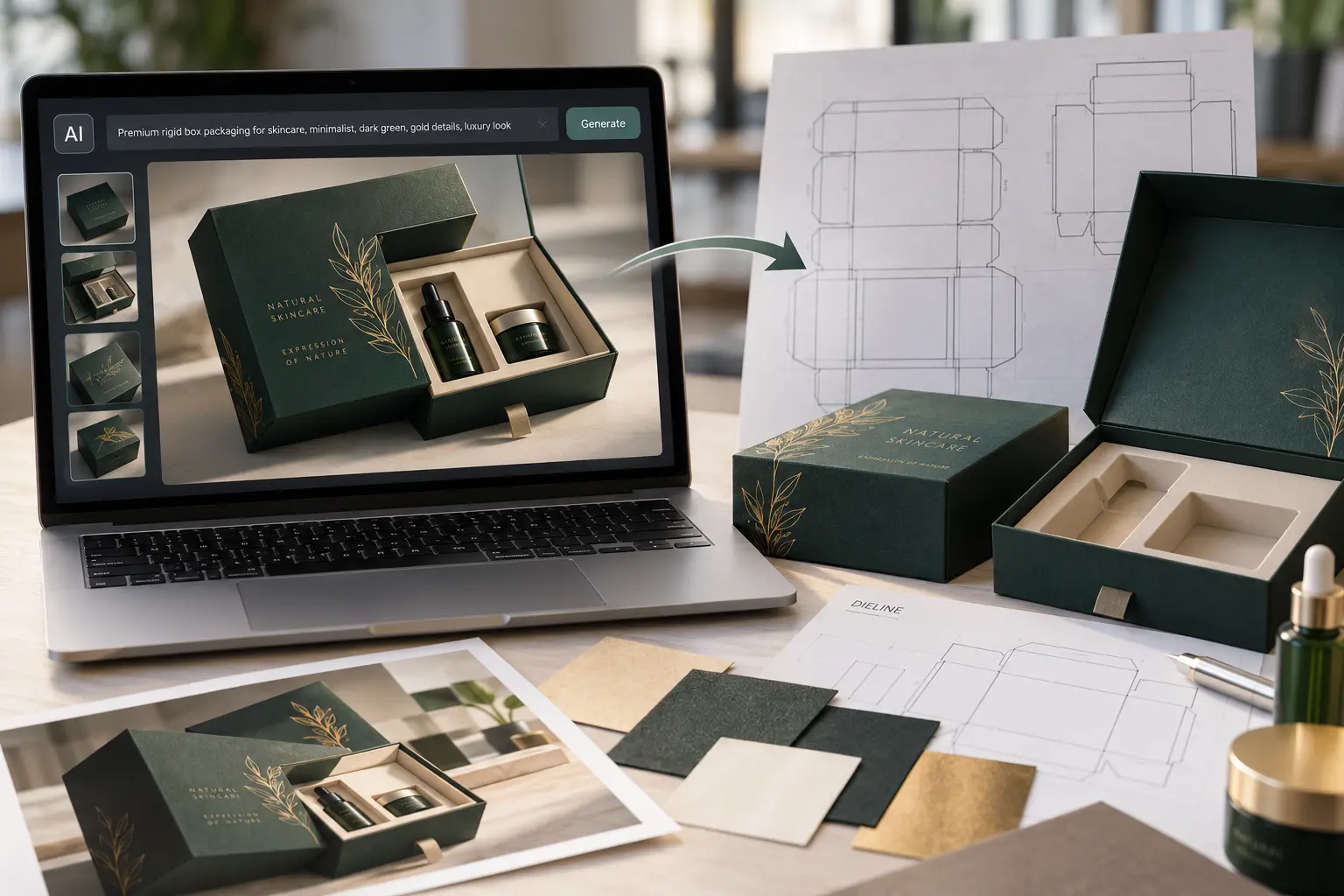
Your packaging is often the first physical interaction a customer has with your brand. It’s more than a container. It’s a handshake, a first impression, and a promise of what’s inside. For a new founder, getting this right is essential, but figuring out how to find a packaging supplier can feel like a monumental task. This guide breaks down the process into clear, manageable steps, helping you move from a great product idea to a memorable unboxing experience.
First Steps: Defining Your Brand’s Packaging Needs
Before you even think about contacting a supplier, you need a clear plan. Great packaging starts with a detailed brief, much like ordering a custom-fit suit for your product. You wouldn’t ask a tailor to make a suit without providing measurements, and the same principle applies here. Start by documenting your product’s exact specifications: its dimensions, weight, and fragility. These details determine whether a simple folding carton will suffice or if you need the protection of custom rigid boxes.
Next, connect your material choices to your brand’s identity. Is your brand accessible and eco-conscious? Simple cardstock might be the perfect fit. Are you positioning yourself in the luxury market? Then textured papers, foils, and embossing will communicate that premium feel. This isn’t just about looks. It’s about aligning the packaging with your product’s price point and the expectations of your target customer. For example, the requirements for our cosmetic packaging solutions often involve intricate inserts and premium finishes to protect delicate products and convey elegance.
Now, let’s talk about the financial realities of a brand launch. You will encounter the term Minimum Order Quantity, or MOQ. This is the smallest number of units a manufacturer will produce in one run, and it directly affects your per-unit cost. Creating a realistic budget is critical. It must account for production, design fees, sampling, and shipping. Founders often find that managing these initial costs is a common hurdle, and as noted by resources on topics like small business loans for cash flow, exploring financing can provide valuable strategies for managing upfront expenses. To finalize your brief, consider these essential elements:
- Visuals: Where will your logo go? What are your exact brand colors, specified with Pantone codes? Which fonts will you use?
- Functionality: Think about the customer’s experience. Would a magnetic closure add a premium touch? Does a ribbon pull make it easier to open? Do you need custom inserts to hold products securely or a die-cut window to offer a sneak peek?
Building Your List of Potential Suppliers

With your detailed brief in hand, you can transition from internal planning to active research. Your goal is to create a longlist of potential partners. Start by using specific search terms like “luxury packaging manufacturer” or “custom cosmetic packaging supplier” on search engines and B2B platforms. Industry trade shows are also invaluable, offering a chance to feel the materials and see construction quality up close, a sensory experience that a website can’t replicate.
A critical decision you’ll face is whether to work with a domestic or international supplier. This choice involves significant trade-offs for your brand launch packaging. There is no single right answer, as the best path depends on your priorities for budget, speed, and control.
| Factor | Domestic (U.S.) Supplier | International (e.g., Asia) Supplier |
|---|---|---|
| Cost | Generally higher unit and tooling costs | Often lower unit costs, especially at high volumes |
| Lead Time | Shorter shipping times (days to a week) | Longer shipping times (weeks to months) |
| Communication | Easier collaboration in the same time zone and language | Potential time zone and language barriers |
| Quality Control | Easier to visit facilities and oversee production | Relies on remote communication and third-party inspection |
| Flexibility | Often more accommodating for smaller MOQs | Typically requires larger order volumes |
As you build your list, platforms like Alibaba note that specific regions are hubs for different manufacturing types, which can help narrow an international search. Once you have a list, begin pre-qualifying candidates. Review their websites for portfolios, client testimonials, and clear evidence of specialization in your product category. Do they have experience with food-grade materials for chocolates or anti-tarnish solutions for jewelry? Seeing a diverse portfolio, like the examples in our packaging categories, helps you understand what’s possible. Your goal is to narrow your longlist to 5-10 strong contenders. Finally, consider the value of an integrated service provider. Some companies just make boxes. Others offer structural design, graphic design, and logistics. For a lean startup, a partner who manages the entire process saves time and prevents the headache of coordinating multiple vendors.
How to Vet and Compare Your Shortlisted Suppliers
Now you move from discovery to due diligence. This is where you separate the contenders from the pretenders based on tangible evidence. The first and most important step is to request samples. This is non-negotiable. It’s crucial to differentiate between a generic sample, which shows you their general print and material quality, and a custom prototype of your actual design. The prototype is your chance to test the structure, fit, and finish before committing to a full production run. It’s the only way to avoid that sinking feeling of unboxing a thousand units that don’t quite fit your product.
Once you have samples, you’ll receive quotes. Don’t just look at the per-unit price. Create a simple spreadsheet to compare all associated costs: tooling or die plate fees, setup charges, payment terms, and estimated shipping. This reveals the true total cost of your first order. A quote that looks cheap at first glance might hide fees that make it more expensive in the end. This level of detail is especially important for intricate projects, like the work required for our custom jewelry packaging, where precision is paramount.
Think beyond your first order. Ask potential suppliers if they can handle increased volumes as your brand grows. A partner that can’t scale with you will force a disruptive and expensive switch down the road. Finally, pay close attention to their communication style. How quickly and clearly did they respond to your request for a quote? Did they ask thoughtful questions to better understand your project? Their behavior during this initial “courtship” phase is a strong indicator of how they will perform as a partner when you’re facing a tight deadline. A responsive and proactive supplier is a valuable asset for any business, especially when creating custom packaging for small business needs.
Critical Questions for Your Final Candidates
After narrowing your list to two or three finalists, it’s time for a detailed discussion. This is your opportunity to lead the conversation and get the specific information you need to make a confident decision. Don’t be passive. The quality of their answers, and their willingness to answer transparently, will reveal their expertise and reliability. Here are the critical questions you should be asking.
1. Regarding Timelines: “What is your standard lead time for a first production run after the final sample is approved? Can you provide a timeline that breaks down the design, prototyping, production, and shipping stages?” This question tests their project management and sets clear expectations from the start.
2. Regarding Quality Assurance: “What does your quality control process involve? How do you identify and handle defects or printing errors, and what is your policy on remakes or credits?” A good partner will have a clear, documented process, not just a vague promise to “make it right.”
3. Regarding Design and Engineering: “Do you have an in-house structural design team that can help optimize our dieline for manufacturing? Can your team provide guidance on material selection to meet our budget and quality goals?” This separates a simple printer from a true packaging expert who can add value to your design.
4. Regarding Industry Expertise: “Can you share examples of packaging you have produced for brands in the cosmetics or confectionery industry? What are some common challenges you help brands in our sector overcome?” Asking for examples in related fields, such as their work on our custom gift boxes for businesses, helps gauge their versatility and problem-solving skills.
Selecting a Partner for Long-Term Success
At this final stage, it’s important to shift your mindset. You are not just buying boxes. You are choosing a partner who will be responsible for your brand’s physical identity. There is a clear distinction: a supplier fulfills an order, while a partner invests in your brand’s success by providing expertise, guidance, and support.
The value of a partner who offers end-to-end services cannot be overstated. For a founder juggling a dozen priorities, having one point of contact for structural design, graphic design, production, and global delivery is a significant advantage. It streamlines the entire process, ensures consistency, and saves your most valuable resource: time.
Think about your brand’s future. The right partner not only meets the needs of your initial launch but also has the capacity to support future product lines, seasonal campaigns like custom advent calendars, and the larger volumes that come with growth. Your final decision is an investment. The right packaging partner delivers a solution that protects your product, creates a memorable unboxing experience, and helps solidify your brand’s place in a competitive market from the very first sale. To see what a full-service packaging partner can offer, you can explore the solutions on our website.