How the Modern World Is Moving from Plastic and Glass to Paper-Based Packaging in Categories Where It Was Once Considered Impossible
Written by CEO of DST-Pack – Stanislav Krykun
There are moments in industrial history when a material shift happens quietly at first, then suddenly becomes unavoidable. Packaging today is going through exactly that kind of transformation. What makes this shift particularly interesting is not that paper is replacing plastic in simple applications like bags or boxes — that has already happened. The real story is something far more disruptive: paper is now entering categories that were historically considered impossible to convert.
Alcohol bottles, cosmetics containers, premium beverages, and even high-barrier liquid products are now being redesigned using fiber-based materials. In other words, paper is no longer just secondary packaging. It is becoming primary packaging — the actual container holding the product.
This shift is not driven by aesthetics. It is driven by regulation, logistics cost pressure, carbon reporting requirements, and a fast acceleration in material science.
The Hidden Forces Driving the Shift Away from Plastic and Glass
For decades, packaging choices were driven by cost and functionality. Plastic won because it was cheap and flexible. Glass dominated premium categories because it felt safe, inert, and “luxury.”
Today, both assumptions are being challenged simultaneously.
Plastic is under regulatory pressure worldwide. The European Union’s directives on single-use plastics and packaging waste are forcing brands to redesign entire supply chains. Extended Producer Responsibility (EPR) laws are making brands financially responsible for the full lifecycle of packaging waste.
Glass, on the other hand, is becoming economically inefficient. It is heavy, energy-intensive to produce, and extremely costly in global logistics. In a world where carbon footprint per shipment is becoming a KPI, glass is no longer neutral — it is a liability.
Paper sits in a very unusual position between these two extremes. It is renewable, lightweight, scalable, and increasingly engineered to behave like plastic or glass.
This is why the packaging industry is undergoing one of its fastest material transitions in modern history.
What “Paper Packaging” Actually Means in 2026
A common misunderstanding is that paper packaging simply means cardboard boxes. That is no longer true.
Modern paper-based packaging is a composite engineering system. It combines fiber, coatings, barrier layers, and structural design to create materials that can hold liquids, resist oxygen, and survive transport stress.
Typical components include:
Molded fiber structures derived from wood pulp, cellulose-based barrier layers, water-based coatings, and in some cases ultra-thin bio-polymers that enable liquid resistance.
This is why paper can now enter categories like wine, spirits, cosmetics, and even pharmaceuticals — categories that were previously fully locked into glass or plastic.
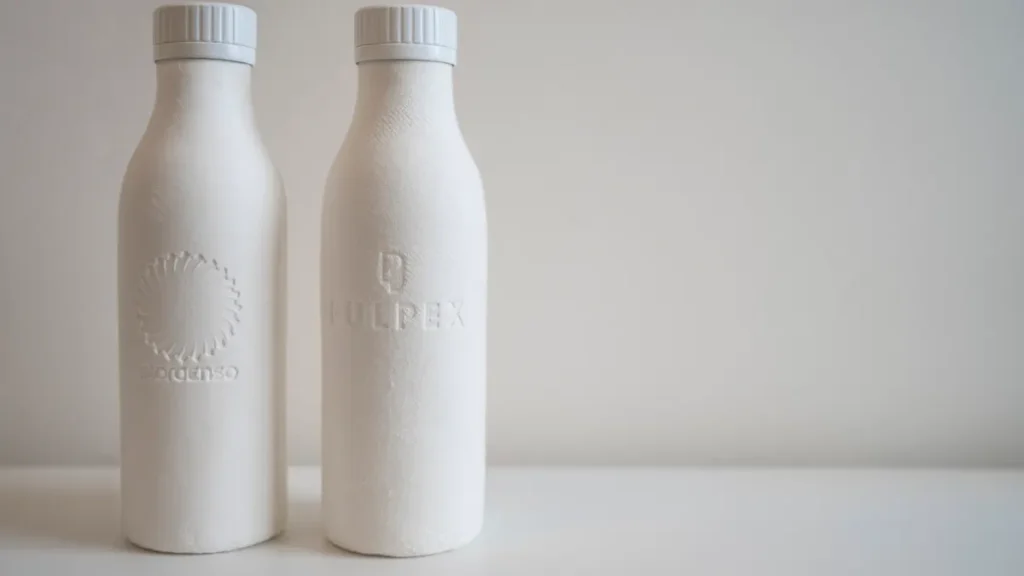
Case Study: The Rise of Paper Bottles in Alcohol Packaging
One of the most symbolic disruptions in packaging is happening in the alcohol industry. Glass has dominated this category for centuries. It communicates premium quality and ensures chemical stability. But it is also one of the least efficient materials from a logistics and carbon perspective.
A major breakthrough came with companies developing fiber-based bottle systems designed to replace glass entirely.
One of the most important players in this space is Pulpex, a UK-based company backed by Diageo, Unilever, and PepsiCo. Pulpex has developed a molded fiber bottle designed for liquids, including beverages and spirits.
The ambition is not niche experimentation. The goal is mass substitution of glass in selected product categories.
Diageo, the owner of brands like Johnnie Walker, has actively explored paper-based bottle prototypes in its sustainability innovation pipeline. While products such as Johnnie Walker Red Label remain glass-based in retail, internal innovation programs have tested fiber bottle concepts for future deployment.
This is important because whisky is one of the most conservative packaging categories in the world. If paper enters whisky, it can enter almost anything.
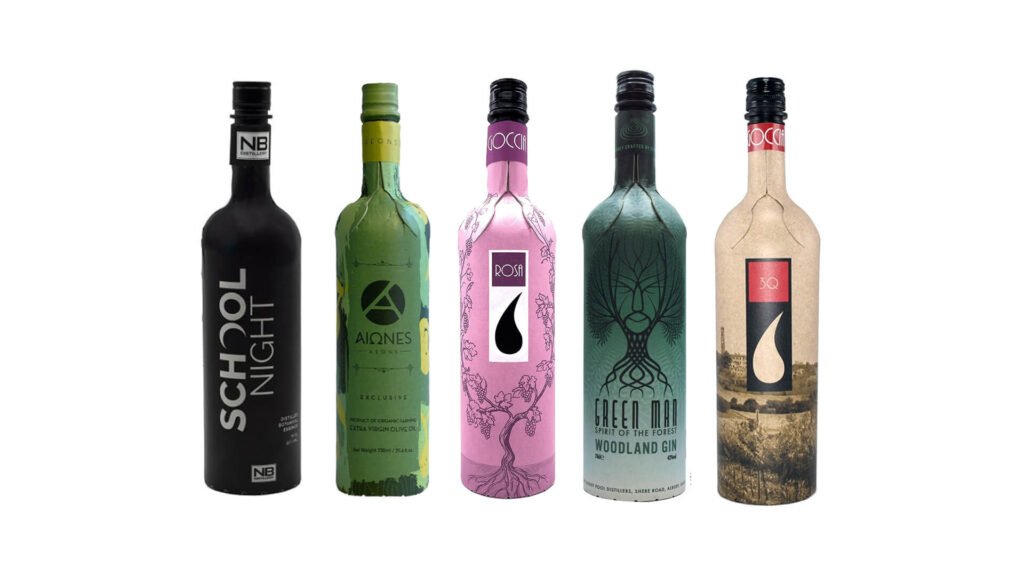
Case Study: Frugalpac and the Hybrid Paper Bottle
Another major innovation comes from Frugalpac, a UK company that developed a paper bottle for wine and spirits using a recycled cardboard shell and a food-grade inner liner.
Unlike fully molded fiber systems, this approach uses a hybrid structure: paper provides the outer shell while a thin internal barrier ensures liquid safety.
This model has already been adopted by multiple wine producers, especially in markets where sustainability positioning directly affects retail pricing and brand perception.
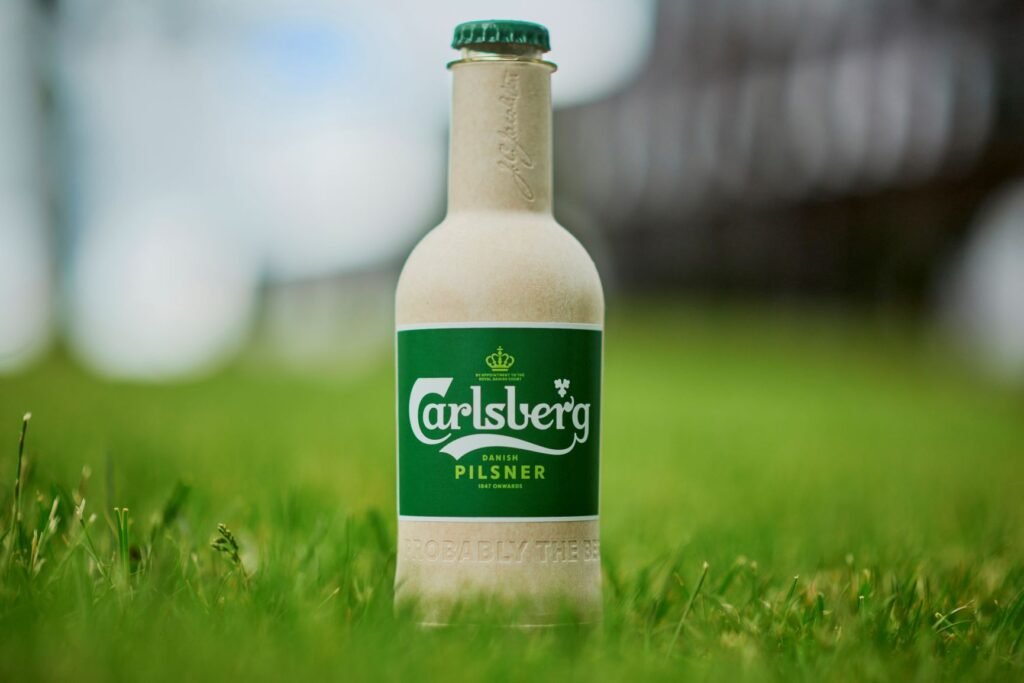
Case Study: Carlsberg and the Paper Beer Bottle
The beer industry is another extreme test case. Carbonation pressure, oxygen sensitivity, and shelf stability make beer packaging highly complex.
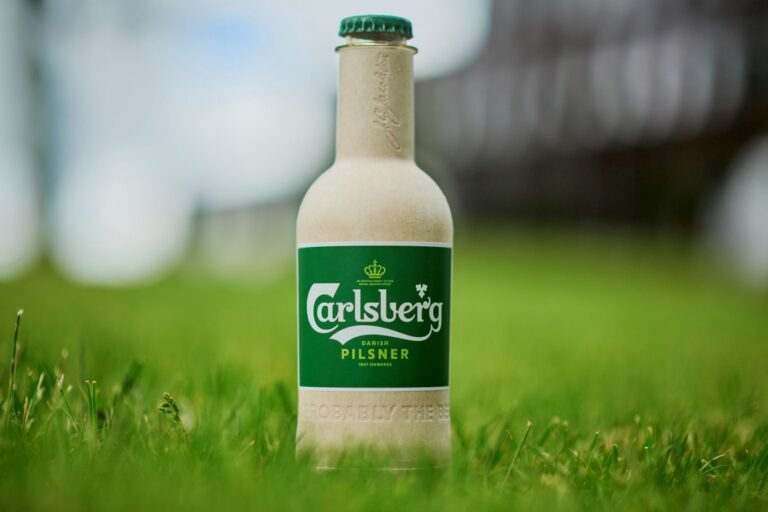
Carlsberg Group has been one of the most visible innovators here, developing paper-based beer bottle prototypes as part of its sustainability strategy.
The structure combines fiber-based shells with internal barrier systems designed to maintain carbonation integrity.
While not yet fully commercial at scale, it represents a serious attempt to move one of the most challenging beverage categories away from glass.
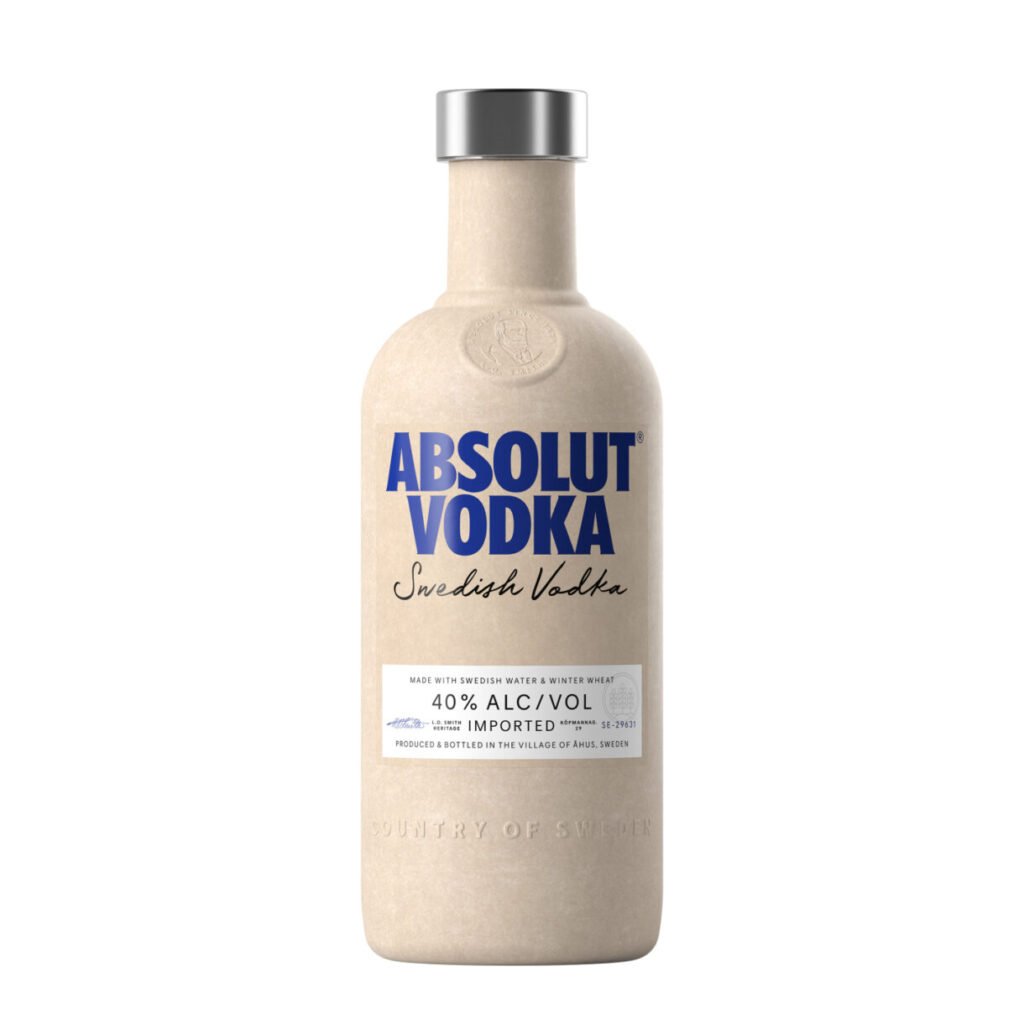
Case Study: Absolut and Paboco
The Paper Bottle Company (Paboco) is one of the most advanced collaborative platforms in this industry.
Together with Absolut, Paboco has developed paper-based vodka bottles aimed at replacing glass in premium spirits packaging.
This is particularly significant because vodka packaging is deeply tied to brand identity and perceived purity. Moving this category into paper requires not just engineering innovation, but psychological redesign of consumer perception.
Cosmetics: The Quiet Revolution
While beverages attract attention, cosmetics may actually be the faster-moving category.
Companies like L’Oréal are actively investing in paper-based tubes, refill systems, and fiber-based containers.
Cosmetics present a different challenge: chemical compatibility. Creams, oils, and serums require stable barrier systems that prevent contamination and evaporation.
This has led to the rise of hybrid paper-plastic systems that maintain performance while reducing plastic usage significantly.
Why Glass Is No Longer Safe as a Default Material
Glass has traditionally been seen as a premium and safe packaging material because it is chemically inert, visually high-end, and preserves product integrity well. For decades it was the default choice for beverages, cosmetics, and food products.
However, in modern supply chains, its disadvantages are becoming more important than its benefits. The biggest issue is weight—glass is significantly heavier than alternative materials, which increases transport costs and carbon emissions across global logistics networks. When scaled to millions of units, this becomes a major cost driver.
Another key problem is fragility. Breakage during transport, warehousing, or last-mile delivery leads to product loss, extra packaging, and higher insurance and operational costs. In addition, glass production itself is highly energy-intensive, requiring very high temperatures and generating substantial CO₂ emissions.
As logistics systems become more optimized and sustainability regulations tighten, glass is no longer automatically the safest default choice—it is increasingly a trade-off between brand perception and system efficiency.
Plastic Is Losing Its Structural Monopoly
Plastic still dominates many categories due to cost and flexibility. However, regulatory frameworks are actively reducing its dominance.
The EU Packaging and Packaging Waste Regulation (PPWR) is forcing companies to rethink entire material strategies.
At the same time, brand perception is shifting. Consumers increasingly associate plastic with low value and environmental harm.
Where Paper Still Fails
Despite rapid innovation, paper is not a universal replacement, as mentioned by me to Anna Kinder’s article on “The Food Institute”
Despite rapid innovation, paper-based packaging is not a universal solution. It still struggles with long-term liquid containment, especially for products requiring extended shelf life or high barrier protection. High humidity environments can also weaken structural integrity, limiting its use in certain climates and supply chains. Another challenge is recycling complexity—many “paper” solutions are actually multi-layer hybrids combining fiber with coatings or thin plastic barriers, which can reduce recyclability depending on local infrastructure.
This means the transition away from plastic and glass is not absolute or immediate. It is gradual, hybrid, and highly dependent on application and system design rather than a simple material replacement.
The Branding Effect of Paper Packaging
One of the most underestimated drivers of the shift toward paper-based packaging is branding. While sustainability and regulation are often presented as the main forces, brand perception is equally powerful in accelerating adoption.
Paper packaging has become a visual signal of modernity, responsibility, and innovation. It immediately communicates that a brand is aligned with environmental thinking and forward-looking design. In many categories, especially premium and DTC brands, this perception is now a key part of product positioning.
It also significantly changes the unboxing experience. Compared to plastic or glass, paper-based structures feel more tactile, natural, and emotionally engaging. The texture, sound, and unfolding process all contribute to a more deliberate and memorable interaction with the product.
For premium brands, this is no longer just a compliance decision—it is a strategic branding advantage that directly influences customer perception and loyalty.
The Real Future: Material Hybridization
The future of packaging is not a simple switch where paper replaces plastic or glass entirely. Instead, it is moving toward material intelligence—choosing the right combination of materials based on performance, cost, and environmental impact. Paper, bio-polymers, and advanced coatings will increasingly work together as integrated systems rather than competing alternatives.
In this model, packaging becomes modular. The outer structure may be fiber-based for sustainability and branding, while internal layers provide barrier protection, moisture resistance, or structural reinforcement. Bio-based films and coatings will replace traditional plastics in many cases, but only where they are functionally required.
This shift means packaging design will no longer be material-led, but system-led. Engineers and brands will design solutions based on product behavior, logistics conditions, and regulatory constraints rather than choosing a single “best” material. As a result, packaging will become more adaptive, efficient, and optimized for both performance and environmental responsibility.
Industrial Execution Matters More Than Innovation
The biggest bottleneck in packaging innovation is not invention, but scaling. Many paper-based or sustainable packaging concepts look impressive at prototype stage, but fail when exposed to real-world production demands. Consistency, speed, cost control, and quality stability across millions of units are far more difficult to achieve than designing a single successful prototype.
Even the most advanced paper bottle or fiber-based container is meaningless without reliable industrial execution and integration into existing supply chains. Material innovation only becomes commercially relevant when it can be manufactured at scale, shipped efficiently, and adopted without disrupting logistics systems.
Companies such as DST-Pack packaging manufacturer are part of the ecosystem translating material innovation into scalable commercial packaging systems for global brands.
Conclusion: A Structural Shift, Not a Trend
The movement from plastic and glass to paper is not a sustainability trend. It is a structural redesign of global packaging systems driven by regulation, economics, and material science.
What makes this shift powerful is not that it replaces materials — but that it redefines categories once considered impossible to change.
Alcohol, cosmetics, beverages, and even high-barrier liquids are no longer fixed in glass or plastic logic. They are now open systems of material experimentation.
The question is no longer whether paper can replace plastic or glass. The question is how fast global supply chains can adapt to a world where packaging is no longer a material decision — but a system design decision.