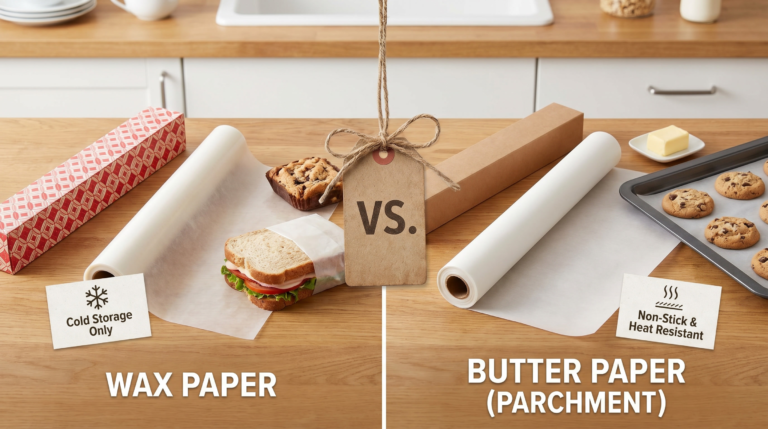
Wax paper and butter paper are two materials that are often confused with each other, especially in food packaging, baking, and product wrapping. At first glance, they may look almost identical—both are thin, flexible, and semi-translucent sheets used for wrapping or separating food. However, their properties, coating methods, and ideal applications are quite different.
Understanding the difference between wax paper and butter paper is important not only for home use, but also for food businesses, bakeries, and packaging companies that need the right material for product protection and presentation.
What Is Wax Paper?
Wax paper is a type of paper that has been coated with a thin layer of wax, usually paraffin or soybean-based wax. This coating makes the paper moisture-resistant and non-stick, which is why it is commonly used in food preparation and short-term food storage.
The wax coating prevents water and grease from passing through the paper, making it useful for wrapping foods that contain moisture or oil. However, wax paper is not heat-resistant, which means it should not be used in ovens or microwaves where high temperatures are involved.
Because of its smooth surface and protective barrier, wax paper is often used to wrap sandwiches, line trays, separate baked goods, or wrap items for temporary storage.
What Is Butter Paper?
Butter paper, also known as baking paper or parchment paper in some regions, is specially treated paper designed to withstand heat. Unlike wax paper, it is usually coated with silicone rather than wax, which makes it both non-stick and heat-resistant.
This heat resistance is the key difference. Butter paper can be used in ovens, making it ideal for baking applications such as cookies, pastries, and cakes. It prevents food from sticking to baking trays and reduces the need for additional grease or oil.
In addition to baking, butter paper is also used in food wrapping, especially in bakery packaging where grease resistance and heat tolerance are important.
Key Differences Between Wax Paper and Butter Paper
Although they may appear similar, wax paper and butter paper are designed for different purposes. The most important distinction lies in their coating and heat resistance.
Wax paper is coated with wax, which makes it moisture-resistant but not suitable for heat exposure. Butter paper is coated with silicone, which allows it to withstand high temperatures without melting or burning.
This difference determines how each material is used in real-life applications. Wax paper is better for cold or room-temperature uses, while butter paper is essential for baking and cooking processes.
Common Uses of Wax Paper
Wax paper is widely used in food preparation and packaging where heat is not involved. It is commonly used to wrap sandwiches, cheese, and cold snacks because it helps maintain freshness and prevents sticking.
It is also frequently used in kitchens for separating layers of baked goods such as cookies or pastries, preventing them from sticking together during storage or transport.
In addition to food use, wax paper is sometimes used in crafts and light industrial applications where a non-stick, moisture-resistant surface is needed.
Common Uses of Butter Paper
Butter paper is primarily associated with baking and cooking. It is placed on baking trays to prevent food from sticking and to make cleaning easier after baking.
It is also widely used in professional bakeries for wrapping baked goods such as bread, cakes, and pastries. Because it is heat-resistant and grease-resistant, it helps maintain product quality and appearance.
In modern food packaging, butter paper is also used as an inner wrapping layer for premium bakery items, adding a clean and hygienic presentation while protecting the product.
Which One Is Better for Food Packaging?
The answer depends entirely on the application. Wax paper is better suited for short-term cold food storage and wrapping, while butter paper is the preferred choice for baking and heat-related processes.
For food businesses, choosing the right material can directly affect product quality and customer experience. Using wax paper where heat resistance is required can lead to failure, while using butter paper for cold storage may be unnecessary and more expensive.
In professional packaging environments, both materials are often used together in different stages of production and presentation.
Role in Modern Packaging
Wax paper and butter paper are both important materials in the broader packaging industry, especially in food-related sectors such as bakeries, confectionery, and takeaway packaging.
They are often used as internal wrapping layers, helping protect products from moisture, grease, and contamination while improving presentation. In premium packaging solutions, these materials are carefully selected based on product type and brand positioning.
Many packaging manufacturers integrate wax or butter paper into custom box designs to improve both functionality and aesthetics. For example, bakery boxes often include a butter paper lining to ensure cleanliness and enhance product presentation.
Companies such as DST-Pack develop custom packaging solutions where materials like these are combined with structural design to meet both practical and branding requirements.
Environmental Considerations
In recent years, sustainability has become an important factor in choosing packaging materials. Traditional wax paper is not always recyclable due to its wax coating, depending on the type of wax used. Butter paper, especially silicone-coated versions, may also have recycling limitations depending on local facilities.
As a result, there is growing interest in eco-friendly alternatives such as compostable baking paper and biodegradable coatings. Many manufacturers are now developing more sustainable versions of both wax and butter paper to reduce environmental impact.
Conclusion
Wax paper and butter paper may look similar, but they serve very different purposes. Wax paper is ideal for moisture resistance and cold food applications, while butter paper is designed for heat resistance and baking.
Choosing the right material is essential for food safety, product quality, and packaging performance. Whether used in home kitchens or commercial food production, both materials play an important role in modern food handling and presentation.
For businesses working with custom food packaging solutions, partnering with an experienced supplier such as DST-Pack packaging manufacturer ensures the right combination of materials and design for optimal product performance and presentation.