Most people think packaging starts with a box and ends with a print file. In reality, the modern packaging process—especially for custom rigid boxes—is much closer to product engineering than simple graphic design. This is where 3D packaging design becomes essential. It allows brands and manufacturers to see, test, and refine packaging before anything is physically produced, reducing errors, saving time, and improving the final customer experience.
At DST-Pack, 3D packaging design is not just a visual add-on. It is a core part of how we develop rigid boxes for brands in cosmetics, food, electronics, and luxury goods. It connects structure, material, branding, and functionality into one realistic digital model that behaves like the real product.
What 3D Packaging Design Actually Is
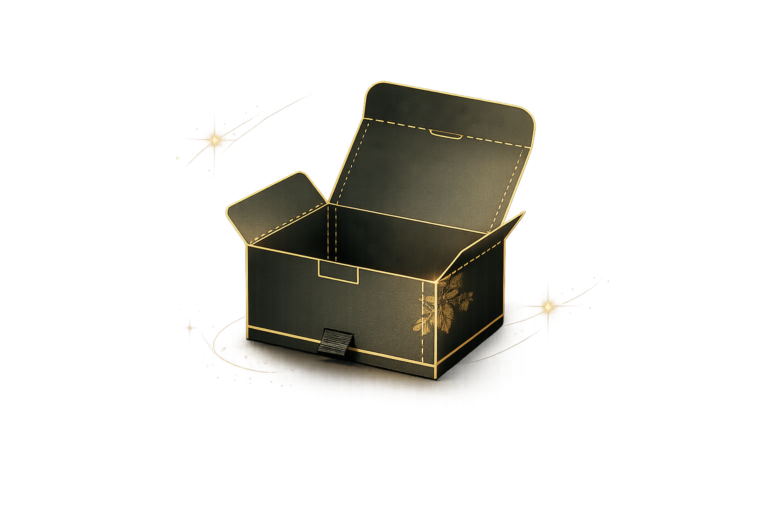
3D packaging design is the process of creating a digital, fully dimensional model of a box or packaging structure before it is manufactured. Unlike flat graphic layouts or dielines, a 3D model allows you to rotate, open, close, and inspect the packaging from every angle.
It combines structural engineering with visual design. That means the thickness of cardboard, folding mechanics, magnetic closures, drawer movement, inserts, and even textures can be simulated digitally. This helps brands understand not only how the packaging will look, but also how it will behave in real life.
In industries like cosmetics or premium gifting, where packaging is part of the product experience, 3D design is no longer optional—it is a standard step in development.
Why 3D Packaging Design Matters for Brands
One of the biggest problems in traditional packaging development is the gap between idea and reality. A flat design may look perfect on screen, but once it is produced, proportions, depth, or usability issues often appear. Fixing these mistakes after production starts can be expensive and time-consuming.
3D packaging design eliminates most of these risks early in the process. Brands can immediately see whether a box feels too large, whether an insert fits correctly, or whether opening mechanisms work smoothly. It also helps marketing teams visualize how the final product will look on shelves or in unboxing videos.
Another important advantage is communication. Instead of sending technical drawings back and forth between designers, engineers, and clients, a 3D model becomes a universal reference point that everyone understands instantly.
The Step-by-Step Process of 3D Packaging Design
While every manufacturer has slightly different workflows, professional 3D packaging design usually follows a structured process. At DST-Pack, we use a refined version of this system to ensure accuracy and speed.
1. Understanding the product and purpose
Everything starts with the product itself. A rigid box for cosmetics will have completely different requirements compared to packaging for chocolates or electronics. At this stage, dimensions, weight, protection needs, and branding expectations are collected.
We also define the user experience. Should the box feel premium and slow to open, or simple and functional? Should it include compartments, inserts, or magnetic closures? These decisions shape the entire structure.
2. Structural development and dieline creation
Once the requirements are clear, the structural design begins. This is where the packaging engineer creates the flat dieline—the technical blueprint of the box. It defines every fold, cut, glue point, and layer of material.
Even though this step is still 2D, it is the foundation of the 3D model. If the dieline is incorrect, the final packaging will not function properly. That is why experienced engineering is critical at this stage.
3. Building the 3D model
After the dieline is approved, it is converted into a 3D structure using specialized software. The flat layout is folded digitally into a real box, allowing designers to simulate how it opens, closes, and holds its shape.
At this stage, even small structural issues become visible. For example, a lid might not align perfectly, or an insert might shift too easily. These problems can be corrected instantly in digital form, long before physical samples are produced.
4. Applying materials and visual design
Once the structure is correct, the visual layer is added. This includes textures like matte lamination, soft-touch coating, embossing, foil stamping, and printed graphics.
This step is especially important for luxury rigid boxes, where material perception is as important as structure. A digital simulation can closely replicate how light interacts with different finishes, giving brands a realistic preview of the final product.
5. Rendering and presentation
The final stage is rendering. This is where the 3D model is turned into high-quality images or animations. These visuals are often used for marketing, client approval, or internal decision-making.
A good render can show how the packaging will look in real environments—on a shelf, in a hand, or during an unboxing experience. For many brands, this step replaces early physical prototypes entirely.
Tools and Technology Behind 3D Packaging Design
Modern 3D packaging design relies on specialized software that combines CAD (computer-aided design) and rendering technology. Programs like ArtiosCAD, SolidWorks, and Blender are often used depending on the complexity of the project.
However, tools alone are not enough. The real difference comes from experience in packaging engineering. Understanding how cardboard behaves, how pressure affects folds, and how different coatings react during production is what makes a design truly manufacturable.
At DST-Pack, we combine engineering knowledge with digital modeling to ensure that what you see on screen can be produced without surprises on the factory floor.
Common Mistakes in 3D Packaging Design
Even with advanced tools, mistakes can still happen if the process is not handled properly. One of the most common issues is ignoring material thickness in early modeling stages. A box that looks perfect digitally may not close properly if real-world material expansion is not considered.
Another mistake is focusing too much on visuals and not enough on structure. A beautiful render is useless if the packaging fails during production or shipping.
There is also a communication gap issue. If designers and engineers are not aligned, revisions can multiply quickly. That is why a unified process is so important.
How DST-Pack Uses 3D Packaging Design in Real Projects
At DST-Pack, 3D packaging design is integrated into almost every custom project we produce. Whether it is rigid boxes for cosmetics or custom candy packaging, the process starts digitally before any material is cut.
This approach allows us to quickly test multiple structural variations without wasting physical materials. Clients can compare different box styles, opening mechanisms, or internal layouts in a matter of hours instead of days or weeks.
We also use 3D design to improve communication with international clients. Instead of relying on technical drawings, we share realistic visuals that clearly show how the final packaging will look and function.
If you want to explore how this process can be applied to your own packaging project, you can learn more here: DST-Pack Packaging Design Service
In many cases, this early digital stage helps brands avoid costly sampling rounds and speeds up the entire production timeline significantly.
The Future of Packaging Development
3D packaging design is becoming the new standard across the packaging industry. As brands demand faster development cycles and more customization, digital prototyping is replacing traditional trial-and-error methods.
In the near future, we will likely see even more integration with AR (augmented reality), allowing brands to place virtual packaging on real shelves using mobile devices. This will make decision-making even faster and more visual.
For manufacturers like DST-Pack, this evolution is not just about technology—it is about delivering better accuracy, better communication, and ultimately better packaging solutions.
Final Thoughts
3D packaging design is more than just a visualization tool. It is a bridge between idea and production. It helps brands avoid mistakes, reduce costs, and create packaging that actually works in real life—not just on paper.
Whether you are developing rigid gift boxes, cosmetic packaging, or custom retail solutions, understanding and using 3D design early in the process can completely change the outcome of your project.
And when it is combined with real manufacturing expertise, like at DST-Pack, it becomes one of the most powerful tools in modern packaging development.