In packaging and print production, the term dieline is used constantly, yet it is often misunderstood by people outside the manufacturing process. A dieline is not a design, and it is not artwork. Instead, it is a technical blueprint that ensures packaging is produced accurately and functions as intended. Understanding what a dieline is can help brands avoid costly mistakes and speed up the production process.
This article explains what a dieline is, why it matters, and how it is used in custom packaging.
What Is a Dieline?
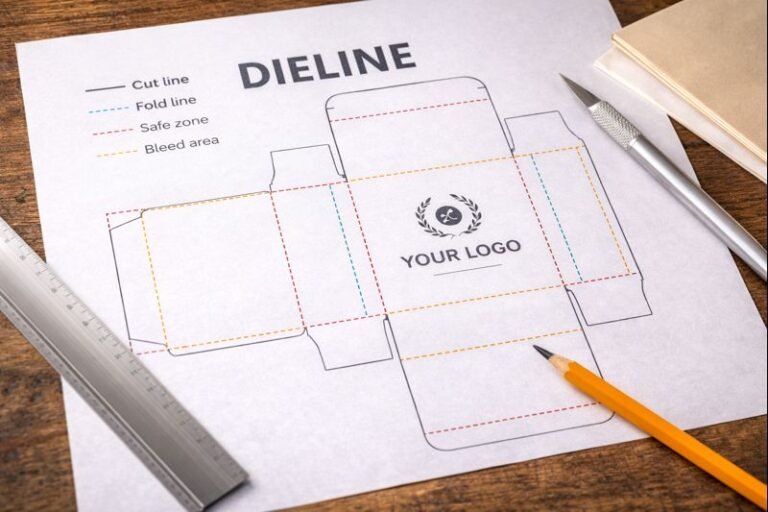
A dieline is a vector-based technical drawing that shows the exact layout of a package before it is cut, folded, and assembled. It defines the shape, dimensions, folds, cuts, glue areas, and safety zones of a box or printed product.
Think of a dieline as a flat template of a package. When printed and cut according to the dieline, it folds into the final three-dimensional structure. Without a correct dieline, packaging cannot be produced consistently or assembled properly.
Dielines are usually created in professional design software and provided as files that manufacturers, printers, and designers all work from.
What Information Does a Dieline Include?
A standard dieline includes several technical elements that guide production.
Cut lines show where the material will be cut. These are usually marked with solid lines and define the outer shape of the packaging.
Fold or crease lines indicate where the material will be folded. These lines help ensure clean edges and correct box formation.
Bleed areas show where artwork should extend beyond the cut line to prevent white edges after trimming.
Safe zones define areas where important text or logos should not be placed, ensuring they are not cut off or distorted.
Glue flaps and assembly areas indicate where adhesive will be applied during box assembly.
Each of these elements plays a critical role in ensuring the final packaging looks and functions as expected.
Why Dielines Are Essential in Packaging
Dielines ensure accuracy. Even small measurement errors can lead to boxes that do not close properly, products that do not fit, or packaging that fails during transport.
They also improve efficiency. When designers work directly on an approved dieline, printers and manufacturers can move into production without additional adjustments or delays.
For custom packaging, dielines allow brands to create unique box structures rather than relying on standard templates. This flexibility supports better product fit, improved presentation, and stronger brand differentiation.
How Dielines Are Used in the Design Process
The dieline is usually the first technical step in packaging development. Once the box structure is confirmed, the dieline is shared with the designer.
Designers place artwork directly onto the dieline, ensuring graphics align correctly with folds, openings, and visible panels. This prevents issues such as logos appearing on box edges or important text being hidden after assembly.
Before mass production, a physical sample or prototype is often created using the dieline. This allows brands to check fit, strength, and usability before approving full production.
Common Dieline Mistakes to Avoid
One common mistake is ignoring bleed and safe zones, which can result in cut-off text or uneven edges. Another is placing important design elements across fold lines, which can distort graphics.
Using outdated or incorrect dielines is also risky. Even small changes in material thickness or box size require updated dielines to maintain accuracy.