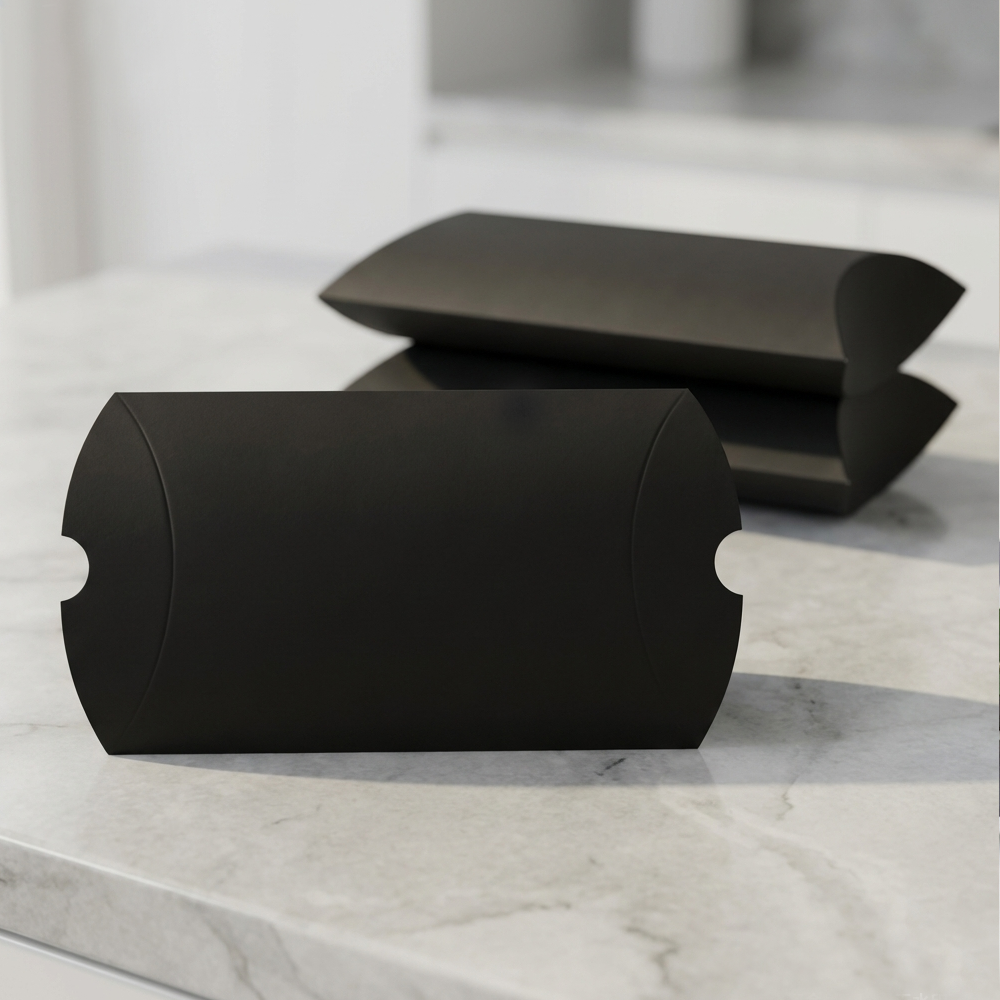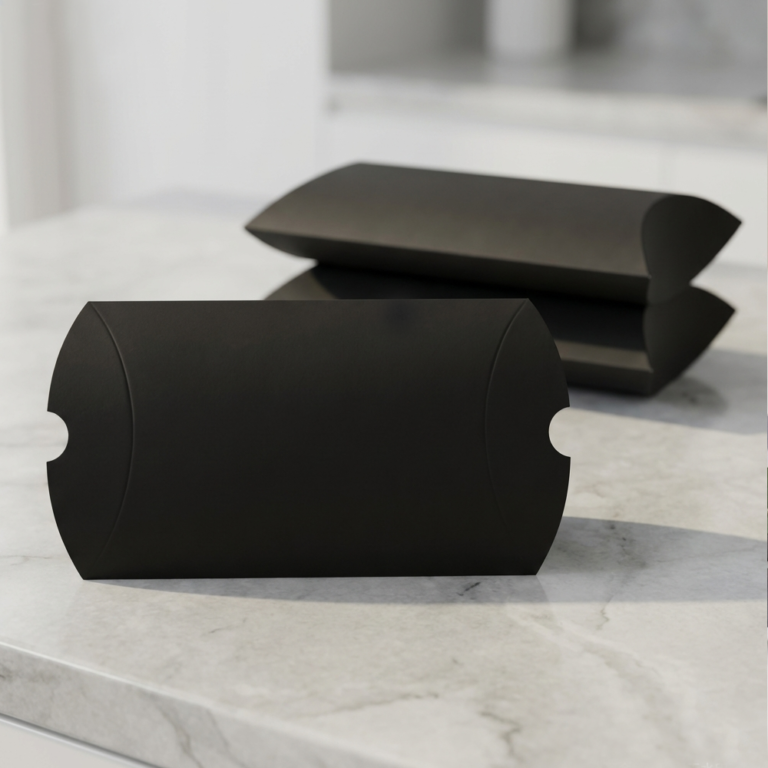
Pillow shape boxes are one of those packaging formats that seem extremely simple at first glance, but in real production they behave very differently from standard folding cartons. The curved structure, flexible sides, and compact flat storage make them popular across fashion, cosmetics, small gifts, and promotional items — especially when brands want something lightweight but still visually distinct.
What makes pillow boxes interesting is not complexity, but perception. They are technically minimal packaging, yet they often feel more “designed” than regular rectangular boxes.
And that is exactly why they keep coming back in modern packaging projects.
Why Pillow Boxes Stand Out Without Trying Too Hard
In retail and e-commerce, most packaging competes through structure — rigid boxes, magnetic closures, inserts, layers. Pillow boxes do the opposite. They remove structure wherever possible and rely on shape alone.
That curved silhouette instantly changes how a product is perceived. Even when the material is simple paperboard, the form creates a softer, more gift-like impression.
This is why pillow boxes are often used when brands want something that feels:
- personal rather than industrial
- lightweight rather than heavy packaging
- gift-oriented without looking expensive
There is also a psychological element. Rounded edges are naturally perceived as less formal and more approachable, which works especially well for smaller consumer goods.
Where Pillow Shape Packaging Actually Works Best
In practice, pillow boxes are not universal packaging. They perform best in very specific categories where size and presentation matter more than protection.
They are commonly used for small accessories, jewelry, cosmetic samples, socks, promotional kits, and seasonal gift items. In many cases, they are not meant to fully protect fragile products, but rather to complete the presentation layer of the product.
This is also where brands sometimes underestimate them. Pillow boxes are not about durability — they are about experience. If the product requires strong structural protection, this format alone is usually not enough.
But when the product is light and presentation-driven, the format works surprisingly well.
Flat Storage, But Not Always Simple Production
One of the main reasons pillow boxes became popular in e-commerce and retail supply chains is their flat shipping efficiency. They take almost no space before assembly, which makes them cost-effective to transport in bulk.
However, what looks simple in a flat layout still requires precision in die-cutting and folding behavior. The curve is not decorative — it is structural. If scoring is off even slightly, the box loses its symmetry and does not close cleanly.
This is especially visible when large volumes are produced. Small inconsistencies that are not noticeable in samples become obvious when hundreds or thousands of units are assembled.
At DST Pack, pillow box production is typically optimized around this balance between soft structure and repeatable folding performance, because consistency matters more than visual perfection in isolated samples.
The Hidden Role of Closure Style
Pillow boxes are usually closed by inserting the two curved ends into each other, but the tightness of that closure changes everything.
If the closure is too loose, the box opens too easily during transport or handling. If it is too tight, assembly becomes slow and frustrating in production or packing lines.
This is one of the most underestimated details in pillow packaging design. It affects not only functionality, but also how premium the box feels when a customer opens it.
A well-balanced closure creates a quiet but satisfying resistance — enough to feel secure, but still smooth enough to open without effort.
That small detail often defines whether the packaging feels cheap or intentional.
Why Brands Still Use Pillow Boxes in 2026
Despite the rise of more complex packaging formats, pillow boxes remain relevant because they solve a very specific problem: fast, attractive packaging with minimal material usage.
They are also highly adaptable. With the right surface finish — matte lamination, soft-touch coating, or simple kraft texture — the same structure can serve completely different brand identities.
Luxury brands sometimes use them for samples or event giveaways. Small e-commerce brands use them for cost-effective gifting. Promotional campaigns use them because they are easy to distribute and assemble on-site.
In other words, pillow boxes are not about competition with premium rigid packaging. They occupy a different space — fast, lightweight presentation packaging.
Where Pillow Packaging Can Go Wrong
The simplicity of pillow boxes is also their biggest risk. Because the structure looks easy, it is often underestimated during production planning.
Common issues include inconsistent curvature, weak fold memory, and misalignment in mass assembly. These problems usually do not appear in early samples, but become visible once production scales.
Another frequent issue is overloading the box. Pillow packaging is not designed for heavy products, and forcing it into that role almost always leads to deformation or customer dissatisfaction.
Good results come from respecting the limitations of the format rather than trying to stretch it beyond its purpose.
Final Thought: Minimal Structure, Maximum Impression
Pillow shape boxes are a reminder that packaging does not always need to be complex to be effective. When the structure is simple, every small detail becomes more visible — from folding precision to surface texture to closure behavior.
They work best when brands understand what they are for: not protection, not engineering, but presentation.
And when used correctly, they can make even a small product feel intentional and thoughtfully packaged.
Practical Production Insight
In real production, pillow boxes often sit at the intersection of speed and presentation. That means small structural decisions — curve radius, scoring depth, closure tension — have a direct impact on how the final product feels in hand.
DST-Pack works with different packaging formats like pillow boxes, folding cartons, and custom retail packaging, focusing on making sure the structure behaves consistently in mass production rather than just looking good in a prototype stage.