Advent calendars have evolved from simple holiday traditions into one of the most competitive and high-value packaging formats in modern retail. What was once a decorative Christmas product has become a strategic sales tool used by global brands in cosmetics, food, wellness, pet products, alcohol alternatives, toys, and premium gift categories.
Today, the success of an advent calendar is not determined by the products inside alone. It is determined by structure, engineering, visual hierarchy, user experience, and above all — how effectively it competes for attention in crowded retail environments during the most competitive season of the year.
This is exactly where a professional advent calendar design service becomes critical. Not as a creative add-on, but as a core part of commercial product development.
Why Advent Calendars Became a High-Performance Retail Format
The transformation of advent calendars into premium retail products did not happen overnight. It is the result of three major shifts in consumer behavior and retail strategy.
1. The shift from product to experience
Modern consumers are no longer buying just physical goods. They are buying experiences, rituals, and emotional engagement. Advent calendars perfectly match this shift because they extend the product interaction over 24 consecutive days.
2. Premiumization of seasonal gifting
Gift packaging has become a major driver of perceived value. A well-designed advent calendar allows brands to package relatively simple items into a high-margin seasonal product by elevating the unboxing experience.
3. Retail shelf competition intensification
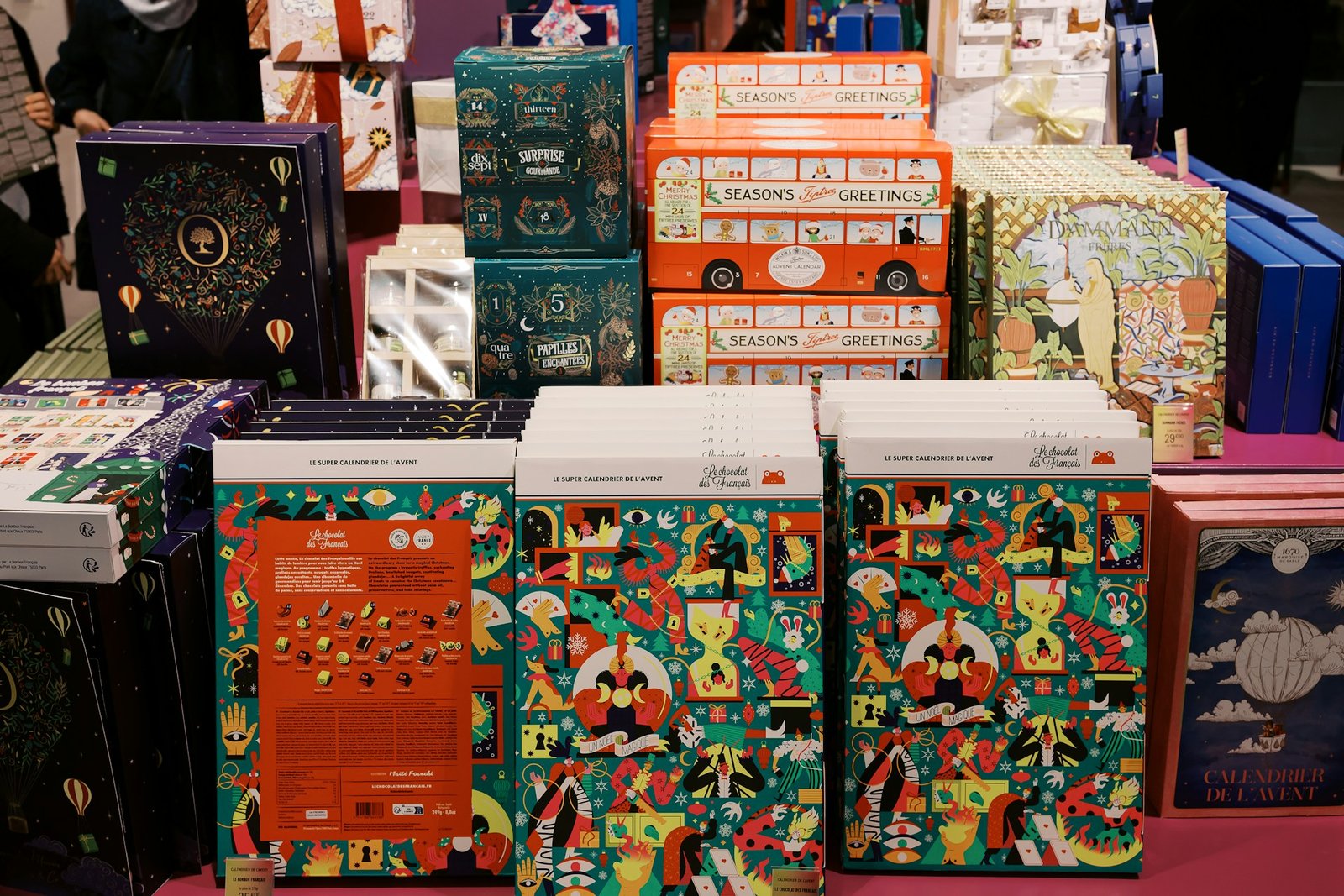
During Q4, retail shelves become saturated with seasonal SKUs. Advent calendars often occupy large physical space, meaning they must visually dominate or they will disappear among competitors.
In this environment, packaging is not decorative. It is a performance asset.
What a Real Advent Calendar Design Service Includes
Most people assume packaging design is primarily about graphics. In reality, for advent calendars, visual design is only one layer of a much more complex engineering system.
A professional advent calendar design process integrates multiple disciplines:
- Structural engineering and material behavior
- Compartment logic and product mapping
- Opening mechanisms and user interaction design
- Weight distribution and transport durability
- Visual storytelling and brand hierarchy
- Production feasibility and cost optimization
These elements are interdependent. Changing one affects all others. That is why successful advent calendar development must be handled as a unified system, not as separate design tasks.
At this stage, brands often realize that they need a structured approach to packaging development rather than isolated design work. This is where a professional packaging design service becomes essential, as it connects structural engineering with branding and production realities from the very beginning.
Structural Engineering: The Hidden Core of Every Advent Calendar
One of the most underestimated aspects of advent calendars is structural complexity. Unlike standard packaging, advent calendars must function as multi-unit systems with repeated interaction over time.
Each structure type introduces its own engineering challenges:
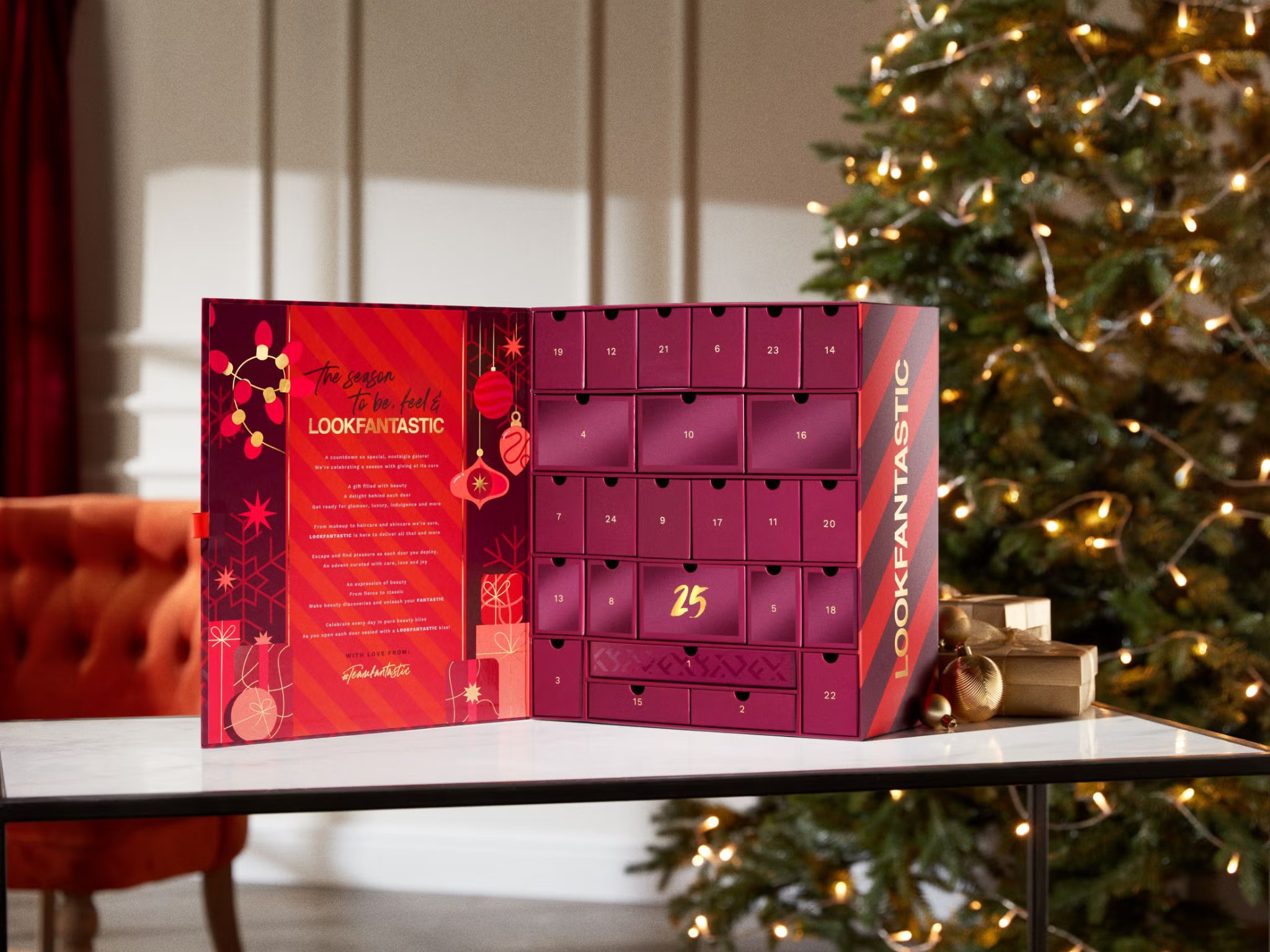
Drawer-based calendars
These require precision-controlled friction. If drawers are too loose, they open during transport. If they are too tight, users struggle with daily interaction. Material thickness tolerance becomes critical at scale.
Window or perforation-based calendars
These rely on calibrated tear strength. If perforations are too weak, they break prematurely. If too strong, they frustrate users. Humidity and storage conditions also affect performance.
Box-in-box systems
These require precise alignment and load balancing. Even slight asymmetry can affect stacking, shipping efficiency, and shelf presentation.
The key point is simple: advent calendars are not static packaging. They are mechanical interaction systems.
Retail Shelf Reality: Why Design Wins or Loses Sales Instantly
In retail environments, consumer decision-making is extremely fast. Studies in visual merchandising consistently show that initial attention capture happens within seconds, often without conscious analysis.
For advent calendars, this creates a unique challenge: they must communicate three things instantly:
- What the product is
- Why it is valuable
- Why it is worth premium pricing
If any of these signals are unclear, the product is ignored.
Successful calendars typically use strong structural silhouettes, clear focal points, and controlled color hierarchy to dominate shelf space. Overly complex designs often fail because they dilute attention rather than directing it.
Material Strategy and Perceived Value Engineering
Material selection in advent calendars is not just a production decision. It directly influences consumer perception of price and quality.
Rigid structures are typically associated with premium positioning. Folding cartons are associated with accessibility. However, the final perception depends heavily on finishing techniques.
Common finishing strategies include:
- Soft-touch lamination for tactile premium feel
- Foil stamping for visual emphasis and shelf reflection
- Embossing for physical depth and interaction
- Spot UV for controlled contrast highlighting
The challenge is not adding as many finishes as possible, but combining them strategically. Over-finishing can reduce clarity and make the product feel less premium due to visual overload.
User Experience: Designing 24 Micro-Moments Instead of One
Unlike traditional packaging, advent calendars are not consumed in a single moment. They are experienced over time, which fundamentally changes design logic.
Instead of optimizing one unboxing experience, designers must optimize 24 sequential interactions.
This introduces several UX considerations:
- Consistency across repeated interactions
- Subtle variation to prevent fatigue
- Progression and narrative development
- Ease of access without damage to structure
Some brands solve this by varying compartment sizes or introducing visual storytelling inside the structure. Others maintain uniformity but enhance emotional experience through internal graphics or messaging.
The key is maintaining engagement across time, not just at first impression.
Why Custom Design Outperforms Pre-Made Templates
Template-based advent calendars often fail in real-world applications because they assume standard product dimensions and uniform weight distribution.
In reality, no two product assortments are identical. Even small differences in product weight or size can create cascading structural issues.
Custom design allows full integration of:
- Product logic
- Structural engineering
- Brand identity
- Retail strategy
This integrated approach results in fewer production failures, better shelf performance, and higher perceived value.
Production Reality: Where Most Calendar Projects Fail
Many advent calendar projects look successful in design stage but fail during production scaling.
Common issues include:
- Material tolerance inconsistencies
- Assembly misalignment at scale
- Transport deformation
- Cost overruns due to structural inefficiencies
These problems usually occur when design is separated from production logic. A well-designed calendar must be production-aware from the beginning.
How Advent Calendars Drive Brand Value Beyond the Holiday Season
Although advent calendars are seasonal products, their impact extends far beyond Q4 sales.
They function as brand amplifiers by:
- Increasing brand recall through repeated interaction
- Elevating perceived product tier
- Creating shareable social media moments
- Strengthening gift-based brand positioning
For many brands, a successful advent calendar becomes a flagship product that defines their annual marketing performance.
Conclusion: Advent Calendar Design Is a Commercial Discipline, Not Decoration
The modern advent calendar is no longer a simple festive packaging concept. It is a highly engineered retail product that combines structural complexity, user experience design, and commercial strategy.
Brands that treat it as a decorative exercise often underperform. Brands that treat it as a system-level packaging challenge gain significant competitive advantage in retail environments.
A professional advent calendar design service ensures that structure, branding, and production are aligned from the beginning — transforming a seasonal idea into a scalable commercial product.
In the end, winning holiday shelf space is not about decoration. It is about engineering attention, experience, and value into a single physical product.