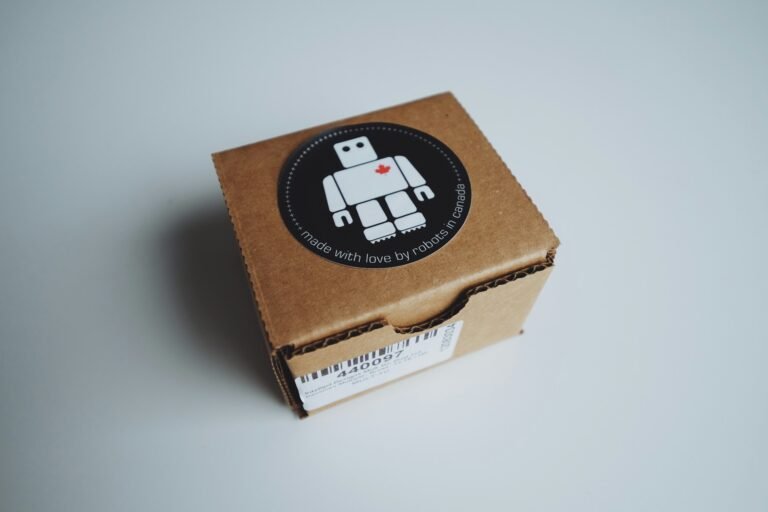
When e-commerce businesses start growing, packaging usually becomes a problem later than expected.
At the beginning, almost any box works. Orders are manageable, packing is flexible, and shipping costs don’t feel critical. But as volume increases, packaging decisions start to show their real impact — not only on product safety, but on speed, cost, and consistency.
What looked like a simple operational choice turns into something much more structural.
It Rarely Fails All at Once
Packaging issues in e-commerce don’t usually appear as obvious failures. It’s not that every second box arrives damaged or completely unusable. Instead, problems build gradually.
A box arrives slightly deformed. Another one needs extra tape. Packing takes a bit longer than expected. A customer mentions that the product felt “loose” inside. None of these seem critical on their own, but together they create friction across the entire operation.
Over time, this friction turns into measurable cost — slower fulfillment, higher return rates, and inconsistent customer experience.
That’s why effective e-commerce packaging is not about avoiding catastrophic failure. It’s about eliminating these small inefficiencies before they scale.
What the Shipping Process Actually Looks Like
There is a tendency to imagine shipping as a relatively controlled process. In reality, once a package leaves the warehouse, control is minimal.
Boxes are dropped, pushed, stacked, and moved repeatedly. They travel through automated systems and manual handling points, often in unpredictable sequences. Even within a single shipment, conditions can vary significantly.
What matters here is not how strong a box is in isolation, but how well it holds up over time under repeated stress.
A slightly under-specified material might pass initial tests but start losing rigidity halfway through the journey. By the time it reaches the customer, the structure is compromised — not enough to destroy the product, but enough to affect perception.
Packing Speed Is a Hidden Cost Driver
One of the less obvious aspects of packaging is how it affects the pace of daily operations.
In a warehouse environment, efficiency is everything. Packing is repetitive, and even small delays become expensive when multiplied across hundreds or thousands of orders.
If a box takes a moment too long to assemble, or if it requires careful positioning to close properly, that extra time accumulates. Workers adapt by finding shortcuts — sometimes forcing closures, skipping steps, or packing items less carefully.
The packaging itself hasn’t failed, but it has introduced inconsistency into the process.
Well-optimized e-commerce packaging tends to feel almost invisible during packing. It opens easily, holds its shape, and closes without resistance. There’s no need to adjust the product multiple times to make it fit.
Space Inside the Box Is Never Truly Empty
One of the most common inefficiencies in e-commerce packaging is unused internal space.
At first, leaving extra room inside the box might seem harmless or even safer. In practice, that empty space creates movement. Products shift, collide with the walls, and gradually lose their initial positioning.
To compensate, additional filler materials are often added. This solves one problem but creates others — higher material cost, longer packing time, and more waste.
At the same time, reducing space too aggressively introduces pressure. When boxes are stacked, external weight transfers inward, and the product absorbs that force.
The challenge is not simply to reduce or increase space, but to control how the product behaves inside it.
When Simpler Structures Perform Better
It’s easy to assume that more complex packaging leads to better protection or a better customer experience. In e-commerce, this is often not the case.
Complex structures tend to introduce more steps:
- more folding
- more alignment
- more potential for error
In controlled environments, this might not be an issue. In fast-moving operations, it quickly becomes one.
Simpler box designs, especially well-optimized mailer boxes, often perform better because they reduce decision-making during packing. There is less room for variation, and the process becomes more consistent.
This doesn’t mean packaging should be basic or unbranded. It means the structure should support the workflow rather than complicate it.
The Customer Notices More Than Expected
Even though e-commerce packaging is primarily functional, customers still react to it emotionally.
A box that arrives slightly crushed, even if the product is fine, creates doubt. A package that is difficult to open creates frustration. On the other hand, a box that feels solid and opens smoothly adds a sense of reliability.
These reactions are subtle, but they influence how the product — and the brand — is perceived.
Interestingly, this doesn’t require extravagant packaging. In many cases, a clean, well-proportioned box with thoughtful details feels more premium than something overly complicated.
Consistency plays a bigger role than complexity.
Cost Is Shaped by Accumulation, Not Single Decisions
When businesses look at packaging costs, they often focus on unit price. But in e-commerce, the total cost is shaped by multiple factors working together.
Material choice affects weight. Dimensions affect shipping rates. Structure affects packing speed. Internal elements affect both cost and time.
Individually, each decision may seem minor. Together, they define the overall efficiency of the system.
Reducing cost effectively is not about cutting corners, but about aligning all these elements. A slightly better-optimized box can reduce shipping volume, speed up packing, and lower material usage at the same time.
These improvements are not always visible at first, but they become significant at scale.
Sustainability Without Compromising Performance
As expectations around sustainability increase, many e-commerce brands are rethinking their packaging.
The shift is visible: less plastic, more paper-based solutions, and a general move toward minimalism. But the transition is not always straightforward.
Materials behave differently under stress. What works in one format may not perform the same way in another. A lighter, more eco-friendly solution might reduce environmental impact, but only if it still protects the product effectively.
Otherwise, increased returns and replacements offset any sustainability gains.
The most successful approaches don’t treat sustainability as a separate goal. They integrate it into the overall packaging logic — reducing excess while maintaining performance.
Experience Becomes Visible at Scale
In small quantities, almost any packaging solution can seem adequate. It’s only when volumes increase that differences become clear.
Boxes that were slightly inconvenient become noticeably inefficient. Minor inconsistencies become recurring issues. Costs that seemed negligible start to accumulate.
This is where experience shows. Not just in producing packaging, but in understanding how it behaves across the entire process — from packing tables to delivery.
A well-developed packaging solution doesn’t draw attention to itself. It works quietly in the background, supporting operations instead of creating friction.
Conclusion
E-commerce packaging boxes are part of a larger system. They influence how quickly orders are packed, how safely they are delivered, and how customers perceive the brand.
The most effective solutions are not defined by complexity or cost alone. They are defined by how well they perform under real conditions — consistently, efficiently, and at scale.
When packaging is aligned with these realities, it stops being a source of small problems and becomes a stable foundation for growth.
Looking for a Reliable E-commerce Packaging Manufacturer?
If your business is scaling and packaging is starting to impact costs, speed, or customer experience, it may be time to rethink the approach. Contact us and we will help you!