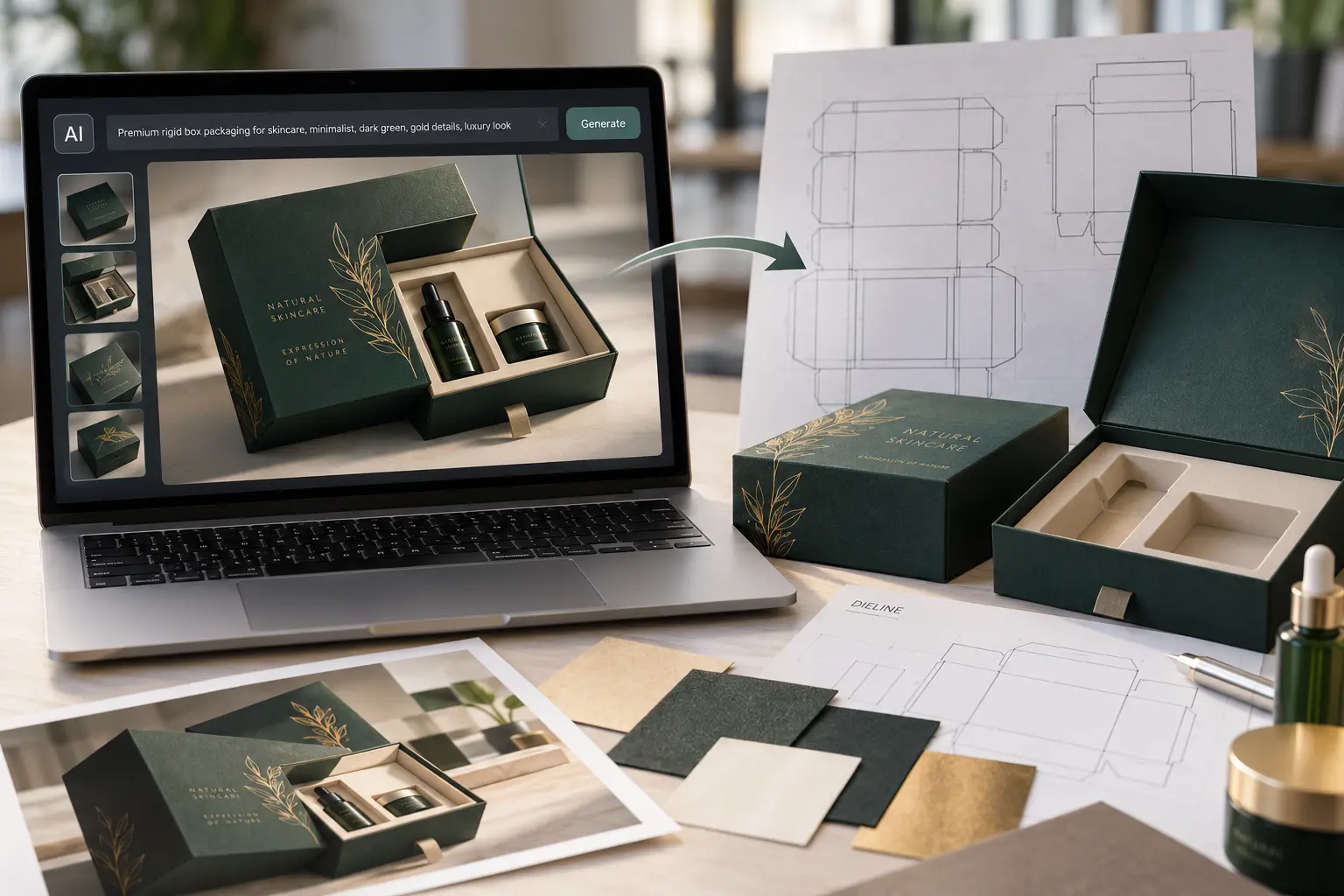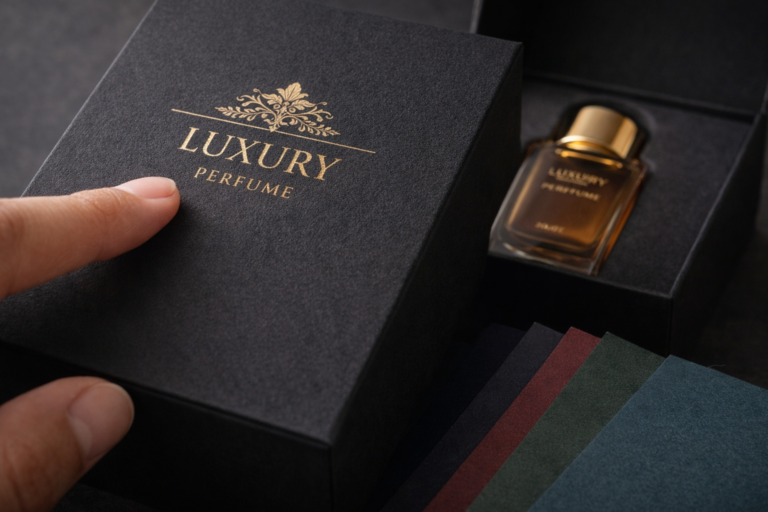
If you’ve ever picked up a premium box, book cover, or luxury product package and thought, “Wow, this feels expensive,” you were probably touching soft-touch lamination. It is one of those finishing techniques that doesn’t scream for attention but quietly upgrades everything it touches. In packaging and print, it has become a signature of quality, especially for brands that want to look refined, modern, and high-end.
Let’s break down what it is, how it works, and why so many brands choose it for premium packaging.
The simple definition
Soft-touch lamination is a special matte film applied to printed paper or cardboard. Unlike regular matte lamination, which mainly removes shine, soft-touch creates a velvety, rubber-like surface that feels smooth and warm when you run your fingers over it.
Visually, it looks elegant and muted. Tactilely, it feels luxurious. That combination is what makes it so powerful in branding and packaging.
How soft-touch lamination is applied
The process itself is quite technical, but the idea is simple.
After your artwork is printed on paper or cardboard, a thin plastic film is laminated over the surface using heat and pressure. This film is specially formulated to have a soft, slightly elastic texture rather than a slippery or glossy one. Once applied, it becomes permanently bonded to the printed sheet.
This means the finish is not sprayed or coated — it’s a real protective layer that becomes part of the packaging.
Because it is a film, soft-touch lamination also adds strength and durability to the box or cover, helping protect it from scratches, moisture, and fingerprints.
Why brands love the soft-touch feel
Touch is one of the most powerful senses in marketing. People judge quality within seconds of picking something up. Soft-touch lamination instantly signals that a product is premium.
Here’s why it works so well:
It feels luxurious
The surface feels smooth, warm, and slightly cushioned. This creates a subconscious association with higher quality and higher price.
It reduces glare
Soft-touch is matte, so it doesn’t reflect light. This makes colors look deeper and richer, especially black, navy, and dark green.
It creates contrast
When combined with gloss UV, foil stamping, or embossing, soft-touch lamination makes those elements pop dramatically. A shiny logo on a velvety background looks especially striking.
It improves perceived value
Even if the box is made from standard cardboard, soft-touch lamination makes it feel like something much more expensive.
Where soft-touch lamination is commonly used
You will most often find soft-touch lamination on premium or gift-focused packaging. Some typical examples include:
Luxury product boxes
Perfume, cosmetics, candles, watches, and jewelry brands frequently use soft-touch to create a refined, boutique-style look.
Rigid boxes and magnetic boxes
Soft-touch lamination is extremely popular on book-style boxes, drawer boxes, and magnetic closure boxes.
Presentation folders and PR kits
Influencer kits, corporate gifts, and press packages often use soft-touch to make a strong first impression.
Book covers and catalogs
High-end books, brochures, and brand catalogs use soft-touch to give a tactile, memorable experience.
Soft-touch vs standard matte lamination
People often confuse soft-touch lamination with matte lamination, but they are not the same.
Standard matte lamination removes shine and makes a surface look flat and non-glossy. However, it still feels smooth and plastic-like.
Soft-touch lamination goes further. It creates a suede-like, silky surface that feels noticeably different when touched. That sensory difference is exactly why it costs more and is used for premium projects.
If matte lamination is about appearance, soft-touch lamination is about both appearance and feeling.
Is soft-touch lamination durable?
Yes, and that’s another big reason it is so popular.
The laminated film protects the printed surface from scratches, light moisture, and general wear. However, there is one thing to know: very dark soft-touch surfaces, especially black, can sometimes show fingerprints or smudges. Many manufacturers solve this by using anti-fingerprint soft-touch films, which keep the surface clean even with frequent handling.
Can it be combined with other finishes?
This is where soft-touch lamination really shines.
It is often paired with:
Hot foil stamping (gold, silver, holographic logos)
Spot UV (glossy elements on a matte soft-touch background)
Embossing and debossing
Die-cut windows or textured papers
The contrast between soft, matte lamination and glossy or metallic elements creates a premium look that is very hard to replicate with other finishes.
Why it matters in packaging design
In today’s market, packaging is part of the product. Customers share unboxings on social media, and brands compete not just on what’s inside the box, but on how the box looks and feels.
Soft-touch lamination turns ordinary packaging into something people want to touch, photograph, and keep. It makes the unboxing experience slower, more deliberate, and more emotional — which is exactly what premium brands want.