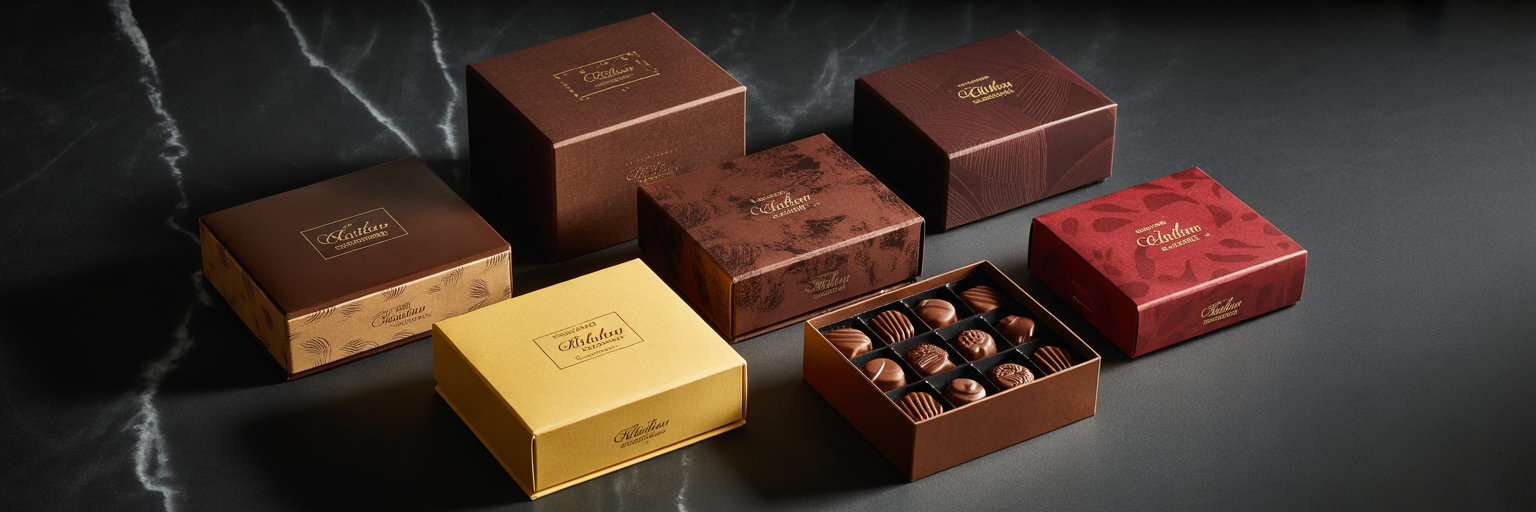
If you have ever picked up a slim, elegant product box and noticed that it felt sturdy yet surprisingly thin, there is a good chance it was made with F-flute corrugated board. F-flute is one of the smallest and finest flute profiles used in corrugated packaging, and it has become extremely popular for premium retail boxes, food packaging, cosmetics, and e-commerce mailers where appearance and print quality matter just as much as strength.
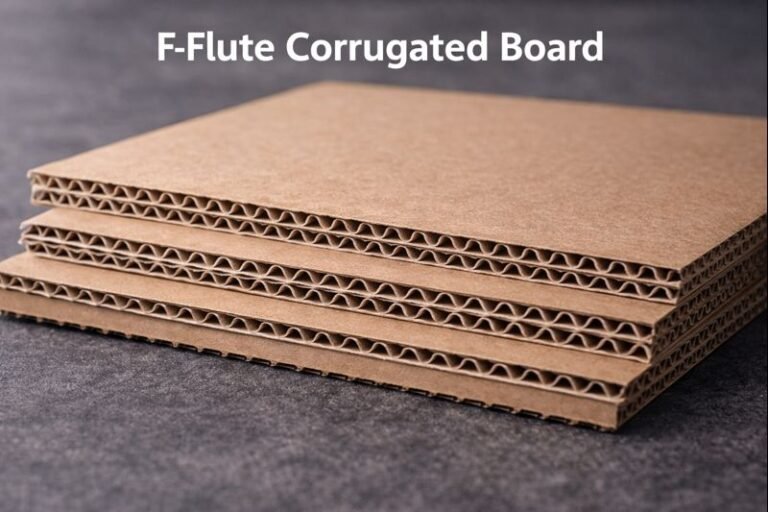
To understand F-flute, it helps to first understand what a “flute” is. In corrugated cardboard, the flute is the wavy layer of paper sandwiched between two flat linerboards. These waves create air pockets that give the material its strength, cushioning, and rigidity. The size and spacing of these waves determine how thick the board is and how it behaves in real use.
Where F-flute fits among corrugated boards becomes clear when you look at the available options. Corrugated board comes in several flute sizes, such as A-flute, B-flute, C-flute, E-flute, and F-flute. As you go down the alphabet, the flutes generally become smaller and more tightly packed. F-flute is even finer than E-flute. It typically has around 125 flutes per foot, which makes it very thin and smooth compared to traditional shipping cartons. Because of this, F-flute looks and feels much closer to premium paperboard while still offering the strength of corrugated material.
One of the biggest advantages of F-flute is its excellent print surface. Because the waves are very small, the outer linerboard stays flatter and smoother than thicker corrugated materials. This allows for sharper printing, cleaner text, and more precise graphics. That is why F-flute is often used for cosmetic boxes, skincare and perfume packaging, electronics accessories, luxury food packaging, subscription boxes, and pharmaceutical or supplement packaging. For products that sit on retail shelves, the packaging must look as good as it performs. F-flute allows brands to achieve both.
Although F-flute is thin, it is not weak. The tightly packed flutes give the board good stacking strength and rigidity. This means boxes made with F-flute can hold their shape well, even when stacked or shipped. This is especially important for e-commerce brands. Customers expect a premium unboxing experience, not a crushed or dented box. F-flute provides protection while keeping the packaging light and compact. Lighter packaging also reduces shipping costs and is more sustainable, as less material is used.
How F-flute improves design possibilities is another reason it is so widely used. Because F-flute is slim and flexible, it opens up more design options compared to thicker corrugated boards. Designers can create tighter folds, sharper edges, slimmer packaging profiles, and more complex box structures. Die-cut windows and decorative cutouts also look cleaner when made from F-flute, which is why it is often used for visually driven retail packaging. The material allows packaging to feel more like a luxury carton rather than a basic shipping box.
Sustainability is also a strong argument for F-flute. It uses less paper than larger flute types, which reduces material consumption. Most F-flute boards are made from recyclable paper fibers and can be recycled after use. Because the boxes are lighter and take up less space, they also reduce transportation emissions and storage requirements. This makes F-flute attractive for brands that want to combine premium presentation with responsible packaging practices.
F-flute is not designed for extremely heavy or fragile items that require thick cushioning, but it is ideal for most retail and consumer products. If you want a box that looks high-quality, prints beautifully, protects the product, feels premium in the hand, and keeps packaging slim and efficient, F-flute is often the right solution.
As packaging continues to evolve, materials like F-flute are becoming more important. Consumers no longer see packaging as disposable. They see it as part of the product and the brand experience. With its balance of strength, elegance, and sustainability, F-flute has become one of the most versatile and valuable materials in modern packaging design.