Embossing is one of the most popular finishing techniques used in premium packaging. It adds depth, texture, and a tactile element that elevates the overall look and feel of a product. In packaging, embossing is often used to highlight logos, brand names, patterns, or key design elements, making packaging more memorable and visually appealing.
For brands that want their packaging to stand out on shelves and create a high-quality impression, embossing is a powerful and versatile solution.
What Is Embossing in Packaging?
Embossing is a finishing process that creates a raised design on the surface of packaging material. This effect is achieved by pressing the material between two metal dies, one raised and one recessed, which form the desired shape under pressure.
The result is a three-dimensional effect that can be both seen and felt. Embossing does not require ink, although it is often combined with printing or other finishing techniques to enhance visual impact.
In packaging, embossing is commonly applied to cardboard, paperboard, and rigid box wraps.
How the Embossing Process Works
The embossing process starts with the creation of a custom metal die based on the artwork. Once the die is prepared, the packaging material is pressed between the male and female dies using heat and pressure.
This process permanently reshapes the surface of the material, creating a raised area without damaging its structure. Because embossing relies on precision, it works best with high-quality paper and cardboard.
Embossing can be applied during or after printing, depending on the design and production workflow.
Types of Embossing Used in Packaging
There are several types of embossing used in packaging, each offering a different visual effect.
Blind Embossing
Blind embossing creates a raised design without using ink or foil. It relies purely on light and shadow to create contrast, making it ideal for minimalist and elegant packaging designs.
Registered Embossing
Registered embossing aligns the embossed area precisely with printed elements. This technique is often used for logos, typography, or patterns that need exact positioning.
Combination Embossing
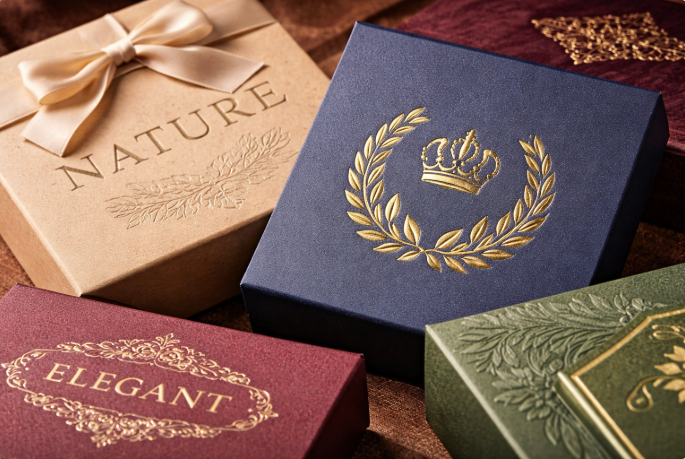
Combination embossing pairs embossing with foil stamping or printing in a single process. This is commonly used for premium packaging, as it adds both texture and visual emphasis.
Embossing vs Debossing
Embossing raises the design above the surface of the material, while debossing creates an indented or pressed-in effect. Both techniques add texture, but embossing is generally more eye-catching, whereas debossing offers a more subtle and understated look.
Brands often choose embossing when they want to emphasize a logo or brand name and debossing when they prefer a refined, minimalist appearance.
Benefits of Embossing in Packaging
Embossing offers several advantages for product packaging.
It enhances perceived value by giving packaging a premium and sophisticated feel. It improves brand recognition by making logos and brand elements more distinctive. It also adds a tactile experience, encouraging customers to touch and interact with the packaging.
In crowded retail environments, embossed packaging can help products stand out without relying on loud colors or complex graphics.
When to Use Embossing
Embossing is particularly effective for:
- Luxury and premium products
- Gift boxes and special editions
- Cosmetics, tea, chocolate, and spirits packaging
- Brand-focused packaging where logos play a key role
It is often used on rigid boxes, folding cartons, sleeves, and high-end retail packaging.
Embossing and Sustainable Packaging
Embossing is compatible with sustainable packaging solutions. Because it does not require additional inks or coatings, blind embossing can be an environmentally friendly way to enhance packaging while keeping materials recyclable.
When combined with FSC-certified cardboard and eco-friendly production methods, embossing supports both branding and sustainability goals.
Things to Consider Before Choosing Embossing
Before selecting embossing, it is important to consider material thickness, design complexity, and production volume. Fine details may not emboss well on thin or low-quality materials, and custom dies add a setup cost that is more cost-effective for medium to large production runs.
Working with an experienced packaging partner helps ensure that embossing is applied correctly and delivers the desired result.