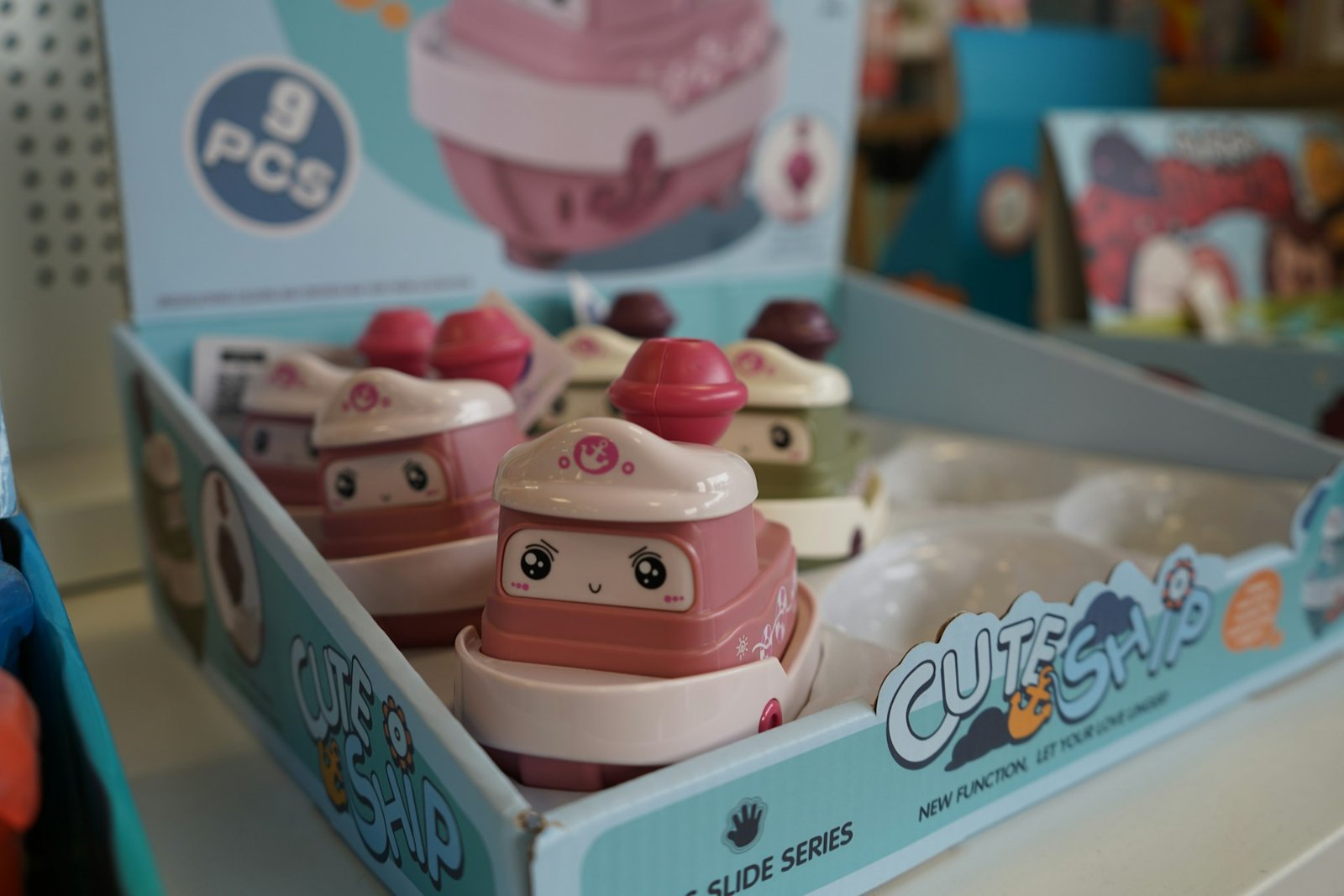
POP displays sit in a very different world compared to most other types of packaging.
Unlike shipping boxes or e-commerce packaging, they don’t exist to protect a product during transport. Their job begins only when the product has already reached the store. From that moment, everything becomes about visibility, structure, and how quickly a customer can understand what is being offered.
In retail, there is no second chance. A display either attracts attention immediately, or it disappears into the background.
Why Retail Environment Changes Everything
A warehouse is controlled. Transport is predictable. But retail is neither.
POP displays are placed in environments where:
- lighting varies from store to store
- foot traffic is unpredictable
- space is limited and competitive
- customers physically interact with products
This means a display is not judged in isolation. It is judged in competition — surrounded by other brands fighting for the same few seconds of attention.
And in that environment, structure becomes communication.
When Structure Starts to Influence Behavior
It’s easy to think of a POP display as just a holder for products. In reality, structure directly influences how people interact with it.
A slightly raised shelf changes what customers see first. A narrow vertical design pulls attention upward, while a wide base creates stability and presence. Even the way products are angled can subtly influence whether they are noticed or ignored.
This is where packaging turns into retail psychology.
Interestingly, many of the most effective displays are not the most complex ones. They are the ones that guide attention without forcing it. The customer should not need to “understand” the display — it should feel obvious within the first glance.
The Hidden Importance of Stability
One of the most underestimated aspects of POP displays is stability over time.
A display may look perfect on the first day it is installed. But retail environments are not static. Products are constantly removed, restocked, and sometimes even handled by customers in ways that were never planned.
Over time, weaker structures begin to show it. Shelves bend slightly. Corners lose rigidity. The display starts to look “tired,” even if it is still technically functional.
And in retail, perception matters as much as function.
A display that looks unstable reduces trust in the product itself, even if nothing is wrong with it.
Why Simplicity Often Wins in Real Stores
There is a strong tendency to overcomplicate POP displays during development. Extra shapes, layers, or visual effects are added with the intention of making the display more attractive.
But in real stores, complexity often works against you.
Store staff need to assemble displays quickly. Space is limited. Time is short. If a structure requires too many steps or interpretation, mistakes happen during setup.
This is why experienced manufacturers usually prefer clarity in structure over decorative complexity.
For example, DST Pack often works with brands that initially request highly detailed structures, but later simplify them once real store conditions are considered. The final result is usually cleaner, faster to assemble, and more consistent across locations.
Visibility Is Not Just About Design
Most people assume visibility comes from graphics or branding. In reality, structure plays a bigger role than design in many cases.
A display that is slightly too low may disappear behind competing products. One that is too wide may block itself in crowded spaces. Even shelf spacing affects how products are perceived from a distance.
This is why POP displays must be designed with environment in mind, not just aesthetics.
Retail shelves are not empty spaces waiting to be filled. They are already competitive ecosystems.
Transport Still Shapes the Final Result
Even though POP displays are used in stores, they still have to survive logistics before they get there.
This creates a hidden constraint: the structure must be strong enough for transport, but also efficient enough to ship in flat form.
In most cases, displays are designed to be folded and assembled at the destination. This reduces shipping volume, but introduces a new requirement — the structure must be extremely intuitive.
If anything is unclear in folding or locking points, errors multiply across different store locations.
This is where manufacturing experience becomes critical. At DST Pack, many display structures are adjusted specifically to reduce ambiguity during assembly, especially for large retail rollouts where consistency matters more than anything else.
When POP Displays Fail in Practice
Failures rarely come from one big mistake. They usually come from small miscalculations that only become visible at scale.
A display may look strong in samples but start failing after a few weeks in busy stores. Another may work structurally, but underperform because it does not attract attention fast enough.
Sometimes the issue is even simpler — customers don’t understand what is being displayed. If the message is not immediate, the opportunity is lost.
Retail does not wait. It reacts instantly.
The Real Purpose of POP Packaging
POP displays are not just packaging in the traditional sense. They are a direct sales tool.
Unlike e-commerce packaging, which ends its job at delivery, POP displays continue working every day they are in a store. They influence visibility, encourage impulse purchases, and shape how products are positioned in the customer’s mind.
This is why small improvements in structure or placement can have a real impact on sales performance.
Conclusion
POP display packaging sits at the intersection of structure, marketing, and real retail behavior.
The most effective displays are not the most complex or visually aggressive ones. They are the ones that remain stable over time, communicate clearly within seconds, and work reliably in different store environments.
When all of this comes together, a POP display stops being just a physical structure — and becomes an active part of the sales process.
Where Structure Meets Real Production
One of the biggest challenges in POP display development is translating a concept into something that actually works across production, logistics, and retail environments.
This is where manufacturers with real-world experience matter.
Instead of focusing only on visuals, DST Pack develops POP display solutions that consider assembly speed, transport efficiency, and long-term stability in retail conditions.