Packaging plays a huge role in modern commerce — from food and beverages to cosmetics, electronics, and e‑commerce. But beyond functionality and aesthetics, the choice of packaging material can have a significant impact on the climate. Over the past decade, brands and policymakers have increasingly embraced sustainable paper packaging as an alternative to plastics and other conventional materials. This shift is driven by environmental urgency, consumer demand, and regulatory pressure — and it’s reshaping the carbon footprint of global packaging.
Instead of seeing paper packaging as a simple trend, this article explores the complex reality of how paper is replacing other materials and what that means for the planet’s climate.
Vision vs. Reality: Why Paper Packaging Is Considered Sustainable
Many companies and consumers view paper packaging as inherently better for the environment. There are good reasons for this perception.
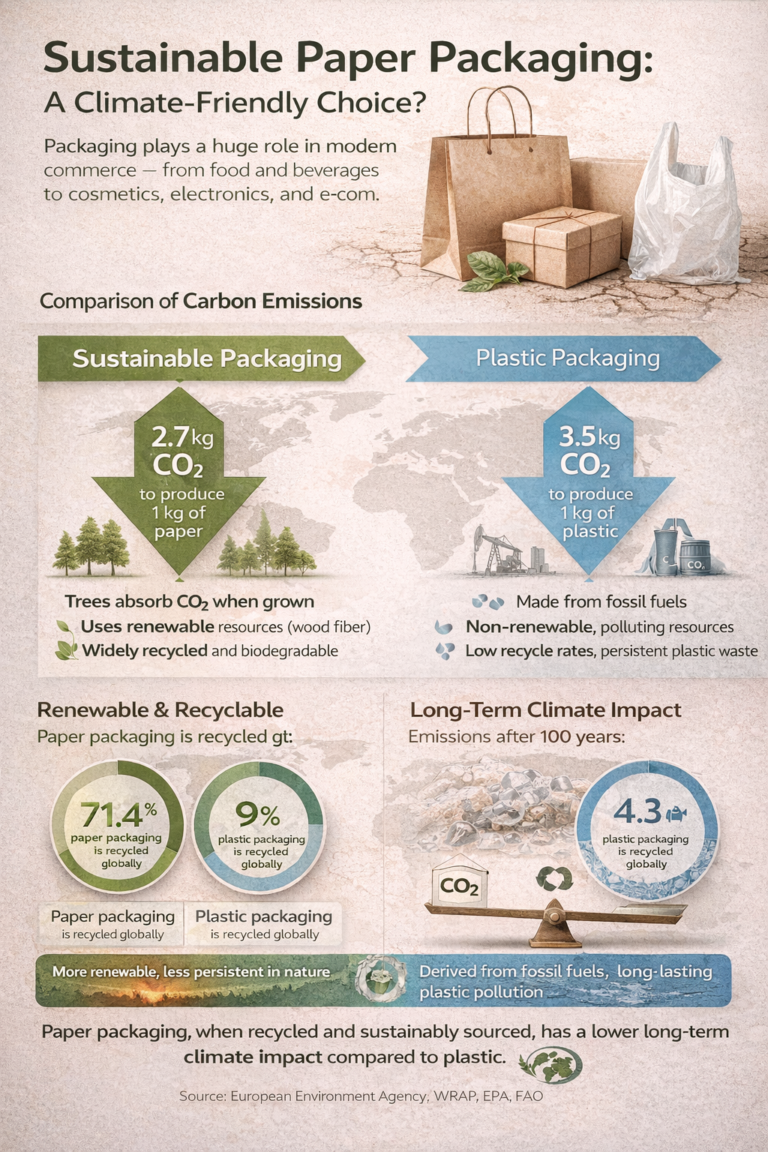
Paper is made from wood fibres, a renewable resource that can be responsibly managed and replanted indefinitely, in contrast to petroleum‑derived plastics that depend on finite fossil fuels. Paper and cardboard are also widely recyclable and biodegradable, and can be reused multiple times to conserve resources.
Recycling paper reduces demand for virgin pulp and cuts greenhouse gas emissions compared to making new material. For example, recycling one ton of paper can save around 1.5 tons of CO₂ emissions and free up landfill space.
Paper packaging also typically breaks down in nature much faster than most plastics. Under normal environmental conditions, uncoated paper decomposes in weeks or months — not centuries — and doesn’t create persistent microplastics that pollute ecosystems.
These facts help explain why many brands — from small sustainable startups to global players — are switching from plastic to paper‑based packaging and why consumers tend to see paper as the “greener” choice.
The Real Climate Picture: Production, Transport, and Lifecycle
However, if we look beyond intuition and examine real emissions data, the picture becomes more nuanced.
Recycling and biodegradability are important, but life cycle assessments (LCAs) show that paper isn’t automatically better in every environmental metric. Producing paper consumes significant energy and water, and the pulping and bleaching processes contribute to emissions.
For example, research found that a paper bag generates more greenhouse gases than a plastic bag — in part because it takes far more energy and water to produce paper than plastic, and paper is heavier to transport. Seven trucks of paper may be needed to carry the same number of bags that one truck of plastic can.
Another study highlighted that plastic grocery bags generate less greenhouse gas per unit than paper bags, consuming less water and energy in the process.
This does not mean paper has no environmental benefit — but it shows the importance of looking beyond simple comparisons and considering the full life cycle, including sourcing, manufacturing, transport, use, and end‑of‑life.
How Paper Packaging Reduces Carbon Emissions in Real Use
Despite these production challenges, sustainable paper packaging still offers concrete climate advantages, especially when implemented with circular economy principles.
Renewable Raw Materials
Because paper comes from forests, and trees absorb CO₂ as they grow, sustainably managed forestry can help offset emissions. Even with harvesting, forests that are replanted and managed responsibly continue to act as carbon sinks, storing carbon that would otherwise contribute to atmospheric CO₂.
This is a key difference from plastics, which are derived from fossil fuels — carbon that is already stored underground and released into the atmosphere when processed.
Higher Recycling and Lower End‑of‑Life Impact
Globally, recycling rates for paper and cardboard far exceed most plastics. In many countries, more than 65% of paper packaging is recycled, whereas plastic recycling rates — especially for flexible packaging — remain below 10%.
Every ton of recycled paper not only saves landfill space but also significantly reduces the energy and emissions needed to produce new material.
Lower Persistence and Ecosystem Impact
One of the most visible benefits of paper packaging is that it does not persist in the environment like plastic. Plastic can fragment into microplastics that enter soil, waterways, and food chains. Paper, on the other hand, biodegrades in months under natural conditions, minimizing long‑term pollution.
This difference plays out not just in landfill statistics, but in how packaging affects wildlife, ecosystems, and even soil health.
Where Paper Packaging Still Has Challenges for Climate Goals
Sustainable paper packaging is not perfect. Manufacturing paper uses a lot of water, energy, and chemicals, and unsustainable harvesting can contribute to deforestation if not properly regulated. One analysis estimated that around 35% of clear‑felling is linked to paper production, often with monoculture plantations that reduce biodiversity.
Other climate concerns include:
Transport emissions – Paper and cardboard are heavier than many plastics, meaning more fuel is needed to transport the same volume of material.
Production emissions – In some cases, plastic packaging can produce fewer greenhouse gases during manufacturing than paper, especially for lightweight applications such as bags.
Water use – The paper industry is one of the largest industrial consumers of water, further complicating environmental goals in water‑stressed regions.
These factors do not negate paper’s benefits but reveal why sustainable packaging needs careful design, circular systems, and responsible sourcing rather than blanket assumptions.
Policy, Innovation, and the Shift Away From Single‑Use Plastics
Government policies and market incentives are accelerating the shift toward sustainable packaging. Regulations such as single‑use plastics bans and taxes on plastic packaging are pushing brands toward renewable materials. More than 70% of global consumers now say they are willing to pay more for sustainable packaging, indicating market demand alongside regulatory pressure.
Global brands are responding. For example, Amazon reported a 16% reduction in single‑use plastic packaging by increasing use of recyclable paper solutions, cutting tens of thousands of metric tons of plastic waste.
Meanwhile, research and innovation continue to expand the options for sustainable materials beyond conventional paper, including biodegradable films, plant‑based composites, and molded fiber alternatives, all of which further reduce the climate impact of packaging.
When Sustainable Paper Packaging Truly Helps the Climate
The net climate benefit of sustainable paper packaging is strongest when a few conditions are met:
- Responsible sourcing from sustainably managed forests (e.g., FSC‑certified)
- High levels of recycling and use of recycled content
- Lightweight design and material optimization
- Circular systems that keep materials in use as long as possible
- Integration with broader waste management infrastructure
Under these conditions, paper packaging can significantly reduce the overall carbon footprint relative to single‑use plastics and other materials that are difficult to recycle or biodegrade.
Final Thoughts
The shift toward sustainable paper packaging is more than a material trend — it’s a strategic response to climate change, consumer expectations, and environmental responsibility. While paper is not a silver bullet, its renewable nature, recyclability, and biodegradability give it clear advantages over many conventional materials, especially when paired with circular economy principles.
Sustainable packaging does not automatically equal zero impact, but with thoughtful design, responsible sourcing, and strong recycling systems, paper packaging can drive measurable improvements in global climate performance