The Strategic Role of Three-Dimensional Packaging
Each year, thousands of new products enter the US market, all competing for a sliver of consumer attention. In this crowded environment, standard, flat packaging has become effectively invisible. It blends into the background noise of a busy shelf or an endless social media feed. This is where 3D packaging design moves from a simple aesthetic choice to a core strategic decision.
Three-dimensional design is not about adding more graphics. It is the intentional creation of packaging with depth, structure, and tactile qualities that communicate brand value before the product is even revealed. For a brand manager, this is the first and most direct opportunity to signal quality and innovation. It’s the difference between a box that is simply opened and discarded and one that begins a conversation with the customer, silently communicating the care and quality invested in what’s inside.
Creating Shelf Impact with Visual and Tactile Elements
The principles of 3D design have a direct impact at the point of sale, whether in a physical store or on a digital screen. The human eye is naturally drawn to depth and irregularity. A uniquely shaped box or one with distinct structural features will always stand out in a uniform retail aisle. This visual disruption is critical, as research from PKG Branding suggests that up to 73% of purchase decisions are made right at the shelf. Thoughtful design transforms a product from one of many options into a point of focus, making our branded packages for retail stores a powerful sales tool.
This initial visual attraction is then reinforced by touch. Imagine the difference between a flimsy carton and a rigid box with a soft-touch lamination. The weight and texture create a subconscious perception of luxury, justifying a premium price point before the customer has even seen the product. These sensory cues are not just for brick-and-mortar stores. A product with strong three-dimensional features photographs better, appearing more substantial and appealing in online listings. The packaging can even become an interactive channel by integrating customizable QR codes, which, as tools like Autonix demonstrate, can bridge the physical product with ongoing digital engagement.
Designing a Memorable Unboxing Experience
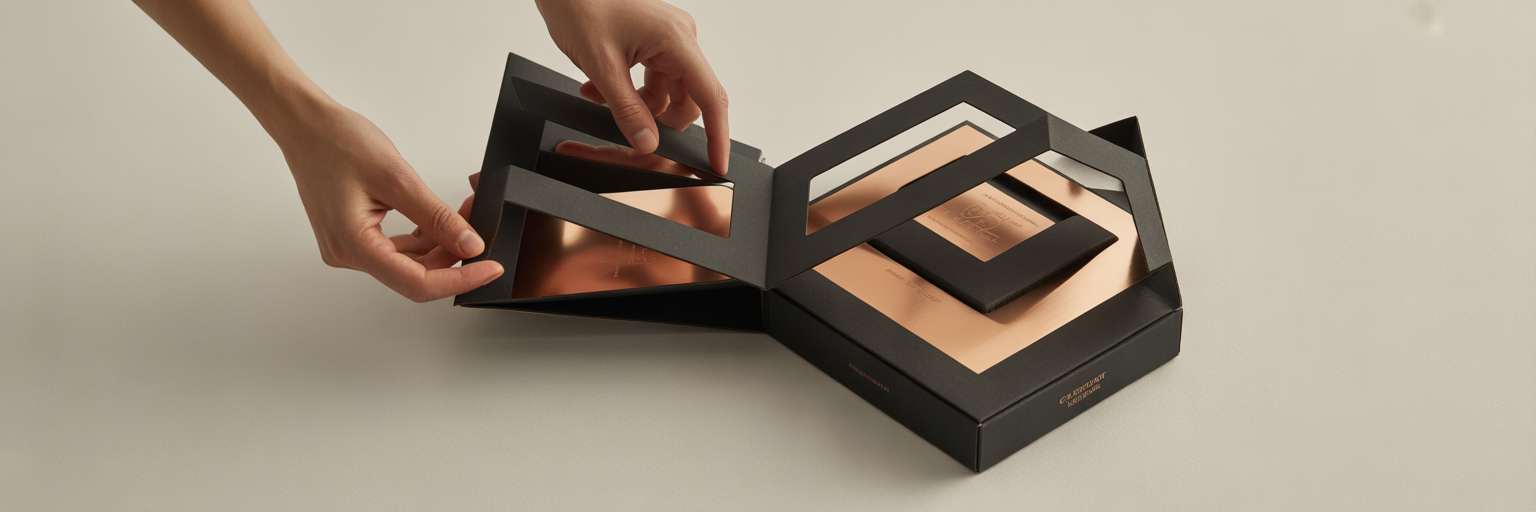
Once a purchase is made, the role of packaging shifts. For an e-commerce brand, the unboxing is the first physical handshake with the customer. A standard brown box and some bubble wrap get the job done, but they do nothing to build a relationship. A thoughtful 3D packaging design, however, can enhance customer unboxing experience by turning a mundane task into a memorable event. It’s a moment of controlled discovery that makes the customer feel valued.
This transformation is achieved through specific structural and material choices. Consider how these elements work together:
- Multi-layered inserts that create a sense of discovery, revealing the product piece by piece.
- Custom-fit compartments that hold items securely and present them with elegance, much like a piece of jewelry in its case.
- Magnetic closures or ribbon-pulls that add a satisfying, premium feel to the simple act of opening.
- Structural reveals that build anticipation, where opening one flap leads to another in a carefully choreographed sequence.
This level of detail is especially powerful for high-value items, which is why we specialize in solutions like custom packaging for cosmetics. A beautiful unboxing is highly shareable on platforms like Instagram and TikTok, generating authentic, word-of-mouth marketing that no advertisement can buy. Intricate gift sets and Advent calendars are prime examples where the 3D structure is inseparable from the product experience itself, a concept we explore with our custom gift boxes for businesses.
Streamlining Concepts with 3D Visualization
So, how does a complex, multi-layered package go from a simple idea to a physical reality? The process begins long before any materials are cut. Modern brands rely on 3D packaging visualization tools to build, refine, and perfect their designs in a digital environment. For a brand manager, this technology removes the guesswork and offers tangible business benefits.
Instead of waiting weeks for a physical prototype that might be wrong, teams can create a digital model in days. This model can be rotated, opened, and examined from every angle, allowing for immediate feedback and adjustments. This collaborative approach shortens product development timelines and significantly reduces the cost and waste associated with multiple rounds of physical sampling. As industry observers at PACKNODE have noted, these digital tools are essential for staying competitive. Marketing, design, and leadership can all align on the final look, feel, and function before committing to a full production run. With our packaging design service, we act as a partner in this process, providing the expertise to translate a brand’s vision into a viable and compelling digital prototype.
From Digital Design to Flawless Production
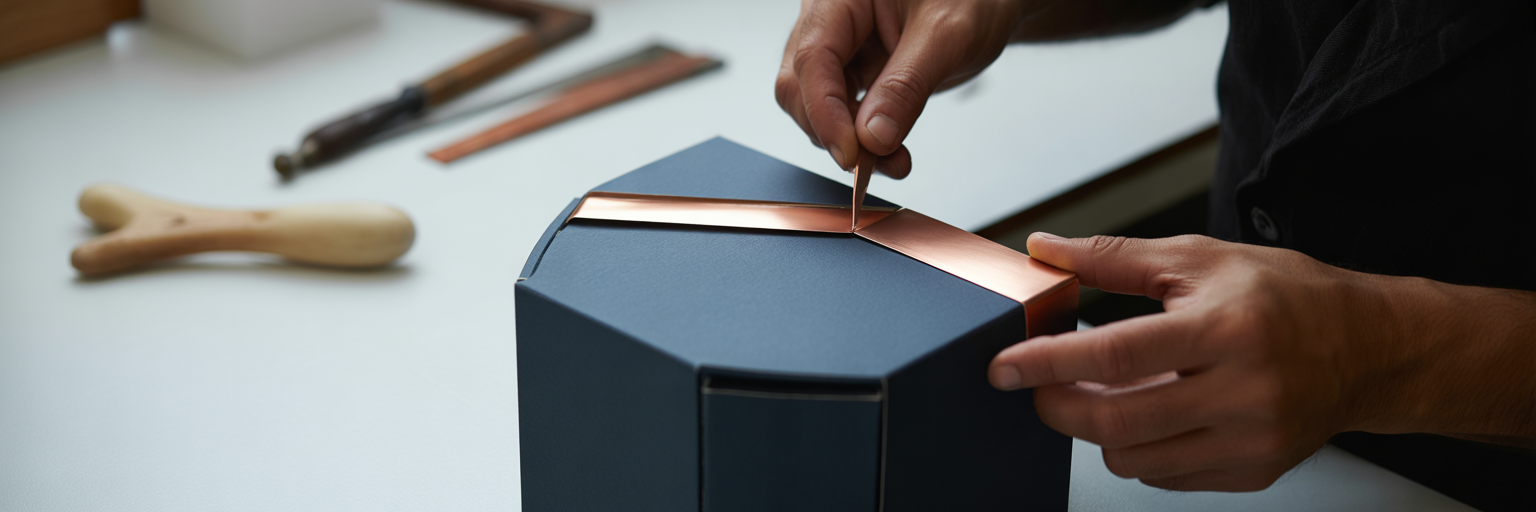
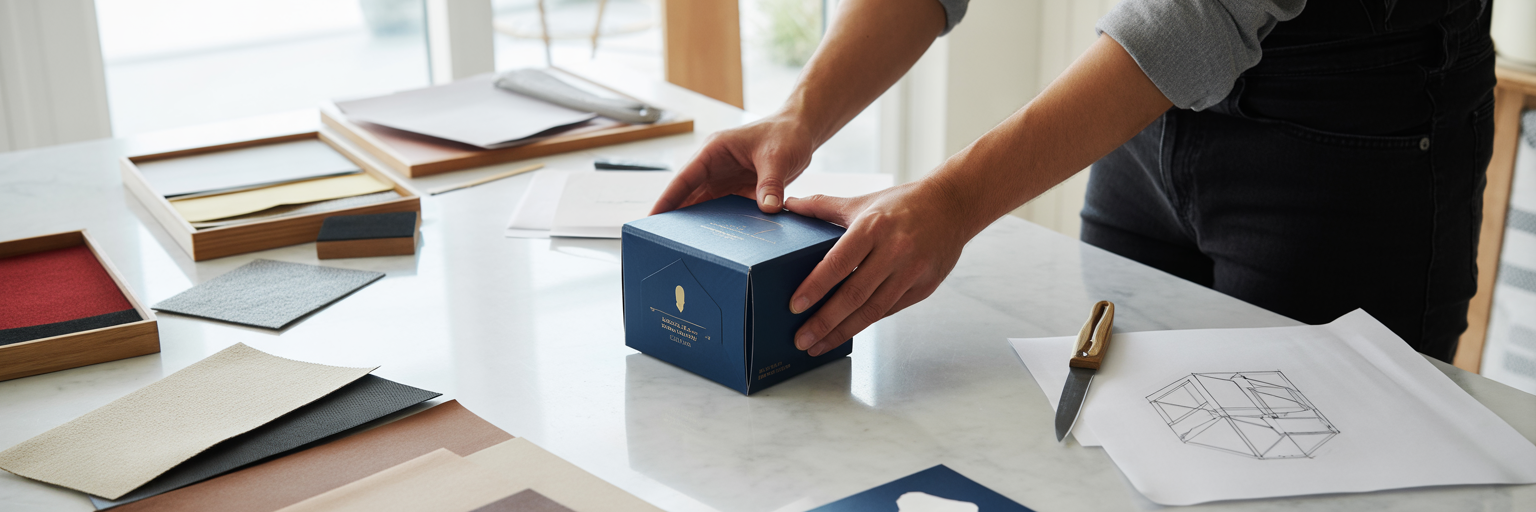
A stunning digital design is only half the battle. The transition from a file on a screen to a physical object in a customer’s hands is where true expertise becomes critical. A complex design is worthless without flawless execution. The first decision point is material selection. The choice between a thick rigid board for a substantial, durable feel versus a specialty paper with a unique texture directly impacts the final product’s perceived quality. These are the foundational elements that bring cosmetics packaging design ideas to life.
From there, high-end finishes are layered on to complement the 3D structure. These details are not just decorative; they are tactile cues that reinforce brand identity. For brands seeking custom luxury packaging USA, understanding how these elements work together is key. For example, the subtle elegance of embossing on custom perfume packaging can communicate sophistication more effectively than any printed word.
| Element | Technique/Material | Tactile & Visual Effect | Ideal for… |
|---|---|---|---|
| Material | Thick Rigid Board | Substantial weight, durable, premium feel | Luxury gift sets, electronics, jewelry packaging |
| Material | Textured Specialty Paper | Unique feel (e.g., linen, felt), organic look | Cosmetics packaging, artisanal foods |
| Finish | Embossing / Debossing | Raised or recessed patterns, subtle depth | Logos, monograms, creating tactile interest |
| Finish | Foil Stamping | Metallic, high-gloss accents, visual pop | Highlighting brand names, borders, luxury cues |
| Finish | Spot UV Coating | High-gloss varnish on specific areas, contrast | Making images or patterns stand out on a matte surface |
Note: This table outlines how different production choices contribute to the final sensory experience of the packaging, helping brands align materials and finishes with their desired market positioning.
Successfully producing these intricate designs requires a manufacturing partner with proven expertise and in-house production capabilities to ensure strict quality control from start to finish.
Building Lasting Brand Value Through Packaging
Investing in 3D packaging design is not a cost. It is an investment in brand equity and customer loyalty. From capturing attention on a crowded shelf to creating a shareable unboxing moment, a well-designed package communicates value at every step. It turns a simple transaction into a memorable experience.
There is also a modern, forward-thinking benefit: sustainability. Precise digital prototyping minimizes material waste during the development phase. Furthermore, when packaging is beautiful and functional, customers are more likely to keep and reuse it, extending the life of the brand in their home. This aligns the brand with the eco-conscious values that are increasingly important to consumers. Ultimately, the package has become an inseparable part of the product experience, creating a connection that lasts long after the initial purchase.