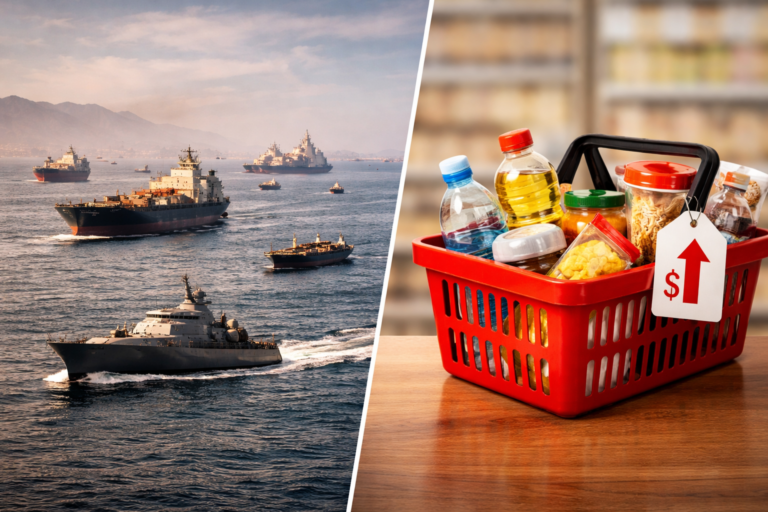
How the Iran War Is Driving Up Plastic Prices and What It Means for Consumers in 2026
The global packaging and consumer‑goods industries are facing a new wave of price pressure in 2026—one driven not by inflation alone, but by geopolitical shockwaves in the Middle East and their impact on plastic raw materials. As the conflict around Iran and the Strait of Hormuz intensifies, the cost of key plastics such as polyethylene (PE), polypropylene (PP), polystyrene (PS), and flexible packaging films has surged, pushing up input costs for everything from food and beverages to household products and electronics.[1][2]
This article explores how polymer prices have changed in the second half of March 2026, the role of the Iran war and Strait of Hormuz disruptions, and what this means for shelf prices of consumer goods in Europe, the United States, and globally. We will also look at what packaging manufacturers and brands can do to mitigate the impact while keeping products affordable for end‑consumers.[2][3]
UPDATED: Recently, we also shared our perspective with CNBC on how the Iran war is affecting global plastic supply and pricing. The key message is simple: what we’re seeing on the ground matches the broader market signals — increasing volatility, rising costs, and growing uncertainty in supply chains.
Polymer Prices: A Sharp Rise in March 2026
In the first months of 2026, the global plastics market had begun to stabilize after several years of wild swings. Feedstock costs had eased, and many commodity resins such as PE, PP, PS, and PVC were trading at historically low levels, giving processors and brand‑owners some breathing room.[4]
However, by March 2026 that situation has reversed. According to market‑tracking platforms, average resin prices in Central Europe show clear double‑digit increases over the last month for core packaging polymers:
- PP random copolymer: up around 23% vs. last month (approx. 1.73 €/kg vs. roughly 1.40 €/kg beforehand).[5]
- HIPS (high‑impact polystyrene): up about 7–10% vs. last month, with values near 1.83 €/kg.[5]
- GPPS (general‑purpose PS): up roughly 10%, now around 1.73 €/kg.[5]
These increases place many plastics close to four‑year highs, echoing trends reported in North America and Asia where PE, PP, PS and PVC have all moved up in January and early March.[4][6]
For a packaging manufacturer like DST‑Pack.com, this means higher raw‑material bills for flexible films, thermoformed trays, bottles, and rigid plastic containers—costs that either get absorbed with lower margins or passed on somewhere along the value chain.[5][2]
Why the Iran War Is Hitting Plastic Prices
The trigger for this renewed price spike is the Iran conflict and its impact on the Strait of Hormuz, the narrow waterway that links the Persian Gulf to the Gulf of Oman and the wider Indian Ocean.[2]
Strait of Hormuz, Oil, and Petrochemical Flows
Iran has effectively shut down or severely restricted traffic through the Strait of Hormuz, threatening or attacking ships in the area. This has cut off a major route for crude oil and petrochemical exports from the Middle East, including large volumes of naphtha, ethylene, propylene, and other feedstocks used to make plastics.[2]
Crude oil prices briefly spiked by around 39% in Europe in a single day, and analysts expect sustained pressure on Brent crude and related benchmarks, even after some drawdowns from strategic petroleum reserves.[2][3]
Plastic production is heavily dependent on fossil feedstocks: it’s estimated that 4–8% of global oil and gas demand goes into making plastic.[2] When the cost and availability of these inputs tighten, the whole polymer value chain starts to move up.[2][7]
Middle East Polyethylene and Polypropylene Capacity
The Middle East is a major hub for polyethylene (PE) and polypropylene (PP) capacity, especially for export to Asia and Europe. Many regional plants and refineries depend on uninterrupted flows of naphtha and gas that pass through the Strait of Hormuz.[2]
When shipments are blocked or rerouted, or when insurance and logistics costs spike, Middle Eastern producers either:
- cut back on output,
- declare force majeure, or
- raise prices to cover the risk premium.[2]
Analysts from commodities firms like ChAI and energy consultancies stress that any prolonged disruption to the Strait of Hormuz could push global plastics and packaging prices higher for weeks or months, not just days.[2][7]
Asia’s Early Supply Crunch
Asia is feeling the pain first. The region relies on seaborne naphtha from the Middle East to run crackers and produce PE, PP, and other packaging‑related polymers.[2]
Several major players have already declared force majeure or reduced supply, including:
- Qatar Energy
- Kuwait Petroleum Corporation
- Mangalore Refinery and Petrochemicals
- Petronet LNG
- Wanhua Chemical
- Shell and others.[2]
When these plants cut output or pause deliveries, Asian plastics prices rise rapidly, and that upward pressure eventually spreads to Europe and North America via exports, alternative trade‑flow switching, and higher global benchmark prices.[2][4]
How Rising Plastic Prices Feed Into Consumer Prices
Packaging is often a small percentage of a product’s total cost, but it is a visible and essential component of the final shelf price. When the main materials used in packaging—PE films, PP trays, PET bottles, PS containers—go up, the consumer inevitably feels it.[2]
Food and Beverage Packaging
The food and drink sector is one of the biggest users of plastic packaging, accounting for up to 40% of global plastic packaging demand.[2] Everything from bread wrappers and meat trays to ready‑meal films and beverage bottles depends on polymers.
With PE and PP prices already up over 20% in some markets due to war‑related supply tightening, food and beverage manufacturers are facing higher costs for:
- pouches and laminates,
- thermoformed trays and clamshells,
- shrink films and stretch wraps,
- caps and bottles.[2]
These added costs tend to show up in two ways:
- Small price increases per unit (e.g., 10–20 cents more on a 2‑liter soft‑drink bottle), or
- Down‑packaging (slightly smaller sizes or lighter‑weight packs) while shelf prices stay the same.[2]
Some brands may also delay new promotions or reduce discounts, indirectly raising the effective price paid by consumers.[2]
Other Consumer Goods
Beyond food and drinks, many everyday products rely on plastic:
- Household cleaning products (bottles, trigger sprayers, caps).
- Personal‑care items (shampoo, shower gel, cosmetics).
- Electronics and small appliances (HIPS, ABS enclosures).
- Toys and stationery (PE, PP, PVC components).[4]
When the base resin price for PS, PP, or PE rises by 10–20%, molders and packaging converters must either accept lower margins or pass those increases forward. For mass‑market brands, that often means higher retail prices or smaller packaging to maintain profitability.[5][2]
Energy, Transport, and Insurance Costs
It is not just raw‑material prices that are rising. The Iran‑related energy shock also affects:
- Fuel and freight costs for trucks, ships, and planes.
- Energy bills for factories and packaging plants.
- Insurance premiums for cargo traveling through or near the Strait of Hormuz and other high‑risk zones.[2]
Plastics Europe and commodity analysts note that companies will face higher working‑capital pressure, longer lead times, and reduced availability, all of which can indirectly push up final consumer prices.[2][3]
What This Means for Retail Shelves in the EU and the USA
For consumers in the European Union and the United States, the impact of rising plastic prices will likely be subtle but widespread. You may not see a newspaper headline announcing a “plastic‑packaging tax,” but you may notice:
- More frequent price increases on packaged goods in supermarkets—especially on items with high plastic content (bottled drinks, packaged snacks, personal‑care products).[2]
- Smaller or lighter packaging for the same product, where brands try to offset higher resin costs without raising the sticker price.[2]
- Fewer promotions and discounts on non‑essential items, as grocers and manufacturers try to protect margins in an environment of higher input costs.[2]
For a business like DST‑Pack.com, this creates both a challenge and an opportunity:
– Challenge: higher polymer costs for films, thermoformed trays, and rigid packaging structures in both the EU and North American supply chains.[5]
– Opportunity: helping brands rethink packaging design—light‑weighting, optimizing material use, and exploring alternative formats that reduce dependence on the most volatile plastics, tailored for both EU and US markets.[2]
Across the EU and the USA, decision‑makers in packaging and consumer goods will increasingly need to balance cost, performance, and sustainability while navigating a more volatile resin market shaped by geopolitical risk.[2]
How Packaging Manufacturers Can Respond
Given the current environment, packaging producers should focus on cost‑efficient, resilient, and transparent value propositions for their clients. Key strategies include:
Optimize Material Use and Design
– Light‑weighting: reduce gauge where possible without compromising protection or shelf appeal.
– Right‑sizing: design trays and films that match the exact product dimensions, minimizing excess plastic.
– Hybrid structures: combine plastics with paperboard overlays or laminates to reduce total resin use while keeping functional benefits.[2]
These moves can help brands offset some of the polymer‑price increase without a visible change in the product or consumer experience.[2]
Diversify Resin Sources and Trade Flows
With Middle East supply under pressure, many brands are expected to shift sourcing toward US and non‑Middle‑Eastern producers.[2][3]
Packaging manufacturers can support this by:
- securing long‑term contracts with multiple resin suppliers (US, European, and Asian).
- exploring alternative resin grades where technically feasible (e.g., higher‑recycle content or different copolymer ratios).[5]
This helps spread risk and reduces the chance of a sudden, severe price spike in a single polymer line.[2]
Transparent Communication with Brand‑Owners
Brands need to explain to retailers and consumers why prices are moving. As a packaging supplier, DST‑Pack.com can help by:
- providing clear, referenced cost‑breakdown notes showing how feedstock and polymer‑price changes affect the final pack.
- offering what‑if scenarios (e.g., “if PP prices stay at current levels for 3 months, total pack cost increases by X%”).[5]
This kind of transparency builds trust and can make it easier for brands to justify moderate price increases to retailers and consumers.[2]
Sustainability and Alternative Materials: Promise or Delayed Solution?
Given the urgency of the Iran‑related shock, many wonder whether this crisis will accelerate the move away from fossil‑fuel‑based plastics toward recycled, bio‑based, or alternative materials.[2]
However, experts caution that real‑world adoption is slow and complex. Even if recyclable or alternative materials are available, brands still need:
- compatible machinery and supply‑chain infrastructure,
- regulatory approvals,
- and consumer acceptance.[2]
Analysts from ChAI and other commodity‑market firms expect that short‑term relief will come more from shifting sourcing (e.g., to US plastics) than from switching to fundamentally new materials.[7]
That said, the current crisis does highlight the strategic vulnerability of relying heavily on a single chokepoint like the Strait of Hormuz. Over the longer term, this could push brands and policy‑makers to invest more in circular‑economy models, recycled content, and local or regional production, thereby reducing dependence on volatile global petrochemical routes.[2]
Plastic Prices in 2–3 Months: What to Expect
Market‑makers and energy‑industry analysts generally expect that:
- Crude oil and gas prices will remain elevated but not in a straight‑line spike, thanks to drawdowns from strategic reserves and potential new supply from non‑Middle‑Eastern OPEC members.[2]
- Plastic and packaging input costs will stay above early‑2026 levels for several months, especially in Asia and Europe, where LNG and gas‑price shocks are felt most directly.[2][3]
- Some substitution away from the most affected plastics (e.g., certain PE and PP grades) toward alternative resins or US‑based supply is likely, but this will not fully offset the price rise.[4]
For a packaging producer, this means planning for higher input‑cost environments rather than a quick return to 2024–early‑2026 lows. It also means building in more flexibility in design, material choice, and logistics to absorb shocks without disrupting deliveries.[2]
Conclusion for DST‑Pack and Its Clients
The Iran war and the disruption of flows through the Strait of Hormuz are reshaping the global plastics market in real time. In the second half of March 2026, polymer prices for PE, PP, PS, and related resins have moved sharply higher, pushing up the cost of plastic packaging worldwide.[1][5][4]
For consumers, this will likely translate into higher prices on many packaged goods, subtle reductions in pack size or weight, and fewer promotions on plastic‑rich products.[2] For brands and retailers, it means tighter margins and more strategic decision‑making around packaging design and sourcing.[2]
As a packaging manufacturer, DST‑Pack.com can position itself as a strategic partner by:
- helping clients optimize material use and design to reduce polymer‑cost exposure,
- offering transparent, data‑backed pricing models that reflect current market conditions, and
- exploring alternative formats and materials that balance cost, functionality, and sustainability.[2]
By framing the current turbulence not just as a crisis but as an opportunity to rethink packaging efficiency and resilience, DST‑Pack.com can add real value to its clients while helping them manage the impact of higher plastic prices on the consumer’s shopping basket in both the EU and the USA.[2]
References / Further Reading
“Are Feedstock Shortages and War Risks Pushing Petrochemical Prices Higher?” – ChemAnalyst, March 2026.[7]
“Iran war chokes petrochemical supply, sends plastic prices soaring” – US News / WHBL, March 26, 2026.[1]
“Iran conflict: Plastic packaging price rise for food and drink” – FoodNavigator, March 16, 2026.[2]
“Europe petchems prices surge in March as Middle East conflict lifts costs and risk premiums” – ICIS, March 20, 2026.[3]
“March 2026: Prices Up for PE, PP, PS, PVC; PET Flat” – Plastics Technology, March 26, 2026.[4]
“Average Resin Prices – Central Europe” – PlasticPortal.eu, March 2026.[5]
“Analysis‑Iran war chokes petrochemical supply, sends plastic prices soaring” – WHBL, March 26, 2026.[6]