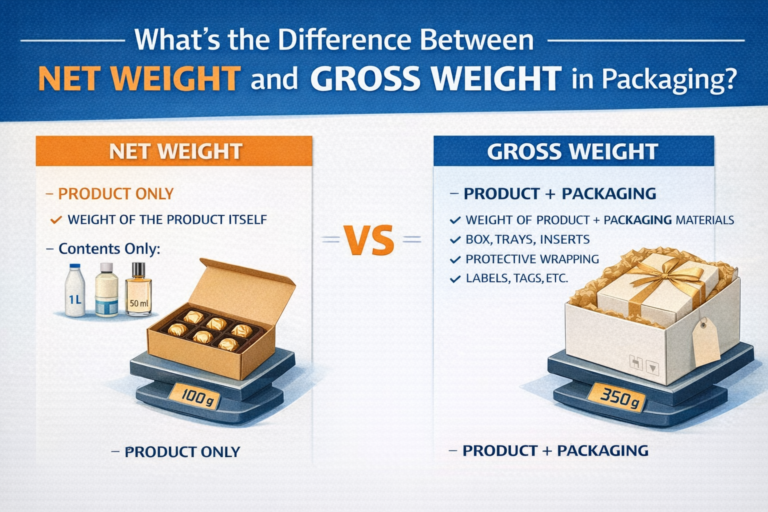
When dealing with packaging, shipping, or international trade, weight terminology plays a crucial role. Two of the most commonly used terms are net weight and gross weight. Although they may sound similar, they refer to very different measurements, and confusing them can lead to shipping errors, pricing issues, and customs delays.
What Is Net Weight?
Net weight refers to the weight of the product only, without any packaging, container, or additional materials. It tells you how much the actual item inside the package weighs.
For example:
- The weight of chocolates inside a box
- The weight of liquid inside a bottle
- The weight of cosmetics inside a jar
Net weight is especially important for:
- Product labeling
- Consumer transparency
- Food and pharmaceutical compliance
- Retail pricing
Many regulations require net weight to be clearly printed on product packaging so customers know exactly how much product they are purchasing.
What Is Gross Weight?
Gross weight includes the total weight of everything: the product itself plus all packaging materials.
This means gross weight accounts for:
- The product
- Inner packaging
- Outer box
- Inserts, trays, or fillers
- Protective wrapping
Gross weight is the figure most commonly used in shipping, logistics, and customs declarations, as it represents the full load being transported.
Key Differences Between Net and Gross Weight
The main difference is simple:
- Net weight = product only
- Gross weight = product + packaging
Net weight is customer-focused, while gross weight is logistics-focused.
Why the Difference Matters in Packaging and Shipping
Understanding the difference between net and gross weight is essential for several reasons:
- Shipping costs are calculated using gross weight or chargeable weight.
- Customs documentation often requires both values.
- Warehouse planning depends on accurate gross weight for stacking and transport.
- Regulatory compliance relies on correct net weight labeling.
Incorrect weight information can result in higher shipping fees, rejected shipments, or fines.
Example of Net vs Gross Weight
Imagine a packaged perfume product:
- Net weight of perfume liquid: 100 g
- Bottle, box, and inserts: 250 g
Net weight: 100 g
Gross weight: 350 g
While the consumer only cares about the 100 g of perfume, the shipping company charges based on the 350 g shipment.
How Packaging Design Affects Gross Weight
Packaging materials play a major role in increasing gross weight. Thick cardboard, rigid boxes, foam inserts, or glass containers can significantly add weight to a product.
Smart packaging design aims to:
- Protect the product
- Minimize unnecessary material
- Reduce total shipment weight
- Lower logistics costs
Optimized packaging benefits both the brand and the supply chain.
Net and Gross Weight in International Trade
In exports and imports, net and gross weight are standard data points on:
- Commercial invoices
- Packing lists
- Bills of lading
Authorities use this information to verify cargo, calculate duties, and ensure safety during transport.
Common Mistakes to Avoid
- Listing gross weight as net weight on labels
- Forgetting to include inserts or accessories in gross weight
- Using estimated values instead of measured weights
- Not updating weights after packaging changes
Accurate measurement and documentation are essential for smooth operations.
Final Thoughts
Net weight and gross weight serve different purposes but are equally important in packaging and logistics. Net weight informs the customer, while gross weight ensures correct handling, transport, and pricing.
For businesses producing packaged goods, understanding and clearly distinguishing these two measurements helps avoid costly errors and ensures compliance across the supply chain. If you are looking for professional packaging manufacturer which will help you on every step – contact us!