When it comes to packaging, printing, and product presentation, choosing the right paper or cardboard weight is crucial. One common question from designers and brands is whether 350 GSM paper is strong enough for their packaging needs. To answer this, it’s important to understand what GSM means, how paper and cardboard differ in strength, and what options are available from lightest to strongest.
GSM stands for grams per square meter. It is a measure of the paper or board’s weight and, indirectly, its thickness and durability. A higher GSM generally indicates a thicker, stronger material. However, GSM alone doesn’t tell the full story. The type of paper or board, its fiber composition, and its manufacturing process all contribute to how strong it feels and how much weight it can hold.
Is 350 GSM Paper Strong Enough?
350 GSM paper is considered a heavy cardstock and is commonly used for premium brochures, invitations, gift cards, and retail packaging. It is thick enough to provide a sturdy feel and hold shapes well for simple folding boxes or mailers. For lightweight products such as cosmetics, jewelry, or small accessories, 350 GSM paper can be strong enough when combined with techniques like folding, gluing, or lamination.
However, for larger, heavier, or more protective packaging, 350 GSM alone may not be sufficient. For example, a box for a bottle of wine, a large candle, or electronics might require rigid cardboard, corrugated board, or multilayer paperboard to ensure durability and prevent damage during transport.
It is also worth noting that 350 GSM can be combined with lamination or spot UV coating to increase stiffness, add protection, and improve the visual appeal of the packaging without switching to a thicker board.
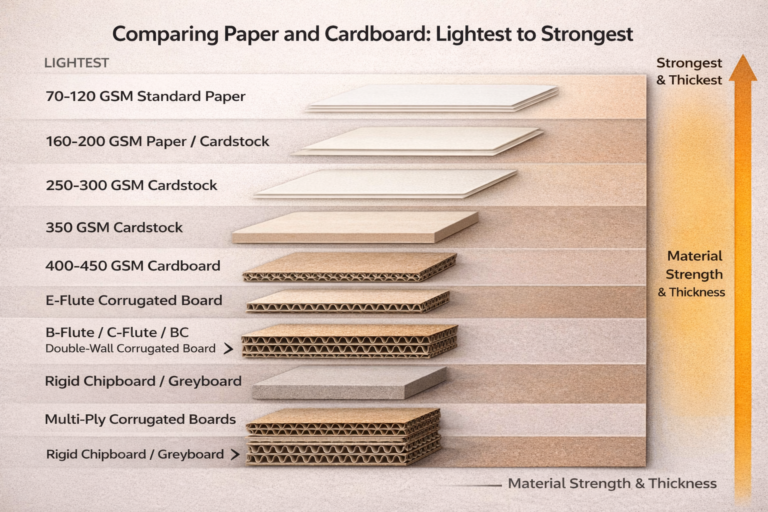
Comparing Paper and Cardboard: From Lightest to Strongest
To help you choose the right material, here is a list of common paper and cardboard types arranged roughly from lightest to strongest:
- 70–120 GSM Standard Paper – Typical office printer paper or letterhead. Very thin and flexible, unsuitable for structural packaging.
- 160–200 GSM Paper/Cardstock – Common for flyers, posters, and greeting cards. Provides moderate stiffness but cannot hold heavy products.
- 250–300 GSM Cardstock – Used for business cards, small packaging, and high-quality brochures. Slightly stronger, holds light folded boxes reasonably well.
- 350 GSM Cardstock – Heavy paper suitable for premium packaging, invitations, cosmetic boxes, and small gift boxes. Can be folded, laminated, and printed with high-quality finishes.
- 400–450 GSM Cardboard – Rigid cardboards used for luxury packaging, rigid boxes, and outer sleeves for products. Offers better strength and stacking durability.
- E-Flute Corrugated Board – Thin corrugated board with fine flutes, used for retail packaging, small shipping boxes, and products needing a smooth print surface.
- B-Flute, C-Flute, and BC Double-Wall Corrugated Board – Heavier corrugated options for shipping, protective packaging, and bulk products. C-flute is the most common for shipping boxes, while BC double-wall is extremely strong for heavy loads.
- Rigid Chipboard / Greyboard – Thick, dense board used for premium rigid boxes, drawer-style boxes, and luxury packaging. Often laminated or covered with printed paper for aesthetics.
- Multi-Ply Corrugated Boards – Heavy-duty corrugated boards made from multiple layers of flutes and liners. Ideal for industrial packaging, large shipments, and products requiring maximum protection.
Choosing the Right Material
When deciding if 350 GSM is strong enough, consider the following factors:
- Product weight – Lighter products can be safely packaged with 350 GSM; heavier items may require 400+ GSM or corrugated solutions.
- Box size – Large surface areas increase the risk of bending or collapsing. Bigger boxes usually need thicker material.
- Handling and shipping – If the package will be shipped or handled frequently, thicker and stronger materials ensure durability.
- Aesthetic vs. protection – 350 GSM offers premium feel but moderate strength. Adding lamination or reinforcement can balance visual appeal with sturdiness.
Conclusion
350 GSM paper is strong enough for many premium packaging applications, especially for small and lightweight products. It offers excellent print quality, a luxurious feel, and enough rigidity for folded boxes and mailers. However, for heavier, larger, or protective packaging needs, stronger options such as 400–450 GSM cardboard, E-flute or C-flute corrugated board, or rigid chipboard should be considered.
Understanding the spectrum of paper and cardboard strength—from light 70 GSM paper to multi-ply corrugated boards—helps brands make informed decisions that balance aesthetics, durability, and cost. By choosing the right material, you can ensure your product not only looks great but also arrives safely and impresses customers with both presentation and quality.