If you’ve ever picked up a product box that instantly looked brighter, cleaner, and more “premium” than the rest on the shelf, there’s a good chance it was finished with gloss lamination. This finishing technique is widely used in commercial packaging, book covers, brochures, and retail boxes because it enhances both appearance and durability. It is one of those small details that customers may not consciously notice, but that strongly influences how they perceive a brand.
Gloss lamination is a thin plastic film applied to the surface of printed paper or cardboard. After printing, the film is bonded to the sheet using heat, pressure, or adhesive. Once applied, it creates a smooth, shiny surface that protects the print underneath and makes colors look more vivid.
How Gloss Lamination Works
The process begins after the packaging or printed material has already been printed. The sheets pass through a laminating machine, where a transparent film is applied over the inked surface. This film can be applied in two main ways.
The first is thermal lamination, where heat melts a coating on the film and bonds it to the paper. The second is wet lamination, which uses liquid adhesive instead of heat. Both methods create a strong, even bond between the film and the printed surface.
Once laminated, the sheet is allowed to cool and set. The result is a glossy, smooth layer that seals the print, protecting it from moisture, scratches, fingerprints, and fading.
What Gloss Lamination Looks Like
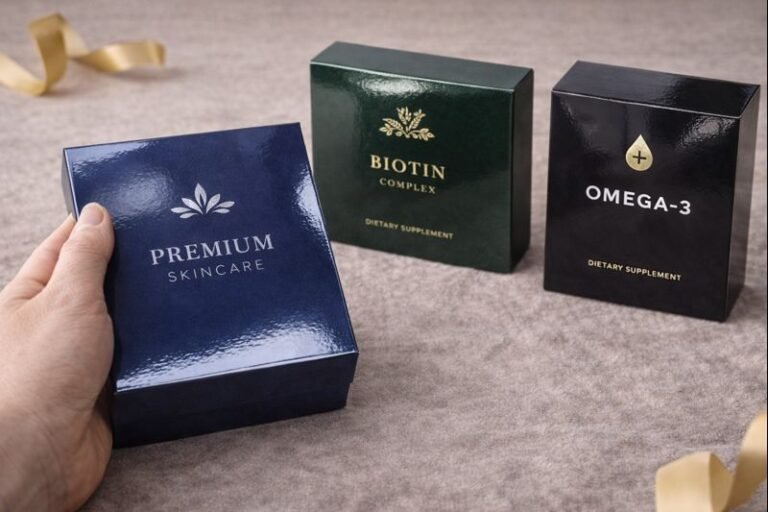
Gloss lamination produces a bright, reflective finish. Light bounces off the surface, making colors appear deeper and more saturated. Whites look cleaner, blacks look richer, and photos gain more contrast and sharpness.
This is why gloss lamination is especially popular for packaging that relies on strong visual impact, such as cosmetics, supplements, electronics, and food boxes. On a retail shelf, a glossy box tends to catch the eye faster than a matte or uncoated one.
Why Brands Use Gloss Lamination
There are two main reasons brands choose gloss lamination: visual appeal and protection.
From a visual point of view, gloss makes packaging look more expensive and professionally finished. It enhances logos, product photos, and design details. If a brand wants to communicate energy, freshness, or modernity, gloss is often the first choice.
From a functional point of view, the laminated film acts as a protective layer. It prevents ink from rubbing off, protects against small scratches, and adds resistance to moisture. This is especially important for packaging that will be handled a lot, shipped long distances, or displayed in stores for extended periods.
Gloss Lamination in Product Packaging
In custom product boxes, gloss lamination is used on everything from simple folding cartons to complex rigid packaging. It is particularly common for:
- Cosmetic and beauty boxes
- Vitamin and supplement packaging
- Food and beverage boxes
- Electronics packaging
- Gift and promotional boxes
When combined with high-quality printing, gloss lamination gives packaging a smooth, clean surface that feels premium in the hands of the customer.
For example, a vitamin bottle box with gloss lamination will look brighter and more trustworthy on the shelf. A cosmetic box will reflect light and draw attention to the product name or brand logo. Even a simple cardboard box can be transformed into something that feels far more valuable with this finish.
Gloss vs. Matte Lamination
Gloss lamination is often compared with matte lamination, which has a flat, non-reflective finish. Both have their place in packaging design, but they create very different impressions.
Gloss lamination emphasizes color and shine. It makes designs pop and feel energetic. Matte lamination, on the other hand, creates a softer, more elegant and understated look. Matte also tends to hide fingerprints better, while gloss can show smudges more easily.
Brands that want bold, eye-catching packaging usually go for gloss. Brands that want a more luxurious, minimalist, or high-end feel often choose matte or soft-touch lamination instead.
Can Gloss Lamination Be Combined with Other Effects?
Yes, and this is where gloss lamination becomes even more powerful. It is often used as a base layer for other finishing techniques, such as:
- Spot UV coating, which adds extra shine to specific areas like logos or text
- Foil stamping, where metallic foil is applied for a luxury effect
- Embossing or debossing, which adds texture and depth
For example, a box might be fully gloss laminated, then have a spot UV logo that is even shinier. This contrast makes the design more dynamic and visually interesting.
Is Gloss Lamination Environmentally Friendly?
Gloss lamination uses plastic film, which means it is not as eco-friendly as uncoated paper. Laminated packaging is harder to recycle because the plastic layer must be separated from the paper.
However, many manufacturers now offer recyclable or biodegradable lamination films, as well as water-based coatings that mimic the look of gloss. If sustainability is a priority for your brand, it is worth asking your packaging supplier about these alternatives.
When Should You Choose Gloss Lamination?
Gloss lamination is a good choice when:
- You want your packaging to stand out on a crowded shelf
- Your design includes photos or colorful graphics
- The box will be handled often or shipped long distances
- You want a clean, polished, professional look
It may not be ideal if your brand aims for a natural, eco-focused, or minimalist appearance. In those cases, matte or uncoated finishes might better match the brand identity.
Final Thoughts
Gloss lamination is one of the most popular and versatile finishes in modern packaging. It enhances color, protects printed surfaces, and gives boxes a professional, high-quality feel. Whether you are producing cosmetic boxes, supplement packaging, or retail cartons, gloss lamination can significantly improve how your product is perceived by customers.
While it is just one layer of film, its impact on branding and presentation is much bigger than it looks. Choosing the right finish, including gloss lamination, is an important step in creating packaging that not only protects your product but also helps sell it.